Introduction to Meditation
Introduction to Meditation
What is Meditation?
Think of meditation as exercise for your mind. Just as you might lift weights to strengthen your muscles, you can meditate to train your attention and awareness. The goal is to reach a state that is mentally clear and emotionally calm.
meditation
noun
A practice where an individual uses a technique – such as mindfulness, or focusing the mind on a particular object, thought, or activity – to train attention and awareness, and achieve a mentally clear and emotionally calm and stable state.
It’s not about stopping your thoughts or emptying your mind. That's a common misconception. Instead, it's about learning to observe your thoughts from a distance without getting carried away by them. Over time, this practice helps you understand your own mind and develop a more peaceful relationship with your inner world.
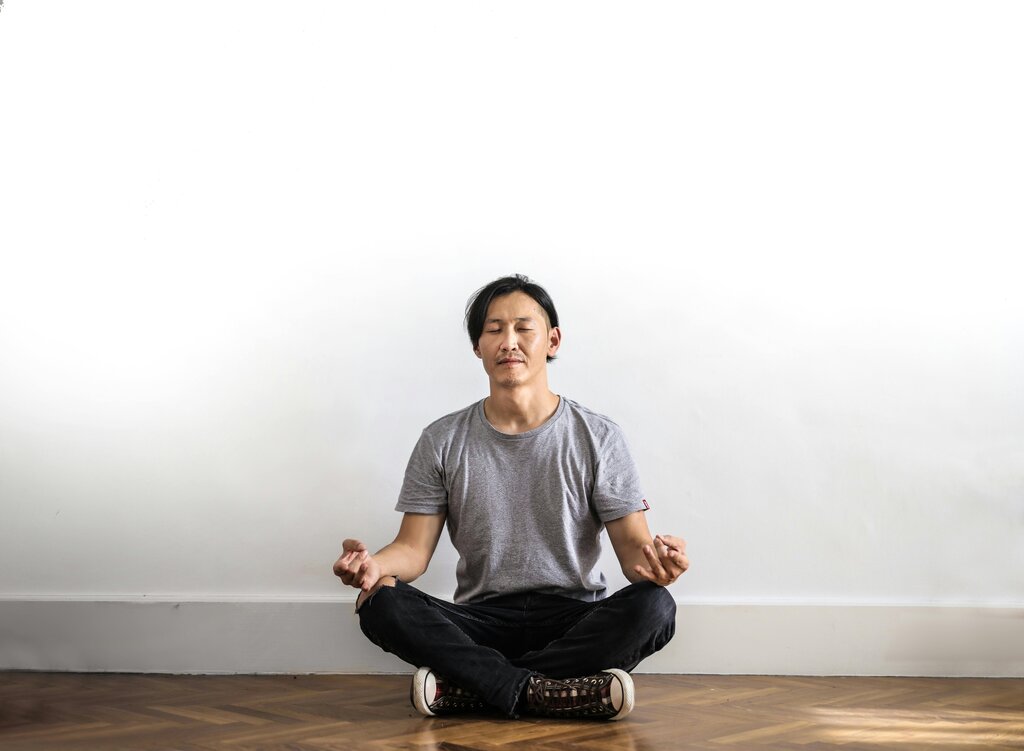
Two Main Paths
While there are countless meditation techniques from different cultures and traditions, they generally fall into two main categories. Think of them as two different styles of mental workout.
The two primary approaches are Focused Attention and Open Monitoring.
First, there’s Focused Attention, also known as concentrative meditation. In this practice, you direct your full attention to a single object or sensation. This could be your breath, a repeated word or phrase (a mantra), or the flame of a candle.
Your mind will inevitably wander. That's completely normal. The exercise is to gently notice when your attention has drifted and then guide it back to your chosen focal point, over and over again. It's like training a puppy to sit. You don't get frustrated; you just patiently bring it back each time.
The second category is Open Monitoring. Here, instead of focusing on one thing, you broaden your awareness to whatever is happening in the present moment. You notice thoughts, feelings, and bodily sensations as they arise and pass, without judging or clinging to any of them.
Imagine sitting by a river and watching leaves float by. You don't try to grab them or stop them; you just watch them come into view and then drift away. Open monitoring develops a non-reactive awareness of your entire experience.
By practicing mindfulness, individuals can develop a greater sense of self-awareness and cultivate a deeper connection with their thoughts, feelings, and experiences.
Many meditation practices actually combine both of these techniques. You might start with a few minutes of focused attention to settle the mind, and then shift into open monitoring to cultivate broader awareness.
Ready to see what you've learned? Let's try a few questions.
What is the primary goal of meditation as described in the text?
Focusing on the sensation of your breath and gently returning your attention to it whenever your mind wanders is an example of which type of meditation?
Understanding these basic concepts is the first step. The goal isn't to become an expert overnight, but to simply begin training your mind.