Introduction to Mechanical Engineering
Introduction to Mechanical Engineering
The Engineering of Movement
Look around you. A car driving down the street, the air conditioner cooling your room, the pen in your hand, the power plant generating electricity—all these are products of mechanical engineering. At its heart, this field is about designing, building, and maintaining anything that moves. It’s one of the oldest and broadest engineering disciplines, turning scientific principles into useful, tangible things.
Mechanical engineering is a branch of engineering that focuses on the design, analysis, manufacturing, and maintenance of mechanical systems.
Mechanical engineers are problem-solvers who work on a massive range of projects. They might design a tiny medical device that travels through arteries, a massive wind turbine that powers a city, or the robotic arm that assembles smartphones on a production line. Their work involves understanding how forces, energy, and materials interact to create a machine that works safely, efficiently, and reliably.
A Quick Trip Through Time
The roots of mechanical engineering stretch back to antiquity. Ancient inventors like Archimedes laid the groundwork by figuring out the principles of the lever and the screw. But the field truly came into its own during the Industrial Revolution in the 18th century. The invention of the steam engine by innovators like James Watt changed everything, powering factories, trains, and ships.
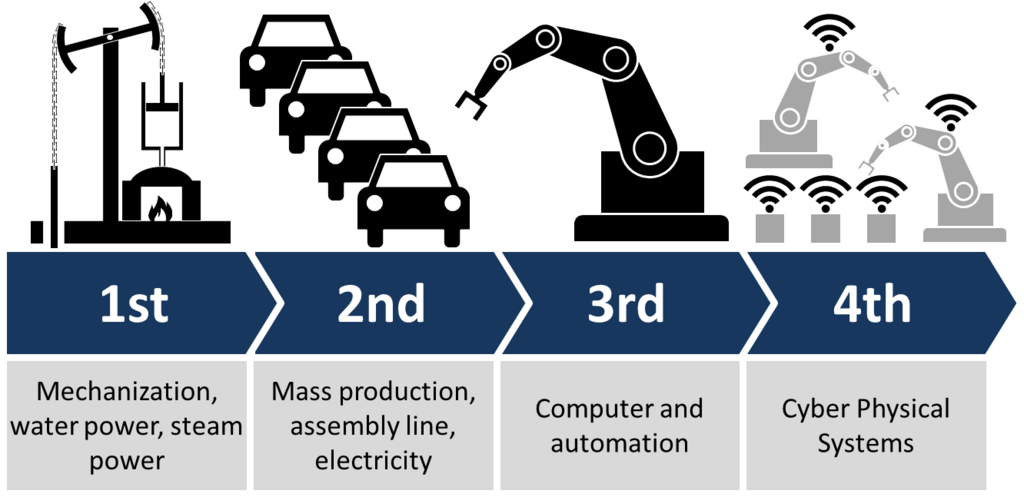
This era created a huge demand for people who could design and build complex machinery. Since then, mechanical engineering has evolved continuously, incorporating new technologies like electricity, computers, and now, artificial intelligence and robotics. The focus remains the same: harnessing physical principles to meet human needs.
The Core Principles
To build machines that work, mechanical engineers rely on a few fundamental areas of science. These are the building blocks of the discipline.
Mechanics
noun
The branch of physics concerned with the behavior of physical bodies when subjected to forces or displacements, and the subsequent effects of the bodies on their environment.
Mechanics is the study of forces and motion. It's divided into two main areas:
- Statics: Deals with objects that are stationary. Think about designing a stable chair or the frame of a skyscraper that won't collapse under its own weight.
- Dynamics: Deals with objects in motion. This is crucial for designing a car's suspension, the wings of an airplane, or the gears in a watch.
Another key principle is thermodynamics, which is the science of energy, particularly heat and its conversion into other forms. It explains how engines generate power, how refrigerators keep things cold, and how power plants produce electricity.
Finally, materials science is about understanding the properties of different substances. An engineer must choose the right material for the job. Should a part be made of steel for strength, aluminum for lightness, or a polymer for flexibility and low cost? This choice can make or break a design.
Where Mechanical Engineers Work
Because it's so broad, mechanical engineering is central to almost every industry you can think of. Mechanical engineers are everywhere, applying their skills to solve a wide variety of challenges.
| Industry | Example Applications |
|---|---|
| Automotive | Designing engines, transmissions, and vehicle bodies. |
| Aerospace | Creating airplanes, spacecraft, satellites, and propulsion systems. |
| Energy | Developing power plants, wind turbines, and solar panel systems. |
| Robotics | Building automated systems for manufacturing, exploration, and healthcare. |
| Biomedical | Engineering prosthetic limbs, surgical robots, and advanced medical devices. |
| Manufacturing | Designing and optimizing the machinery and processes that make products. |
In these roles, an engineer might be involved in the entire lifecycle of a product. They research and develop new ideas, create detailed designs using computer-aided design (CAD) software, build and test prototypes, and oversee manufacturing and production. They are creative thinkers and hands-on builders, bridging the gap between an idea and a physical reality.
At its core, what is mechanical engineering primarily concerned with?
Which historical period was a major turning point for mechanical engineering, largely due to the invention of the steam engine?
This foundation in motion, energy, and materials gives mechanical engineers a versatile toolkit to tackle some of the world's most pressing problems.