Introduction to Macroeconomics
Introduction to Macroeconomics
The Forest and the Trees
Economics is often split into two big domains: microeconomics and macroeconomics. Microeconomics zooms in on the individual. It studies the decisions of a single person, a family, or a business. Think of it like studying a single tree in a vast forest—its health, its leaves, its branches.
Macroeconomics, on the other hand, zooms out. It looks at the entire forest. It’s the study of the economy as a whole system. Instead of asking why one person buys a car, macroeconomics asks why total car sales for the entire country went up or down this year. It deals with the big-picture issues that affect everyone, from the national employment rate to the overall cost of living.
| Topic | Microeconomics | Macroeconomics |
|---|---|---|
| Focus | Individual economic agents (households, firms) | The entire economy |
| Questions | How does a company set its prices? | What causes inflation or recessions? |
| Why did you choose to buy coffee? | Why is the unemployment rate 7%? | |
| Variables | Price of a single good, a firm's output | Gross Domestic Product (GDP), inflation rate |
Both perspectives are crucial. The health of the forest depends on the health of the individual trees, and the trees are affected by the overall climate of the forest. The two are deeply connected, but macroeconomics gives us the tools to understand the broader trends that shape our world.
The Big Goals
So what are macroeconomists trying to figure out? They generally focus on three main goals for a healthy economy. These are the big indicators that tell us whether a country's economy is thriving or struggling.
- Economic Growth: The economy should produce more goods and services over time.
- Low Unemployment: Everyone who wants a job should be able to find one.
- Price Stability: The general level of prices should remain stable, avoiding rapid inflation or deflation.
Achieving these goals leads to a higher standard of living and greater economic security for a country's citizens. When the economy grows, there's more wealth to go around. When unemployment is low, people have stable incomes. And when prices are stable, you can be confident that the money you save today will be worth about the same tomorrow.
Keeping Score
To track progress toward these goals, economists use several key measurements, or variables. These numbers are like the vital signs of an economy.
Gross Domestic Product
noun
The total market value of all final goods and services produced within a country's borders in a specific period of time, usually a year.
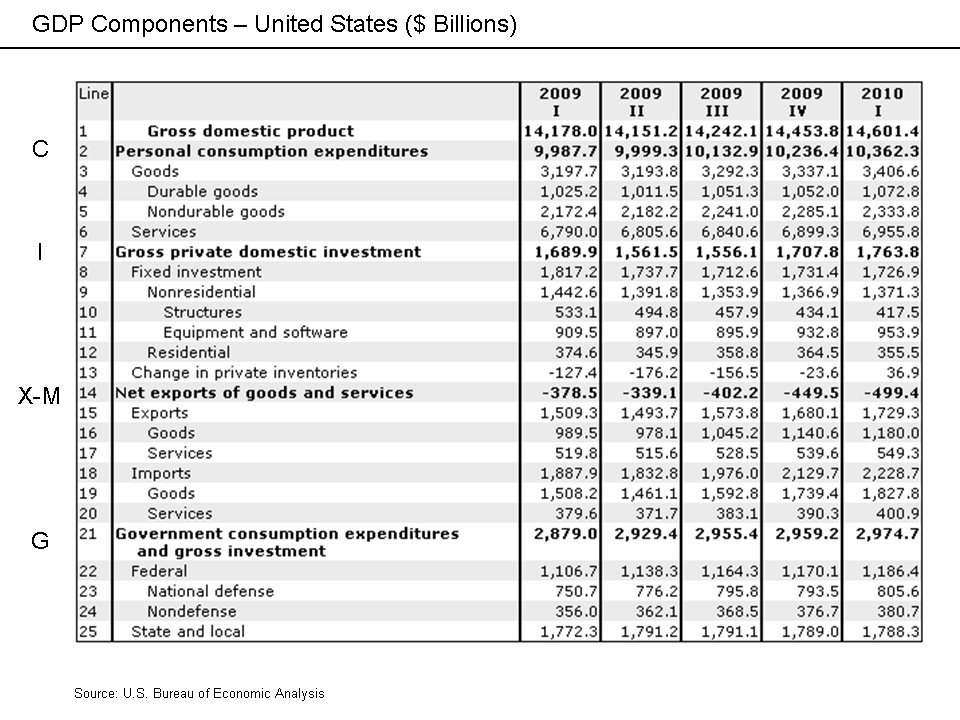
GDP is the most common measure of economic growth. If a country's GDP is going up, its economy is expanding. Think of it as the total price tag on everything the country produced in one year.
Another important variable is national income. This is the total of all wages, profits, rents, and interest earned by a country's citizens. It's closely related to GDP because producing goods and services generates income for the people who make them.
Finally, economists track price levels. This isn't the price of one specific thing, but the average price of all goods and services in an economy. They measure this using a price index. If the price level goes up, that's inflation. If it goes down, that's deflation. Stable price levels are the target.