Introduction to Machine Learning
Introduction to Machine Learning
Learning from Data
Traditionally, we tell computers exactly what to do. To solve a problem, a programmer writes a precise set of rules, or an algorithm, for the computer to follow. This works great for tasks like calculating a budget or alphabetizing a list.
But what about recognizing a friend's face in a photo? Or translating a sentence from Spanish to English? It's almost impossible to write simple, step-by-step rules for these tasks. There are too many variables and exceptions. This is where machine learning comes in.
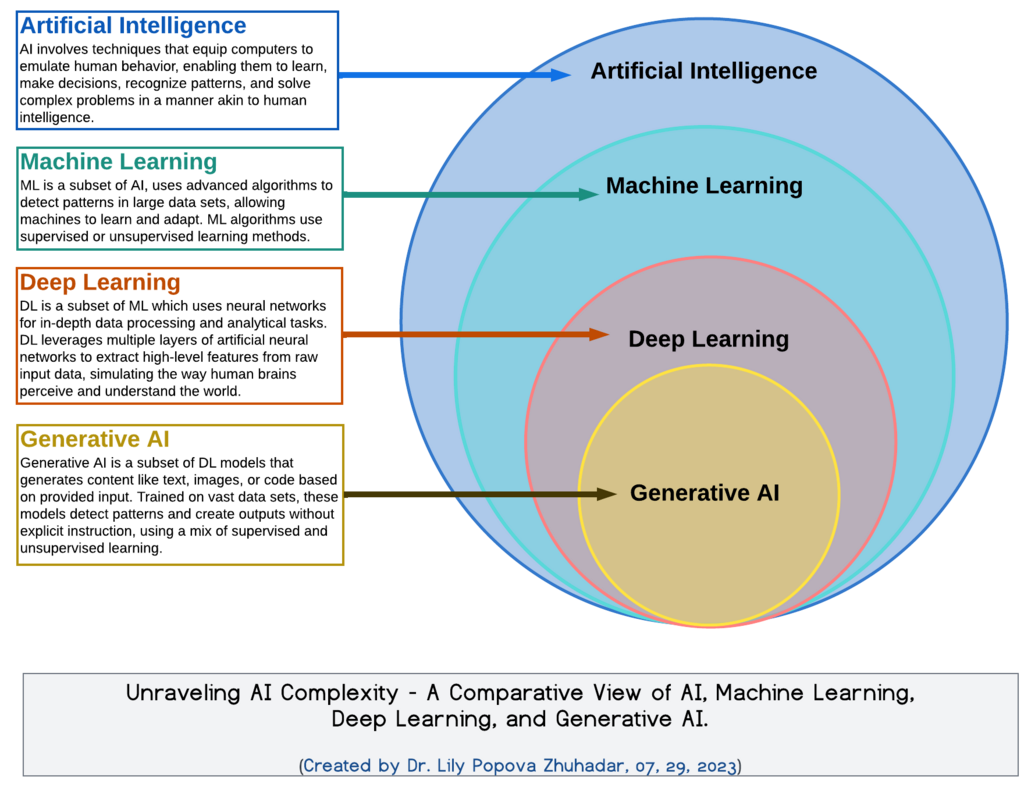
Machine learning is a field of artificial intelligence where computers learn to find patterns and make decisions from data, rather than being explicitly programmed for a specific task.
Instead of feeding a computer rules, we feed it data. Lots of data. The machine learning model then analyzes this information to discover underlying patterns, relationships, and insights. It builds its own understanding of how to perform the task. This ability to learn from experience is what makes machine learning so powerful. It allows us to tackle complex problems in fields from medicine to finance that were previously unsolvable.
Three Ways Machines Learn
Machine learning isn't a single technique. It's a collection of approaches that can be grouped into three main categories, based on how the machine is taught.
The three main types of machine learning are supervised, unsupervised, and reinforcement learning.
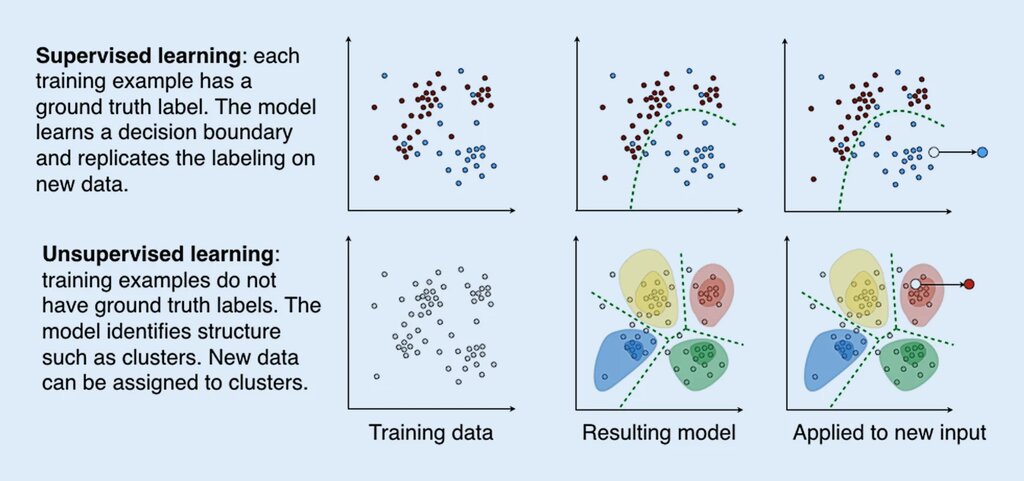
Supervised learning is like studying with flashcards. You give the model a problem (the input data) and also the correct answer (the label). For example, you might show it thousands of pictures of animals, each labeled as either a "cat" or a "dog." The model's job is to learn the relationship between the inputs and their labels. After enough training, it can correctly label new, unseen pictures of cats and dogs.
This method is called "supervised" because the labeled data acts as a teacher, guiding the model toward the right answers.
Unsupervised learning is more like exploring on your own. You give the model a dataset without any labels or correct answers. The goal is for the model to find hidden structures or patterns in the data all by itself. For instance, you could give it a list of customer purchases. The model might discover different groups, or segments, of customers who buy similar products, without you ever defining those groups beforehand.
This is useful for uncovering insights you didn't know to look for.
Reinforcement learning works like training a pet. The model, often called an "agent," learns by interacting with an environment. It tries different actions and receives rewards or penalties based on the outcomes. A reward signals a good action, while a penalty signals a bad one. Over time, the agent learns a strategy, or policy, to maximize its total rewards.
This trial-and-error approach is ideal for teaching machines to play games, control robots, or navigate self-driving cars.
| Learning Type | Input Data | Goal | Common Application |
|---|---|---|---|
| Supervised | Labeled | Predict an outcome | Spam email detection |
| Unsupervised | Unlabeled | Discover hidden patterns | Customer segmentation |
| Reinforcement | No initial data | Learn a sequence of actions | Game-playing AI |
Machine Learning in Your Daily Life
Machine learning isn't just a concept from science fiction; it's already a part of your everyday life. When your email service automatically moves a suspicious message to the spam folder, that's supervised learning at work. The model was trained on millions of emails that were labeled as either "spam" or "not spam."
Streaming services like Netflix and Spotify use machine learning to power their recommendation engines. They analyze your viewing or listening history, and the history of users with similar tastes, to suggest what you might enjoy next. This can be a mix of supervised and unsupervised techniques.
Voice assistants like Siri and Alexa use machine learning to understand your spoken commands. They've been trained on vast datasets of human speech to convert sound waves into text and then determine your intent. Other common applications include credit card fraud detection, medical image analysis, and dynamic pricing for flights and ride-sharing services.
Let's review the main ideas before we test your knowledge.
Ready to check your understanding?
What is the fundamental difference between traditional programming and machine learning?
A hospital provides a machine learning model with thousands of medical images, each one marked as either 'cancerous' or 'non-cancerous.' The goal is for the model to learn how to identify cancerous tumors in new, unmarked images. What type of machine learning is this?
Understanding these core concepts is the first step. By distinguishing between supervised, unsupervised, and reinforcement learning, you have a framework for understanding how different real-world AI systems operate.