Introduction to Machine Learning
Introduction to Machine Learning
What Is Machine Learning?
At its core, machine learning is a way to teach computers to learn from experience, much like humans do. Instead of giving the computer a detailed set of instructions for every possible situation, we give it a lot of data. The computer then finds patterns in that data and learns how to make predictions or decisions on its own.
Think of it this way: you can teach a child what a cat is by showing them pictures of many different cats. Eventually, they learn to recognize a cat they've never seen before. Machine learning works in a similar way, but with data instead of pictures.
This ability is a huge deal. It allows computers to solve problems that are too complex or change too often for a human to write rules for. Tasks like recognizing speech, identifying faces in photos, or recommending your next favorite song are all powered by machine learning.
A New Way to Code
Traditional programming is all about explicit instructions. A programmer writes rules, and the computer follows them. If you want to build a calculator, you write the exact code for how to add, subtract, multiply, and divide numbers. The computer doesn't learn; it just executes the rules you gave it.
Machine learning flips this around. Instead of feeding the computer rules, you feed it data and the correct answers. The computer's job is to figure out the rules for itself.
For example, to build an email spam filter, you wouldn't write rules for every possible spam keyword. That's an impossible task. Instead, you'd show a machine learning model thousands of emails, each labeled as "spam" or "not spam." The model learns the patterns associated with spam and creates its own rules to filter future emails.
Machine Learning in Action
Machine learning is not just a futuristic concept; it's already a part of our daily lives. Its applications are transforming industries across the board.
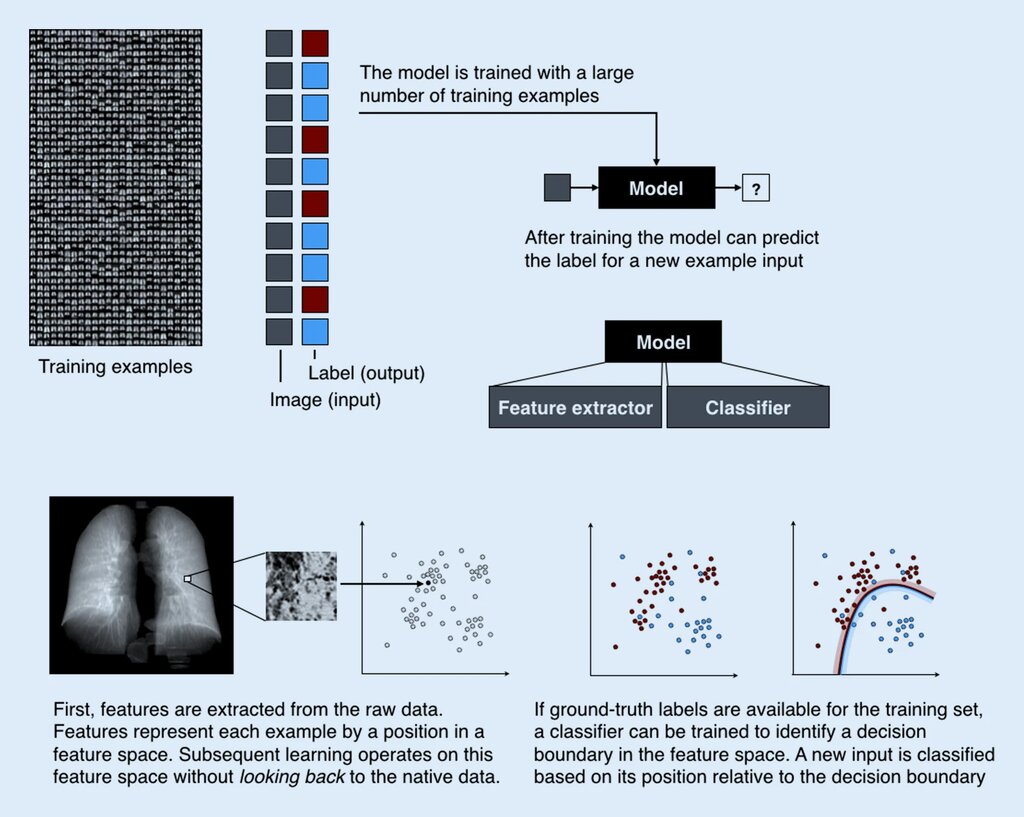
In healthcare, it's used to predict diseases, personalize treatments, and analyze medical images like X-rays to spot tumors that a human eye might miss.
In finance, machine learning algorithms are constantly at work detecting fraudulent credit card transactions. They learn the normal spending patterns of a user and flag any activity that seems unusual. This happens in real-time, protecting millions of people from theft.
And in transportation, it's the key technology behind self-driving cars, which use it to interpret their surroundings and make driving decisions. It also powers navigation apps that predict traffic and suggest the fastest route to your destination.
Even your favorite streaming service uses machine learning to recommend movies and shows it thinks you'll love, based on what you've watched before.
These examples are just the beginning. As we collect more data and develop better algorithms, machine learning will continue to find new ways to solve problems and change the way we live and work.
What is the primary difference between how machine learning and traditional programming solve problems?
Which of the following scenarios is the best example of a machine learning application described in the text?