Introduction to Machine Learning
Introduction to Machine Learning
What Is Machine Learning?
Machine learning is a way for computers to learn from information. Instead of being programmed with a specific set of rules for every situation, a machine learning model is trained on a large amount of data. It learns to recognize patterns and make decisions on its own. It's the reason a streaming service can recommend a movie you'll probably like, or your email provider can filter out spam.
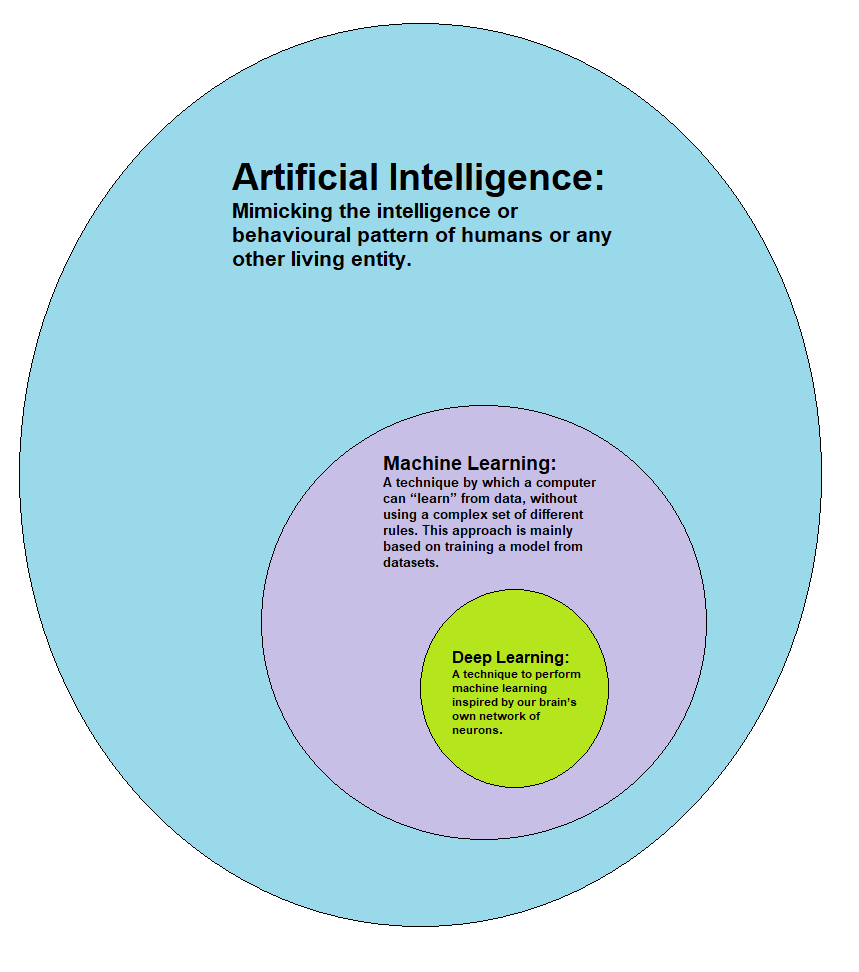
This ability to learn without explicit instructions is what makes machine learning so powerful. It allows us to find solutions to problems that are too complex or change too often to be solved with traditional programming.
A New Way to Program
Think about how you'd write a program to identify spam emails. With traditional programming, you'd create a list of rules. You might tell the computer, "If an email contains the words 'free money' or 'urgent prize', mark it as spam." This works, but it's brittle. Spammers can just change their wording.
Machine learning takes a different approach. Instead of giving the computer rules, you give it examples. You'd show it thousands of emails you've already marked as spam and thousands of emails that are not spam. The model then learns the underlying patterns on its own. It might notice that spam emails often have lots of exclamation points, use strange formatting, or come from unusual addresses. It builds its own complex set of rules based on this data.
The result is a system that can adapt and improve over time as it sees more data, making it far more flexible and powerful than a simple list of hand-written rules.
Four Learning Styles
Machine learning isn't just one thing. It's a broad field with several different approaches, each suited for different kinds of problems. These approaches are often categorized into four main types.
| Type | How It Learns | Analogy |
|---|---|---|
| Supervised | From labeled data (data with correct answers) | A student learning with an answer key. |
| Unsupervised | From unlabeled data, finding hidden patterns | A detective finding connections in a pile of evidence. |
| Semi-supervised | From a mix of labeled and unlabeled data | Learning a language with a small dictionary and lots of books. |
| Reinforcement | Through trial and error, with rewards and penalties | Training a dog with treats for good behavior. |
In supervised learning, the model is trained on a dataset where each piece of data is labeled with the correct outcome. For example, you might have a million images of animals, each labeled as either a "cat" or a "dog." The model learns to associate the features of an image with its label.
In unsupervised learning, the data has no labels. The goal is to discover hidden structures or patterns within the data. A common use is customer segmentation, where a model groups customers into different clusters based on their purchasing behavior, without being told what the groups should be.
Semi-supervised learning is a middle ground. It uses a small amount of labeled data along with a large amount of unlabeled data. This is useful when labeling data is expensive or time-consuming.
Finally, reinforcement learning involves an agent that learns to make decisions by taking actions in an environment to achieve a goal. The agent receives rewards for good actions and penalties for bad ones, learning the best strategy through trial and error. This is the approach used to train AIs to play complex games like Chess or Go.
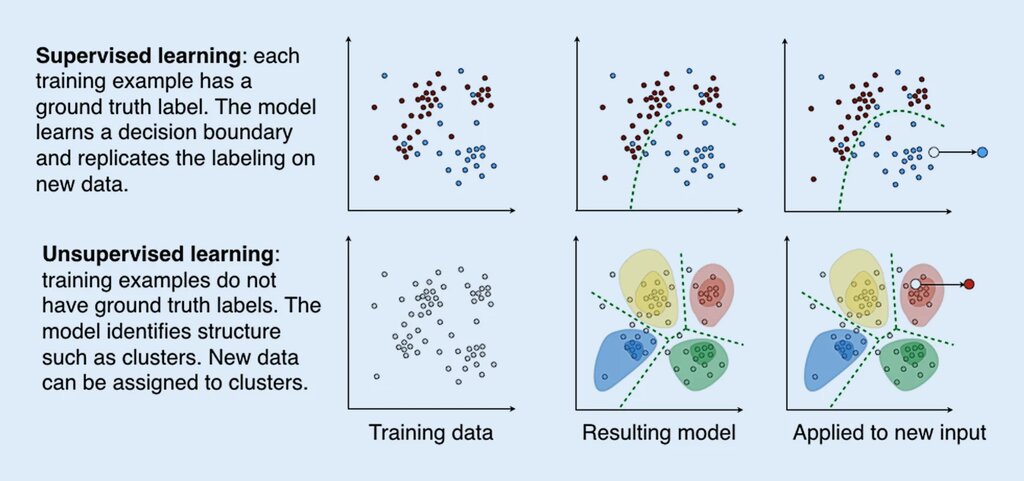
Understanding these different types is the first step toward understanding what machine learning can do and how it's applied to solve real-world problems.
Now, let's test your understanding of these foundational concepts.
What is the primary difference between machine learning and traditional programming?
You are building a system to predict house prices based on a dataset where each house's features (like square footage) are listed along with its final sale price. Which type of machine learning is most appropriate for this task?
These core ideas—learning from data instead of explicit rules and the different ways that learning can happen—form the foundation of the entire field of machine learning.