Introduction to Machine Learning
Introduction to Machine Learning
What Is Machine Learning?
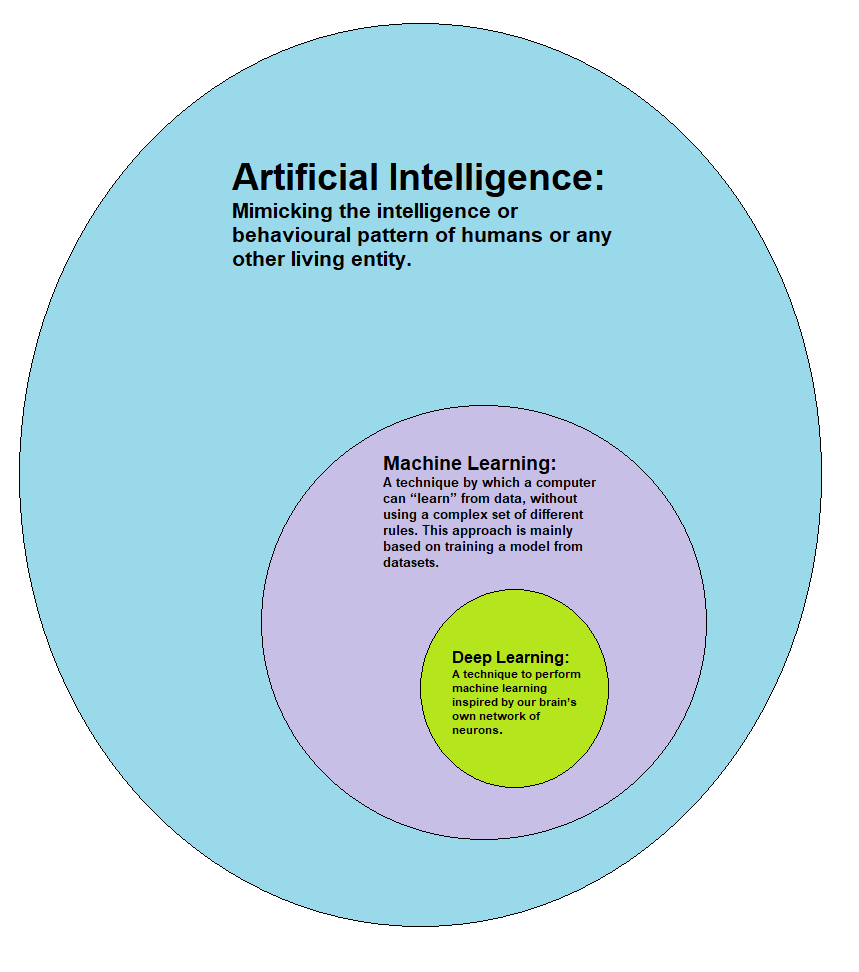
Machine learning, or ML, is a way of teaching computers to find patterns and make decisions from data, without being explicitly programmed for every single task. Instead of writing a fixed set of rules, developers create algorithms that allow the computer to learn on its own.
Think of it like this: you could teach a child to identify a cat by listing rules—it has fur, whiskers, pointy ears, and a tail. But what about a cat with no tail? Or one with folded ears? A rules-based system would fail. With machine learning, you’d simply show the child thousands of pictures of cats. Eventually, they would learn to recognize a cat on their own, grasping the underlying patterns without needing a strict list of rules. This ability to learn from examples is what makes machine learning so powerful.
The Main Flavors of ML
Not all learning is the same. Just as people can learn by studying with a teacher, exploring on their own, or through trial and error, machine learning models have different ways of learning. The three main types are supervised, unsupervised, and reinforcement learning.
Supervised Learning
noun
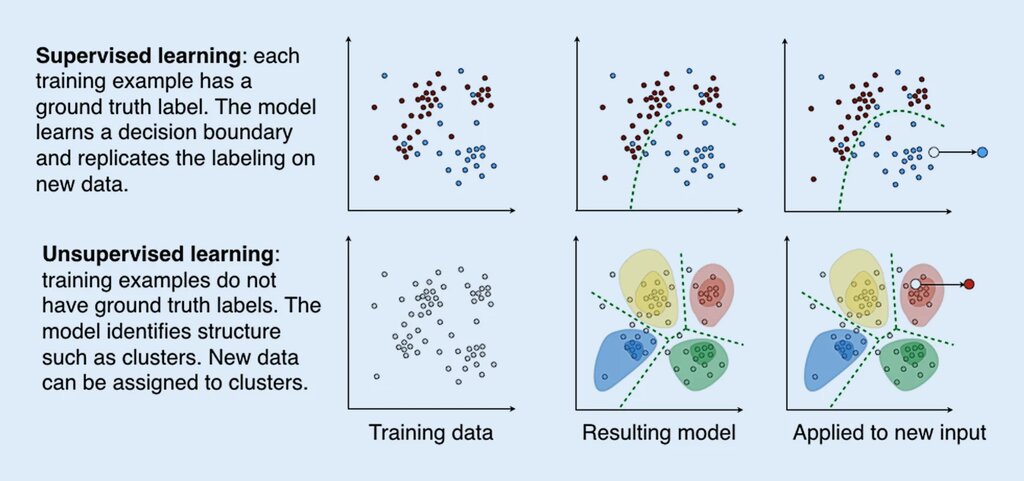
The model learns from data that is already labeled with the correct answers. It's like studying for a test with a detailed answer key.
In supervised learning, the algorithm is given a dataset where each piece of data is tagged with a correct label or outcome. The goal is to learn a mapping function that can predict the output for new, unseen data. It's the most common type of machine learning used today.
Two major tasks fall under supervised learning:
- Classification: The output is a category, like 'spam' or 'not spam', or 'dog' or 'cat'.
- Regression: The output is a continuous value, like the price of a house or the temperature tomorrow.
Unsupervised Learning
noun
The model works on its own to discover patterns and information from unlabeled data. It's like being given a box of mixed-up photos and asked to sort them into piles that make sense.
With unsupervised learning, there are no correct answers and no teacher. The algorithm must sift through the data and find its own structure. This is incredibly useful for exploring data and uncovering hidden relationships.
The most common task is clustering, which involves grouping data points that are similar to each other. This is used for things like customer segmentation, where a business might want to find distinct groups of customers to target with different marketing campaigns.
Reinforcement Learning
noun
A model, or 'agent', learns to make decisions by performing actions and receiving feedback in the form of rewards or penalties. It's like training a dog with treats.
Reinforcement learning (RL) is all about learning in an interactive environment. An agent takes actions, and the environment responds with a new situation and a reward or penalty. The agent's goal is to learn a strategy, called a policy, that maximizes its cumulative reward over time. It's a process of trial and error.
This approach is ideal for dynamic situations where the right answer isn't obvious. It's the driving force behind self-driving cars learning to navigate traffic, robotic arms learning to pick up objects, and AI mastering complex strategy games.
Putting It All Together
These three learning types form the foundation of modern AI. From the moment you unlock your phone with your face to the recommendations you get for your next movie, machine learning is working behind the scenes. Understanding these core concepts helps demystify how intelligent systems are built and trained.
| Learning Type | Goal | Core Idea | Example |
|---|---|---|---|
| Supervised | Predict outcomes | Learn from labeled examples | Spam detection |
| Unsupervised | Find hidden structure | Group unlabeled data | Customer segmentation |
| Reinforcement | Learn a behavior | Trial and error with rewards | Game-playing AI |
Now that you have a grasp of the basic categories of machine learning, you're ready to explore how these concepts are put into practice.
What is the core concept that distinguishes machine learning from traditional programming?
A real estate company trains a model to predict house prices based on a dataset of homes, each with features like square footage and number of bedrooms, and a known final sale price. What type of machine learning is this?