Introduction to Machine Learning
Introduction to Machine Learning
What Is Machine Learning?
At its core, machine learning is about teaching computers to learn from data without being explicitly programmed for every task. Think of it like teaching a child. You don't write a long list of rules for how to recognize a cat. Instead, you show them pictures of cats. Over time, they learn to identify a cat on their own, even ones they've never seen before.
Machine learning works similarly. We feed a computer system vast amounts of data, and it learns to recognize patterns, make predictions, and improve its performance over time. This ability to learn and adapt is what makes it so powerful. It's the engine behind many of the smart technologies we use every day, from spam filters to voice assistants.
Machine learning enables a system to learn from data rather than through explicit programming.
The Three Main Types
Machine learning is generally broken down into three main categories, each defined by the way the computer learns from the data.
Supervised Learning
noun
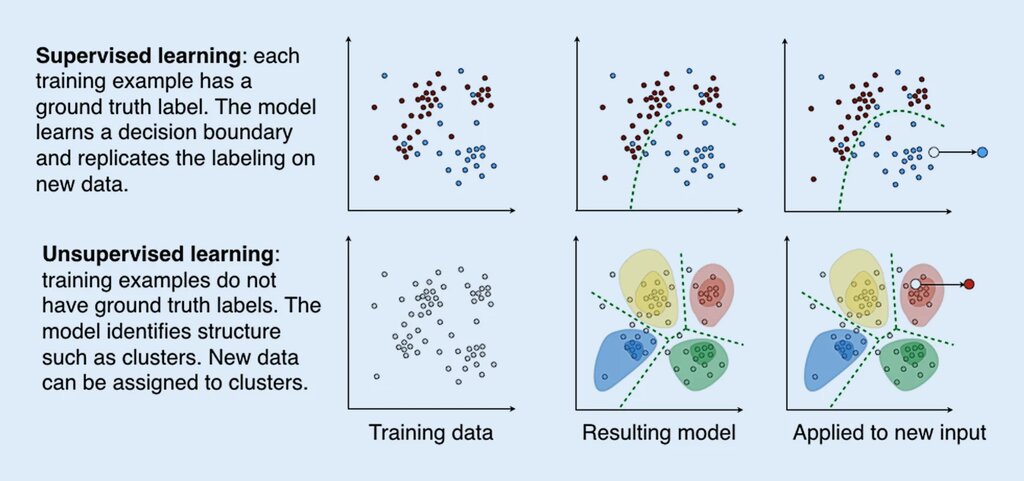
The machine learns from data that is already labeled. It's like studying with flashcards that have both a question and an answer. The goal is to learn a mapping function that can predict the output for new, unseen data.
With supervised learning, you give the algorithm a dataset where you already know the correct outcomes. For example, to predict house prices, you would train a model on a dataset of houses that includes features like square footage and number of bedrooms, along with their final sale prices. The model learns the relationship between the features and the price, so it can then predict the price of a new house.
Unsupervised Learning
noun
The machine learns from data that is not labeled. Its job is to find hidden patterns or structures within the data on its own. It's like being given a box of mixed Lego bricks and asked to sort them into groups without any instructions.
Here, the data has no predefined labels. The algorithm explores the data to find inherent structures. For instance, a streaming service might use unsupervised learning to group users with similar viewing habits. This helps in creating listener profiles and recommending new music without knowing anything about the users beforehand.
The third type takes a different approach.
Reinforcement Learning
noun
The machine learns by performing actions and receiving feedback in the form of rewards or penalties. It's a trial-and-error process. Think of training a dog: you give it a treat for good behavior and a firm "no" for bad behavior.
In this model, an AI agent interacts with an environment and learns to make decisions that maximize a cumulative reward. A self-driving car might learn to navigate city streets this way, getting a positive reward for arriving safely and a negative one for breaking a traffic rule.
Real-World Applications
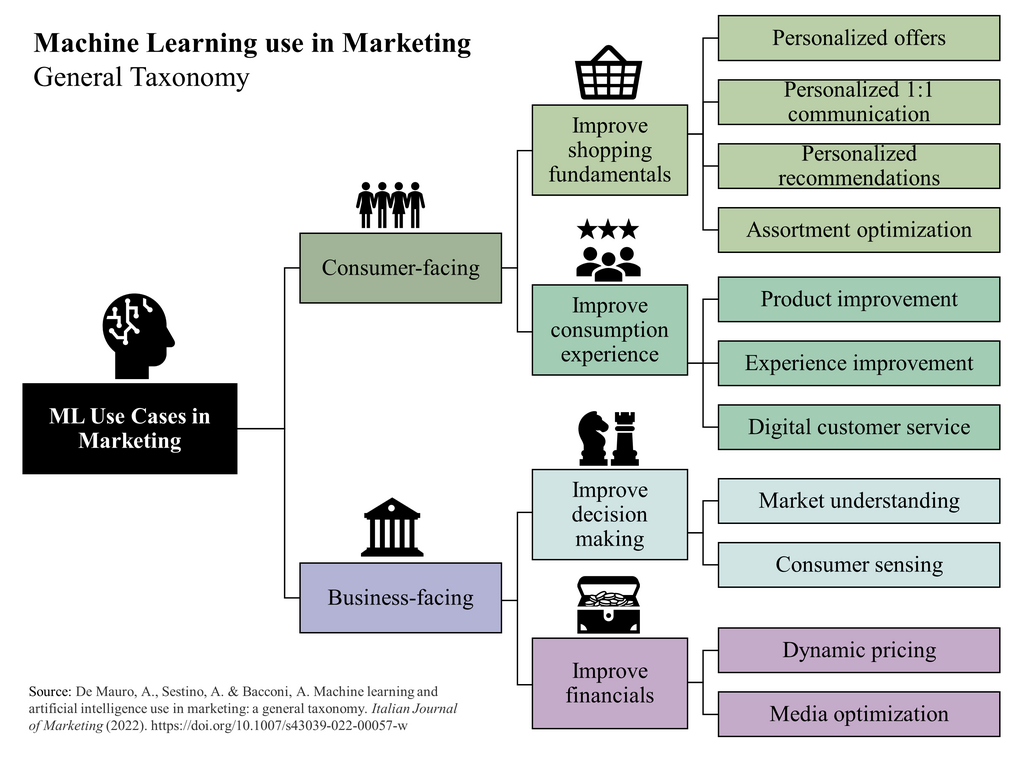
Machine learning isn't just a theoretical concept; it's already integrated into many parts of our lives and various industries.
-
Healthcare: AI can analyze medical images like X-rays and MRIs to detect diseases such as cancer earlier and more accurately than humans.
-
Finance: Banks use machine learning to detect fraudulent transactions in real time, protecting customers from theft.
-
Entertainment: Recommendation engines on platforms like Netflix and Spotify use your viewing and listening history to suggest what you might enjoy next.
-
Retail: Online stores create personalized shopping experiences by recommending products based on your browsing history and past purchases.
-
Transportation: Ride-sharing apps use machine learning to predict demand, determine pricing, and find the most efficient routes for drivers.
These examples are just the beginning. As technology advances, machine learning will continue to find new ways to solve complex problems and reshape how we live and work.
Time to check your understanding of these core ideas.
What is the fundamental principle of machine learning?
A bank wants to develop a system to identify unusual credit card transactions. The system will be trained on a large dataset of past transactions, each marked as either 'fraudulent' or 'legitimate'. Which type of machine learning is best suited for this task?
Now that you have a grasp of the fundamentals, you're ready to explore how these models are actually built and trained.