Introduction to Machine Learning Models
Introduction to Machine Learning
What Is Machine Learning?
Machine learning, or ML, is a way of teaching computers to find patterns. Instead of writing explicit instructions for every possible scenario, we let the computer learn from data. Think about your email's spam filter. No one programmed it with a list of every spam email in existence. Instead, it learned to recognize the characteristics of spam by analyzing thousands of examples.
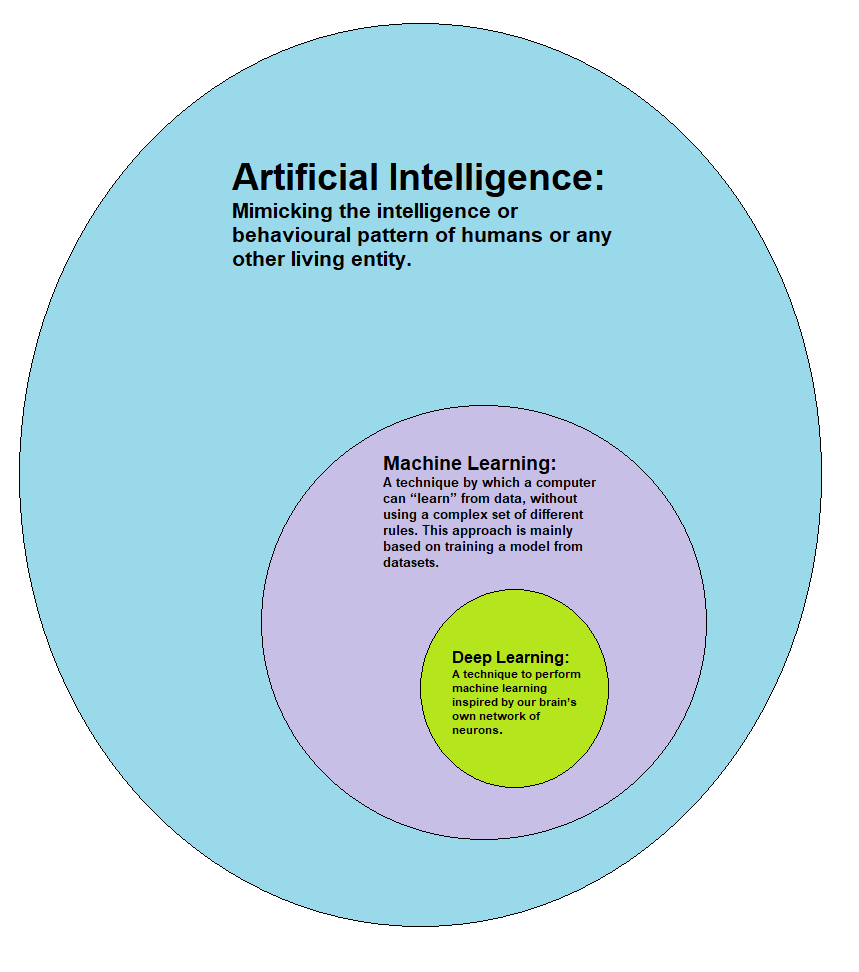
This ability to learn from data is what makes ML so powerful. It's used in everything from recommending movies you might like to helping doctors diagnose diseases. Machine learning is a specific field within the broader category of Artificial Intelligence (AI). Not all AI involves learning from data, but ML is a core component of modern AI systems.
How Machines Learn
Computers can learn in a few different ways, depending on the type of data they're given and the problem they need to solve. The three main approaches are supervised, unsupervised, and reinforcement learning. Each is suited for different kinds of tasks.
Supervised Learning
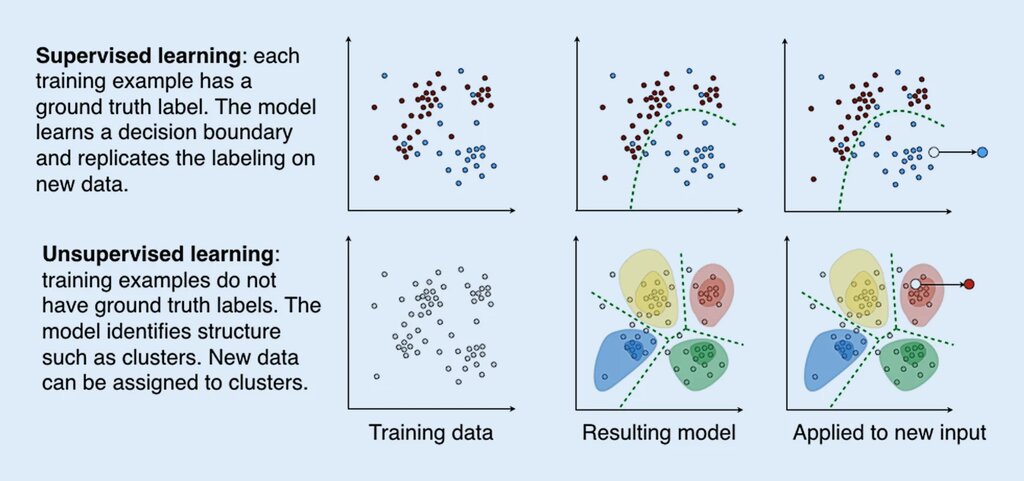
This is the most common type of machine learning. In supervised learning, the computer learns from data that has already been labeled with the correct answers. It's like studying for a test using flashcards that have a question on one side and the answer on the other.
For example, to train a model to identify pictures of cats, you would feed it thousands of images, each one labeled as either "cat" or "not a cat." The model learns the patterns associated with cats—pointy ears, whiskers, fur—so it can later identify them in new, unlabeled photos.
Supervised learning uses labeled data to make predictions. The goal is to predict the label for new, unseen data.
Unsupervised Learning
What if you don't have labeled data? That's where unsupervised learning comes in. Here, the model looks for hidden patterns or structures in an unlabeled dataset. It's like being given a box of mixed fruits and asked to sort them into groups without knowing the names of the fruits. You'd likely group them by color, shape, and size.
A common use for this is customer segmentation. An online store could use unsupervised learning to group customers with similar buying habits. The algorithm might discover a group that buys high-end electronics and another that only buys items on sale, all without being told what to look for.
Unsupervised learning finds hidden structures in unlabeled data. The goal is to discover underlying groups or patterns.
Reinforcement Learning
Reinforcement learning is about learning through trial and error. The model, often called an "agent," learns to make decisions by performing actions in an environment to achieve a goal. When it makes a good move, it gets a reward. When it makes a bad one, it gets a penalty.
Think of training a dog. You give it a treat (a reward) when it sits on command. Over time, the dog learns that sitting leads to a positive outcome. Reinforcement learning powers self-driving cars, which learn to navigate roads by being rewarded for safe driving and penalized for mistakes. It's also used to train computers to play complex games like chess or Go.
Reinforcement learning uses rewards and penalties to make better decisions over time. The goal is to maximize the total reward.
The Machine Learning Workflow
Developing a machine learning model isn't a single step. It's a process, or a workflow, that involves several key phases. While the details can vary, the general flow is consistent.
Developing a machine learning model is an iterative process that consists of several phases: starting with requirements engineering, data gathering, preprocessing, and feature engineering; moving on to model training and tuning; and ending with model evaluation, deployment, and monitoring.
Here’s a simplified look at the typical stages:
| Step | Description |
|---|---|
| 1. Data Collection | Gather the raw data needed for the project. This could be images, text, numbers from a spreadsheet, or sensor readings. |
| 2. Data Preparation | Clean the data. This means handling missing values, removing duplicates, and getting it into a format the model can understand. |
| 3. Model Training | Choose an appropriate algorithm and feed it the prepared data. This is where the model “learns” the patterns. |
| 4. Model Evaluation | Test the model's performance on a separate set of data it has never seen before. This helps ensure it can make accurate predictions in the real world. |
| 5. Deployment | Integrate the trained model into an application so it can start making decisions on new, live data. |
This process is often a cycle. After evaluating a model, you might go back to collect more data or try a different algorithm to improve its performance.
Which of the following best describes the core idea of machine learning?
An e-commerce company wants to group its customers into segments based on their purchasing behavior. They do not have any predefined labels for what these groups should be. Which type of machine learning is most suitable for this task?