Introduction to Machine Learning
Introduction to Machine Learning
What Is Machine Learning?
At its heart, machine learning is about teaching computers to learn from experience, much like humans do. Instead of writing explicit, step-by-step instructions for every possible scenario, we create algorithms that can analyze data, identify patterns, and make decisions on their own.
Think about your email's spam filter. It wasn't programmed with a list of every spam email in existence. Instead, it learned to recognize the characteristics of spam by analyzing thousands of examples you and others marked as junk.
Algorithm
noun
A set of rules or instructions given to a computer to solve a problem or perform a task.
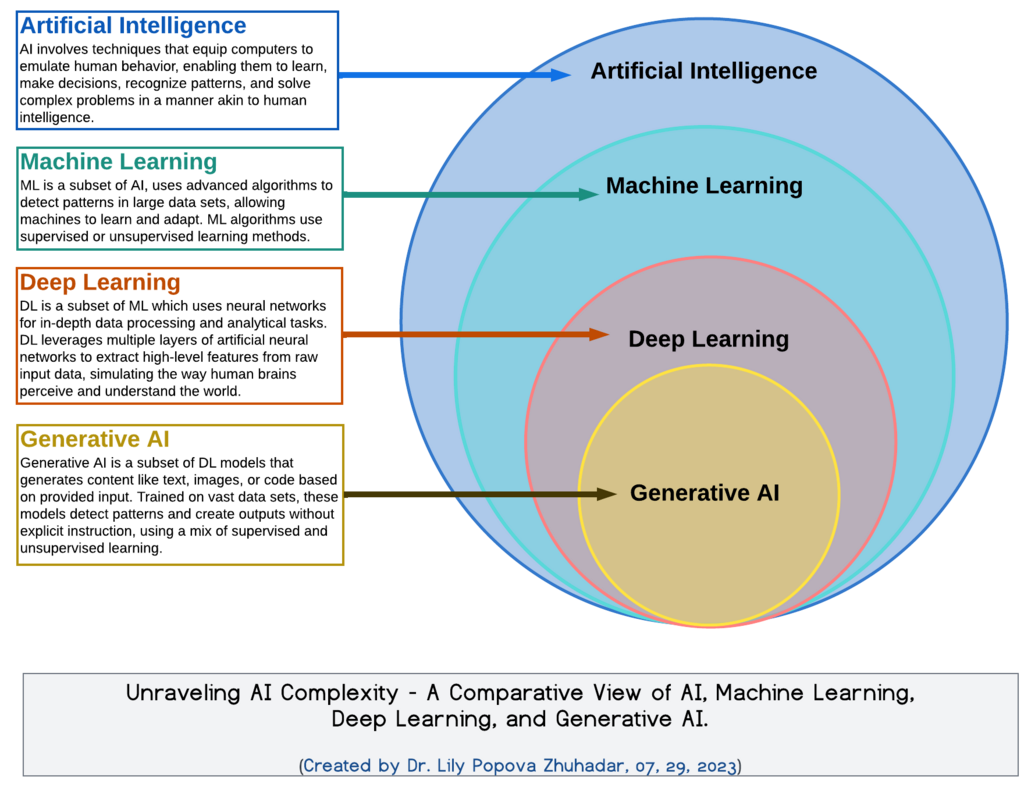
This ability to learn from data makes it possible to tackle complex problems that would be nearly impossible to solve with traditional programming. Machine learning is a subfield of Artificial Intelligence (AI), but it's not the whole story. It's the engine that powers many of the AI applications we use today.
Why Does It Matter?
Machine learning is quietly working behind the scenes in many aspects of modern life. It’s not just about futuristic robots; it's a practical tool that solves everyday problems.
When Netflix suggests a movie you might like, that's machine learning. When your bank flags a potentially fraudulent transaction, that's machine learning, too. It’s used in medical imaging to help doctors spot diseases earlier, in agriculture to predict crop yields, and in navigation apps to find the fastest route through traffic.
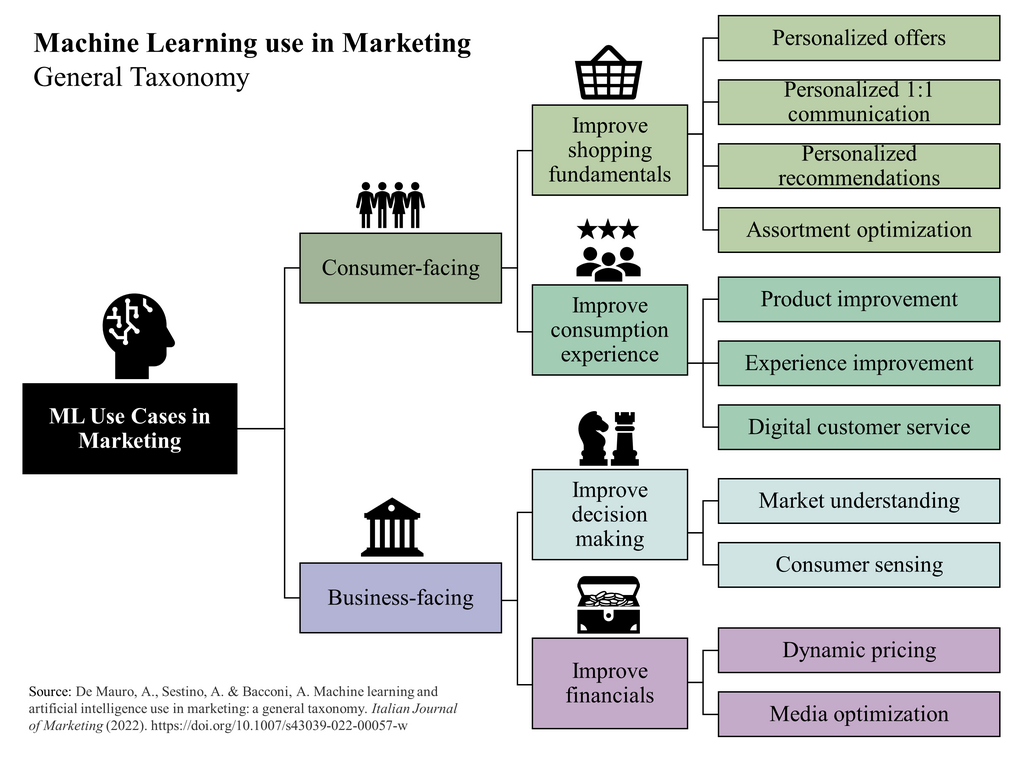
The common thread in all these examples is the use of data to make predictions and automate complex decisions. As we generate more data than ever before, machine learning becomes an increasingly powerful tool for making sense of it all.
Types of Machine Learning
Just as people learn in different ways—from a teacher, through trial and error, or by finding patterns on our own—machines also have different learning styles. These are often grouped into four main categories.
- Supervised Learning
Supervised learning is like studying with flashcards. Each card has a question (the input) and a correct answer (the output). By reviewing enough of these labeled examples, you learn to answer new, similar questions correctly.
A supervised algorithm is trained on a dataset where all the data points are labeled with the correct outcome. For instance, you might feed it thousands of images of animals, each labeled as either "cat" or "dog." After training, the model can look at a new, unlabeled animal picture and predict whether it's a cat or a dog.
- Unsupervised Learning
Unsupervised learning is about finding hidden structures in unlabeled data. Imagine being handed a box of assorted fruits and being asked to sort them. You wouldn't know their names, but you could group them by color, shape, and size. You're discovering the patterns on your own.
This is what unsupervised algorithms do. They explore data to find natural clusters or associations. A common use case is customer segmentation, where a business might group customers based on purchasing behavior to better understand its market, without any preconceived labels.
- Semi-Supervised Learning
This approach is a hybrid of the first two. It uses a small amount of labeled data along with a large amount of unlabeled data. This is useful in situations where labeling data is expensive or time-consuming.
For example, a photo service might have millions of user photos (unlabeled) but only a few that have been manually tagged (labeled). A semi-supervised model can learn from the tagged photos and then use that knowledge to help categorize the rest.
- Reinforcement Learning
Reinforcement learning is about learning through trial and error. An algorithm, or "agent," learns to make decisions by performing actions in an environment to achieve a goal. When it takes an action that gets it closer to the goal, it receives a reward. When it makes a mistake, it gets a penalty.
Think of training a dog. You reward it for good behavior and discourage bad behavior. Over time, the dog learns which actions lead to treats. This is the primary way machines are taught to play complex games like chess or Go, and it's also used to train robots to perform tasks in the physical world.
Now that you've got the basics down, let's test your understanding.
Which of the following scenarios is the best example of supervised learning?
What is the primary goal of unsupervised learning?
Understanding these core concepts is the first step into the world of machine learning. Each type of learning has its own strengths and is suited for different kinds of problems.