Introduction to Machine Learning
Introduction to Machine Learning
What Is Machine Learning?
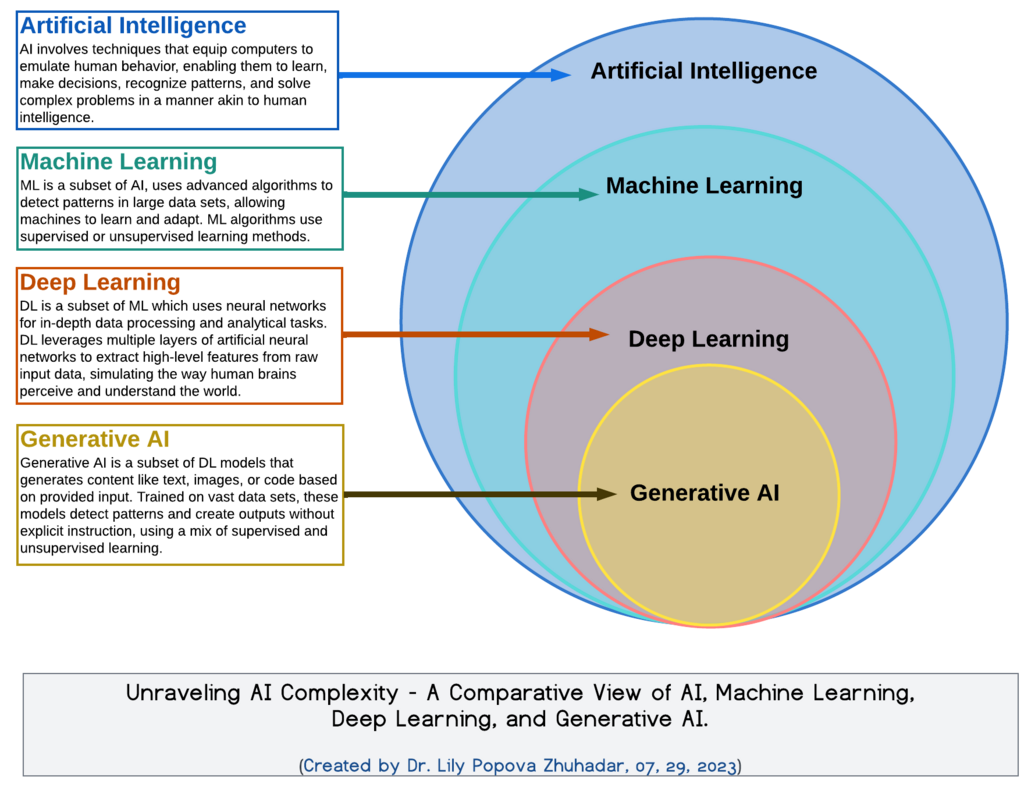
Machine learning, or ML, is a way to teach computers to find patterns. Instead of writing explicit, step-by-step instructions for every possible scenario, you give the computer a large amount of data and let it figure out the rules for itself.
Think about how a child learns to identify a dog. You don't give them a list of rules like "if it has four legs, a tail, and fur, it's a dog." Instead, you show them many different dogs. A Golden Retriever, a Poodle, a Great Dane. Over time, the child's brain starts to recognize the common patterns. Machine learning works in a similar way. It's a field within the larger world of artificial intelligence, focused specifically on this ability to learn from data.
How Computers Learn
Just like people learn in different ways, machine learning models have different training styles. The three most common types are supervised, unsupervised, and reinforcement learning. The right approach depends entirely on the problem you're trying to solve and the kind of data you have.
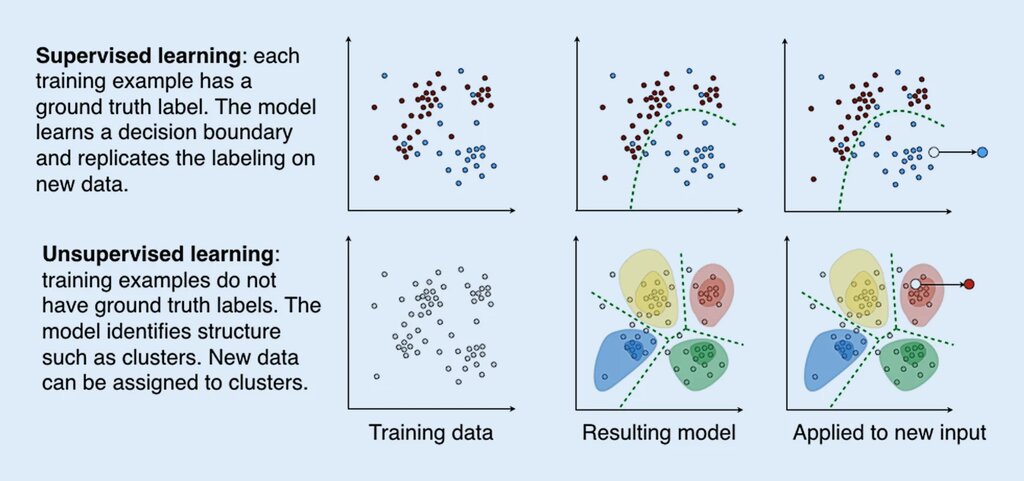
Supervised learning uses labeled data. The model learns from examples where the 'correct answer' is already known.
Imagine you're training a model to identify spam emails. You would feed it thousands of emails, each one clearly labeled as either "spam" or "not spam." The model analyzes these examples to find patterns associated with spam, like certain keywords or sender addresses. After training, it can look at a new, unlabeled email and predict whether it's junk.
Other real-world examples include predicting housing prices based on features like square footage and location, or identifying cancerous cells in medical images.
Unsupervised learning works with unlabeled data. The goal is to find hidden structures or patterns without any pre-existing answers.
Suppose you have a large dataset of customer purchasing habits, but no specific labels. An unsupervised learning algorithm could sift through this data and automatically group customers into segments. It might discover a group of "weekend shoppers" or "bargain hunters" on its own. This is called clustering. Companies use this to better understand their audience and tailor their marketing.
Another application is anomaly detection, like identifying unusual transactions on a credit card to flag potential fraud.
Reinforcement learning is about learning through trial and error. The model, called an agent, learns to make decisions by performing actions and receiving rewards or penalties.
This is similar to training a pet. When the pet performs a desired trick, it gets a treat (a reward). If it does something wrong, it doesn't. Over time, it learns which actions lead to the best outcomes. In machine learning, an agent in a virtual environment learns a task the same way. A great example is an AI learning to play a video game. It tries different moves, and its score goes up (reward) or down (penalty). Eventually, it develops a strategy to maximize its score.
Reinforcement learning is also the technology behind self-driving cars learning to navigate traffic and robotic systems learning to perform complex tasks like assembling a product.
| Learning Type | Data Requirement | Core Idea | Real-World Example |
|---|---|---|---|
| Supervised | Labeled Data | Learn by example | Spam email detection |
| Unsupervised | Unlabeled Data | Find hidden structure | Customer segmentation |
| Reinforcement | No initial data needed | Learn from feedback | AI playing a game |
The Machine Learning Workflow
Bringing a machine learning model to life involves a series of steps. It's a cyclical process that goes from an idea to a functioning application.
Here’s a breakdown of the typical steps:
- Data Collection: First, you need data. This could be anything from spreadsheets and images to user activity logs.
- Data Preprocessing: Raw data is often messy. This step involves cleaning it up, handling missing values, and formatting it in a way the model can understand.
- Model Selection: Based on the problem you're solving (e.g., classification, clustering), you choose a suitable type of machine learning algorithm.
- Training: This is the learning phase. The prepared data is fed into the model, which adjusts its internal parameters to find patterns.
- Evaluation: Once trained, the model's performance is tested on a separate set of data it has never seen before. This shows how well it will perform in the real world.
- Deployment: If the model performs well, it's integrated into an application. This could be a recommendation engine on a website or a feature in a mobile app.
This process is rarely a straight line. Often, you'll cycle back to earlier steps to improve the model's performance.
With these core concepts, you have a foundation for understanding how machine learning is transforming industries, from healthcare to entertainment.