Introduction to Machine Learning Essentials
Introduction to Machine Learning
What Is Machine Learning?
At its core, machine learning is a way of teaching computers to learn from data. Instead of writing step-by-step instructions for every possible task, we create algorithms that allow a computer to find patterns and make decisions on its own. Think of it as the difference between giving someone a fish and teaching them how to fish. Traditional programming gives the computer a fish; machine learning teaches it to find its own.
This ability is transformative. Computers can analyze vast amounts of information—far more than any human could—and spot subtle patterns we might miss. This is why machine learning has become a powerful tool for everything from recommending movies to helping doctors diagnose diseases.
Machine learning enables a computer to learn from experience, rather than being explicitly programmed for a specific task.
Three Ways Machines Learn
Just like people, machines can learn in different ways. The three main approaches are supervised, unsupervised, and reinforcement learning. The right method depends on the problem you're trying to solve and the kind of data you have.
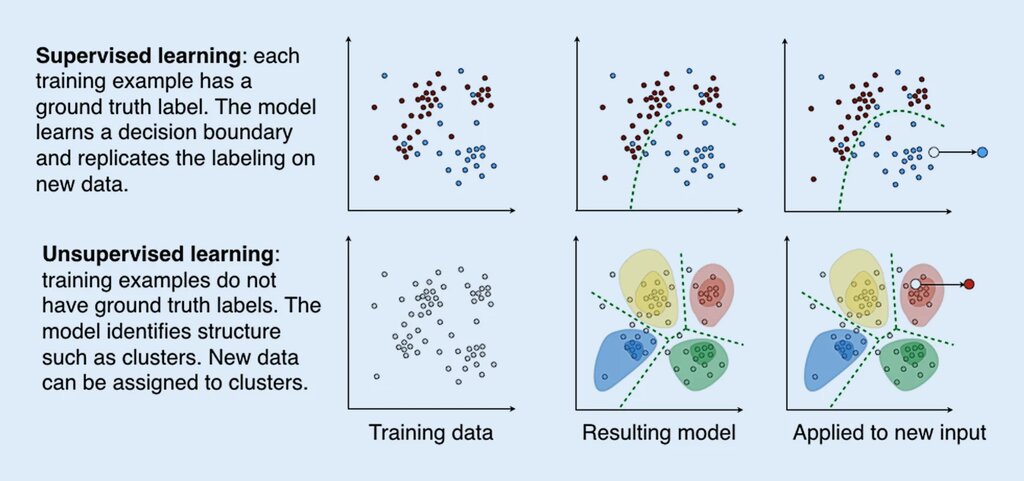
Let's start with the most common type: supervised learning. This is like studying for a test with an answer key. The machine is given a dataset where the correct answers are already labeled. For example, to build a spam filter, you'd feed the algorithm thousands of emails, each one labeled as either "spam" or "not spam."
The algorithm studies these examples and learns the features that distinguish junk mail from important messages. Over time, it gets good enough to make accurate predictions on new, unlabeled emails that arrive in your inbox. It's "supervised" because we guide its learning process with the correct answers.
Next is unsupervised learning, where the machine is on its own. There's no answer key. Instead, the algorithm is given a jumble of data and asked to find any hidden structures or patterns within it. It's like being handed a box of mixed Lego bricks and sorting them by color and shape without any instructions.
This is useful for tasks like customer segmentation, where a company might want to group customers with similar purchasing habits to tailor its marketing. The algorithm identifies these groups automatically, revealing insights that might not have been obvious.
Finally, there's reinforcement learning. This method is all about trial and error, much like how you might train a pet with treats. An algorithm, often called an "agent," learns by performing actions in an environment to achieve a goal. When it makes a good move, it gets a reward. When it makes a bad one, it gets a penalty.
The agent's objective is to maximize its total reward over time. This approach is powerful for training AIs to play complex games like chess or Go, or for teaching a robot how to walk. The agent learns from its mistakes and gradually discovers the best strategies to succeed.
Machine Learning in Your Daily Life
You might not realize it, but you likely interact with machine learning systems every day. They work behind the scenes to make technology more helpful and personalized.
When a streaming service suggests a show you end up loving, that's machine learning. When your phone's camera automatically enhances a photo, that's machine learning, too. It's used for fraud detection on your credit card, language translation apps, and the navigation systems that find the fastest route home.
These applications are just the beginning. As we collect more data and develop smarter algorithms, machine learning will continue to find new ways to solve problems and change how we interact with the world.
What is the primary difference between machine learning and traditional programming?
An e-commerce company wants to group its customers into different segments based on their purchasing habits, but it doesn't have any predefined categories for these groups. Which type of machine learning would be most suitable for this task?