Introduction to Machine Learning
Introduction to Machine Learning
What Is Machine Learning?
Machine learning is a way of teaching computers to find patterns in data. Instead of writing explicit, step-by-step instructions for every task, we let the computer learn from examples. It's like showing a child pictures of cats until they can recognize a cat on their own, without you describing exactly what a cat looks like every time.
This ability to learn from experience is what makes machine learning so powerful. It's the engine behind personalized movie recommendations, spam filters that protect your inbox, and medical tools that can spot diseases in scans. By analyzing vast amounts of data, these systems can make predictions, classify information, and make decisions with increasing accuracy.
Machine Learning
noun
A field of artificial intelligence that uses statistical techniques to give computer systems the ability to "learn" from data, without being explicitly programmed.
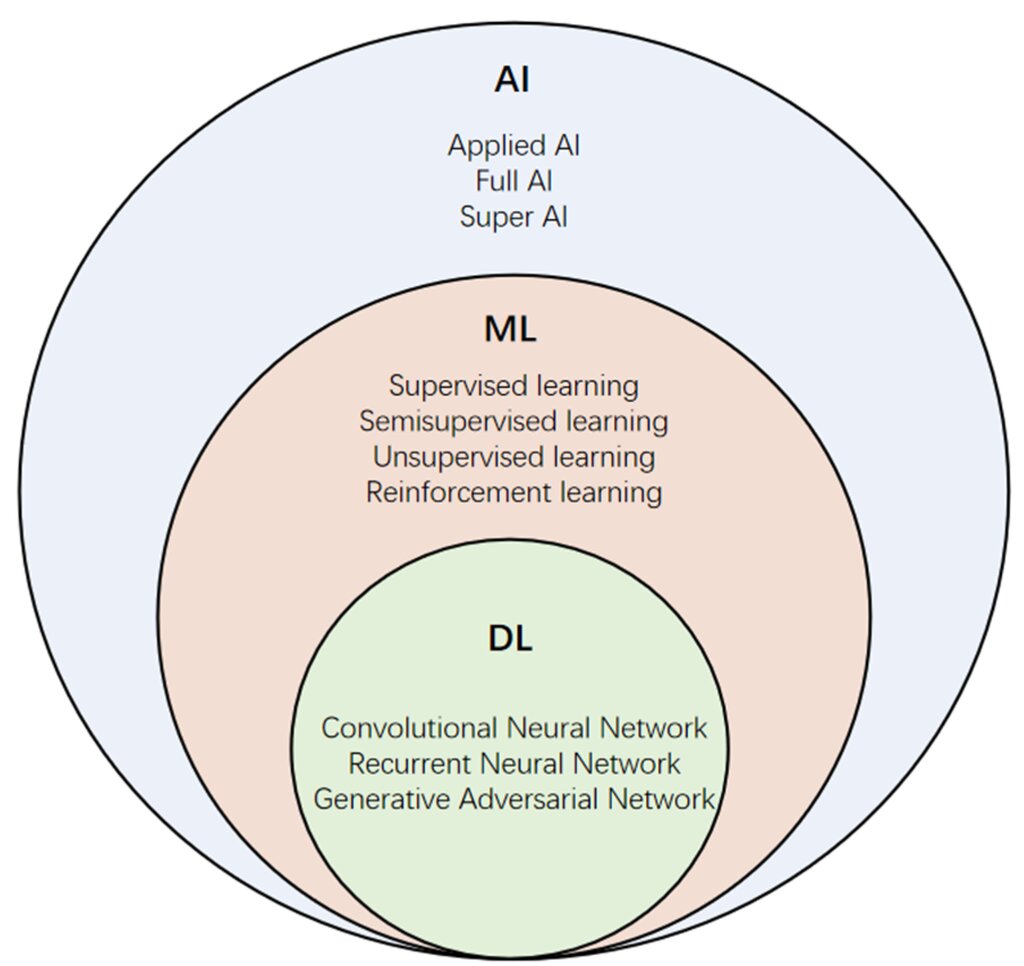
Machine learning is a subfield of Artificial Intelligence (AI). While AI is the broad concept of creating intelligent machines, machine learning is the primary method used to achieve it. Within machine learning, there's also a more complex area called Deep Learning, which uses structures inspired by the human brain to learn.
Three Ways Machines Learn
Machines don't all learn in the same way. The approach depends on the problem you're trying to solve and the kind of data you have. The three main types are supervised, unsupervised, and reinforcement learning.
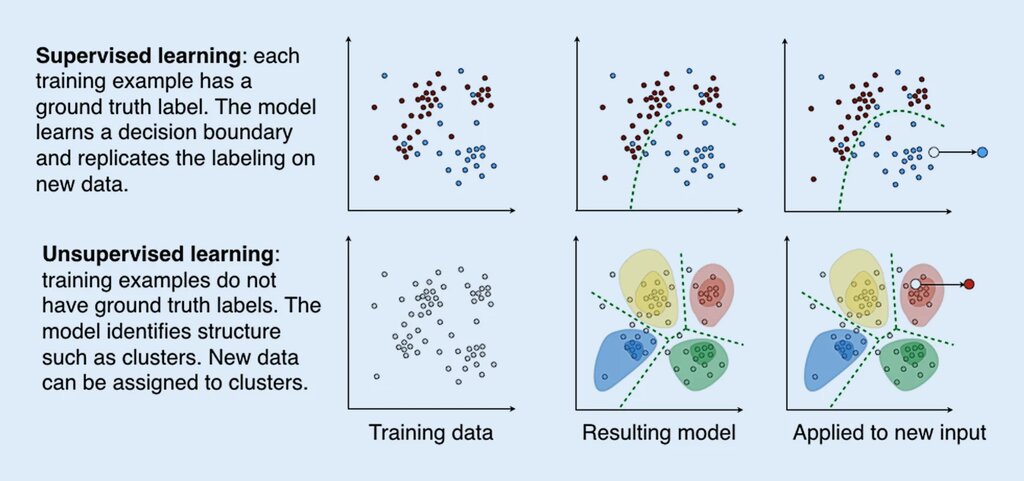
Supervised Learning This is the most common type of machine learning. In supervised learning, the computer learns from data that is already labeled. Think of it like learning with flashcards. Each card has an image (the input) and a name on the back (the correct output). After seeing enough examples, the model can identify the object in a new, unseen picture.
Real-world examples include:
- Email Spam Filters: The model learns from emails that have been labeled as "spam" or "not spam."
- Image Recognition: A model is trained on thousands of pictures of dogs, each labeled "dog," to learn how to identify them.
- Price Prediction: A model predicts house prices based on historical data where the price (label) is known for houses with certain features (size, location, etc.).
Unsupervised Learning In unsupervised learning, the data has no labels. The goal is for the machine to find hidden patterns or structures on its own. Imagine being given a box of mixed fruits and being asked to sort them into groups. You might not know the names of the fruits, but you can group them by color, size, and shape.
Real-world examples include:
- Customer Segmentation: An e-commerce site groups customers with similar buying habits to create targeted marketing campaigns.
- Anomaly Detection: A bank's system flags unusual transactions that don't fit a customer's typical spending pattern.
- Recommendation Engines: Grouping similar movies or products together based on their features or who watched them.
Reinforcement Learning This type of learning is all about trial and error. The machine, or "agent," learns by performing actions and receiving rewards or penalties. It's like training a dog. When the dog sits on command, it gets a treat (reward). When it doesn't, it gets nothing (no reward). Over time, the agent learns which actions lead to the best rewards.
Real-world examples include:
- Game Playing: AI like AlphaGo learned to play the complex game of Go by playing against itself millions of times, rewarding moves that led to winning.
- Self-Driving Cars: A car learns to make safe driving decisions by being rewarded for actions like staying in its lane and penalized for actions that could lead to an accident.
- Robotics: A robot learns to pick up an object by trying different grips and motions until it finds one that works consistently.
The Machine Learning Workflow
Developing a machine learning model isn't a single step but an iterative process. It involves several key phases to go from a raw idea to a functional application. While the details can get complex, the overall workflow is quite logical.
Developing a machine learning model is an iterative process that consists of several phases: starting with requirements engineering, data gathering, preprocessing, and feature engineering; moving on to model training and tuning; and ending with model evaluation, deployment, and monitoring.
Here’s a simplified look at the typical lifecycle of a machine learning project.
- Data Collection: The process starts with gathering relevant data. This could be anything from spreadsheets and customer databases to images and text.
- Data Preparation: Raw data is often messy. This step involves cleaning it, handling missing values, and formatting it in a way the model can understand.
- Model Training: This is where the learning happens. The prepared data is fed into a chosen algorithm, which adjusts its internal parameters to find patterns.
- Model Evaluation: Once the model is trained, it needs to be tested on new, unseen data to see how well it performs. This tells us if it has actually learned or just memorized the training data.
- Deployment: If the model performs well, it's put into a real-world application where it can start making predictions or decisions.
This cycle often repeats as new data becomes available or as we find ways to improve the model's performance.
Now that you have a grasp of the fundamentals, let's test your knowledge.
What is the primary difference between machine learning and traditional programming?
An online store wants to group its customers into different segments based on their purchasing habits to send them targeted marketing emails. Which type of machine learning would be most suitable for this task?
Understanding these core concepts is the first step into the exciting world of machine learning.