Introduction to Machine Learning Concepts
Introduction to Machine Learning
What Is Machine Learning?
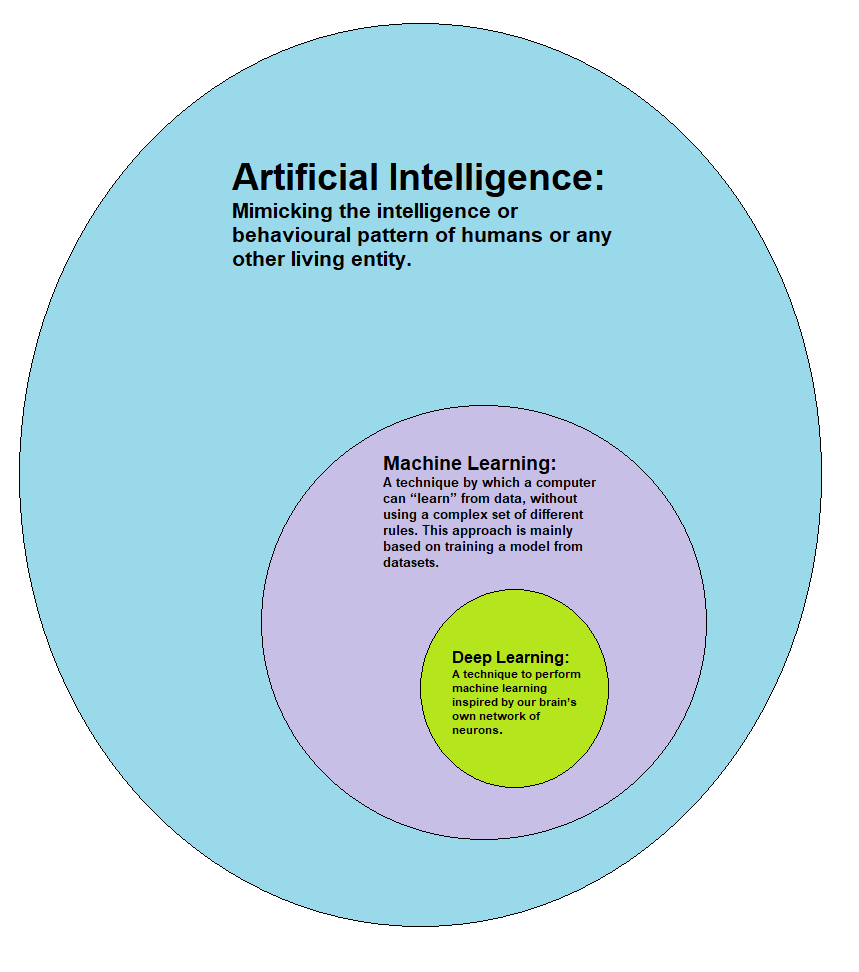
Machine learning is a way of teaching computers to find patterns and make decisions from data, rather than being explicitly programmed for a specific task. Think about how you learned to identify a cat. No one gave you a long list of rules like "if it has pointy ears, whiskers, and a long tail, it's a cat." Instead, you saw many examples of cats and eventually, your brain learned to recognize them on its own.
Machine learning works in a similar way. We give a computer system lots of examples—pictures, numbers, text—and it learns the underlying patterns. This ability to learn from experience is what makes it so powerful. It allows computers to tackle complex problems where the rules are too complicated for a human to write down, like predicting the weather or recognizing speech.
A New Way to Program
For decades, programming meant giving a computer a precise set of instructions to follow. To build a spam filter with this traditional approach, a programmer would have to write rules by hand. They might tell the computer to flag emails containing specific words like "free money" or "urgent offer."
This works, but it's brittle. Spammers can easily change their tactics to get around these fixed rules. The programmer would have to constantly update the code to keep up.
Machine learning flips this model on its head. Instead of writing rules, we provide data. We show the machine learning model thousands of emails that we've already marked as spam and thousands that are not. The model then learns the characteristics of spam on its own. It might notice that spam emails often come from strange addresses, use a lot of capital letters, or contain certain types of links. The result is a smarter, more adaptable filter that gets better over time as it sees more examples.
| Traditional Programming | Machine Learning | |
|---|---|---|
| Input | Data & Explicit Rules | Data & Expected Outcomes |
| Process | Computer executes rules | Computer learns patterns from data |
| Output | An answer | A model that can find answers |
| Example | A calculator that adds numbers based on the rules of arithmetic. | A system that learns to predict house prices based on historical sales data. |
Three Flavors of Learning
Machine learning isn't a single technique but a broad field with several different approaches. The three main types are supervised, unsupervised, and reinforcement learning. Each is suited for different kinds of problems.
Supervised learning is like studying with flashcards. The data is "labeled," meaning each piece of information already has the correct answer attached. The goal is to learn the mapping between the input and the output so you can make accurate predictions on new, unseen data. Email spam filtering is a classic example.
Unsupervised learning is like being a detective dropped at a crime scene with no initial clues. The data is unlabeled, and the goal is to discover interesting structures or patterns on your own. This is useful for tasks like customer segmentation, where a business might want to group similar customers together to better understand their behavior, without knowing the groups beforehand.
Reinforcement learning is about learning through trial and error. An agent, like a robot or a game-playing AI, learns by interacting with an environment. It receives rewards for good actions and penalties for bad ones. Over time, it learns a strategy, or "policy," that maximizes its total reward. This is the approach used to train AIs that can beat the world's best players in games like Go and chess.
Machine Learning in the Wild
Machine learning is not a futuristic concept; it's already a part of our daily lives. When you use a search engine, machine learning algorithms rank the results to show you the most relevant links. When a streaming service recommends a movie you might like, it's using machine learning to predict your taste based on your viewing history.
Other common applications include:
- Image Recognition: Identifying faces in photos on social media or helping self-driving cars "see" pedestrians and other vehicles.
- Natural Language Processing (NLP): Powering virtual assistants like Siri and Alexa, and translating text from one language to another.
- Medical Diagnosis: Analyzing medical images like X-rays and MRIs to help doctors detect diseases earlier and more accurately.
- Fraud Detection: Spotting unusual patterns in credit card transactions to prevent fraudulent purchases.
These examples are just the beginning. As we collect more data and develop more powerful algorithms, machine learning will continue to transform industries and change the way we interact with technology.
How does machine learning fundamentally differ from traditional programming?
A data scientist is training a model to identify spam emails. They have a large dataset where each email is already labeled as either 'spam' or 'not spam'. Which type of machine learning is this?
This is a foundational concept in a rapidly evolving field. By understanding the core ideas, you're better equipped to see how it shapes the world around us.