Introduction to Machine Learning
Introduction to Machine Learning
What Is Machine Learning?
Machine learning gives computers the ability to learn from data without being explicitly programmed. Think about how you learned to recognize a cat. You weren't given a long list of rules like "if it has pointy ears, whiskers, and a long tail, it's a cat." Instead, you saw many examples of cats and eventually, your brain learned to identify them on its own. Machine learning works in a similar way.
Instead of writing step-by-step instructions, we feed a computer vast amounts of data. The computer then builds its own model, or set of rules, for a specific task. This approach is powerful for problems that are too complex to solve with traditional programming, like predicting the weather, identifying spam emails, or recommending your next favorite song.
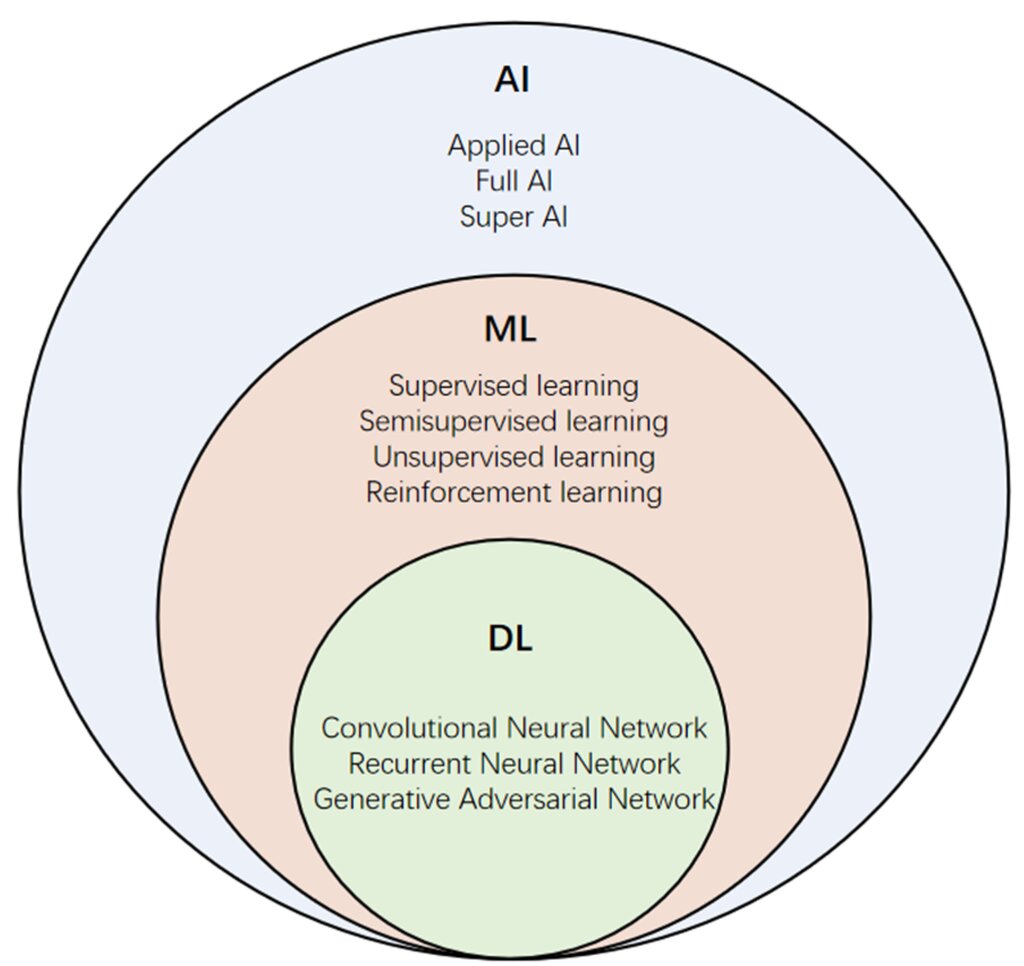
Machine learning is a subfield of Artificial Intelligence (AI). It's the engine that powers many of the smart applications we use every day.
Three Ways to Learn
Just as people have different learning styles, machine learning models have different ways of learning from data. These methods are typically grouped into three main categories: supervised, unsupervised, and reinforcement learning.
Supervised Learning: Learning with a Teacher
In supervised learning, the machine learns from data that is already labeled with the correct answers. It’s like studying for a test with a set of flashcards that have questions on the front and answers on the back. The algorithm's goal is to learn the relationship between the inputs (the questions) and the outputs (the answers) so it can make accurate predictions on new, unseen data.
A classic example is an email spam filter. The model is trained on thousands of emails that have been pre-labeled by humans as either "spam" or "not spam." After training, it can look at a new, unlabeled email and predict whether you should see it in your inbox.
Unsupervised Learning: Finding Patterns on Its Own
With unsupervised learning, the data has no labels. The machine is given a dataset and must find its own patterns and structures within it. Imagine being handed a box of assorted fruits and being asked to sort them into groups. You might group them by color, shape, or size without ever being told the names of the fruits.
This method is useful for tasks like customer segmentation, where a business wants to group customers with similar purchasing habits to better target marketing campaigns. The algorithm finds these groups without any prior knowledge of who should belong where.
Reinforcement Learning: Learning from Experience
Reinforcement learning is about learning through trial and error. The algorithm, often called an "agent," interacts with an environment and receives rewards or penalties for its actions. It’s similar to how you might train a pet. When the pet performs a trick correctly, it gets a treat (a reward). When it doesn’t, it gets a gentle correction (a penalty).
Over time, the agent learns which actions lead to the highest cumulative reward. This approach is commonly used in robotics, to teach a robot to walk, or in game-playing AI, where an agent learns to master a game by playing it over and over again.
Machine Learning in Action
Machine learning is all around us. When Netflix suggests a movie you might like, it's using ML to analyze your viewing history and compare it to millions of other users. When you ask a voice assistant like Siri or Alexa a question, machine learning is at work processing your speech and finding the answer.
Other common applications include:
- Recommendation Engines: Found on sites like Amazon and Spotify, they predict what you might want to buy or listen to next.
- Image Recognition: Used in social media to automatically tag friends in photos and in self-driving cars to identify pedestrians and traffic signs.
- Financial Trading: Algorithms predict market fluctuations to make automated trading decisions.
- Medical Diagnosis: Models analyze medical images like X-rays and MRIs to help doctors detect diseases earlier and more accurately.
Let's test your understanding of these foundational ideas.
What is the primary difference between machine learning and traditional programming?
A bank wants to group its customers into different segments based on their transaction history without any predefined categories. Which type of machine learning would be most suitable for this task?
These three learning paradigms—supervised, unsupervised, and reinforcement—form the bedrock of machine learning. By understanding them, you can start to see how machines are taught to make sense of the world's complex data.