Introduction to Machine Learning
Introduction to Machine Learning
What is Machine Learning?
Machine Learning (ML) gives computers the ability to learn without being explicitly programmed. Instead of writing step-by-step instructions for every possible scenario, developers create algorithms that allow a computer to learn from data, identify patterns, and make decisions on its own.
Think about how a child learns to recognize a cat. You don't give them a list of rules like "if it has pointy ears, whiskers, and a long tail, it's a cat." Instead, you show them different cats. Over time, the child's brain identifies the common features and learns to recognize a cat, even one it has never seen before. Machine learning works in a similar way, but with data instead of real-world experiences.
It's a subfield of Artificial Intelligence (AI). While AI is the broader concept of creating intelligent machines, machine learning is the primary method used to achieve it today.
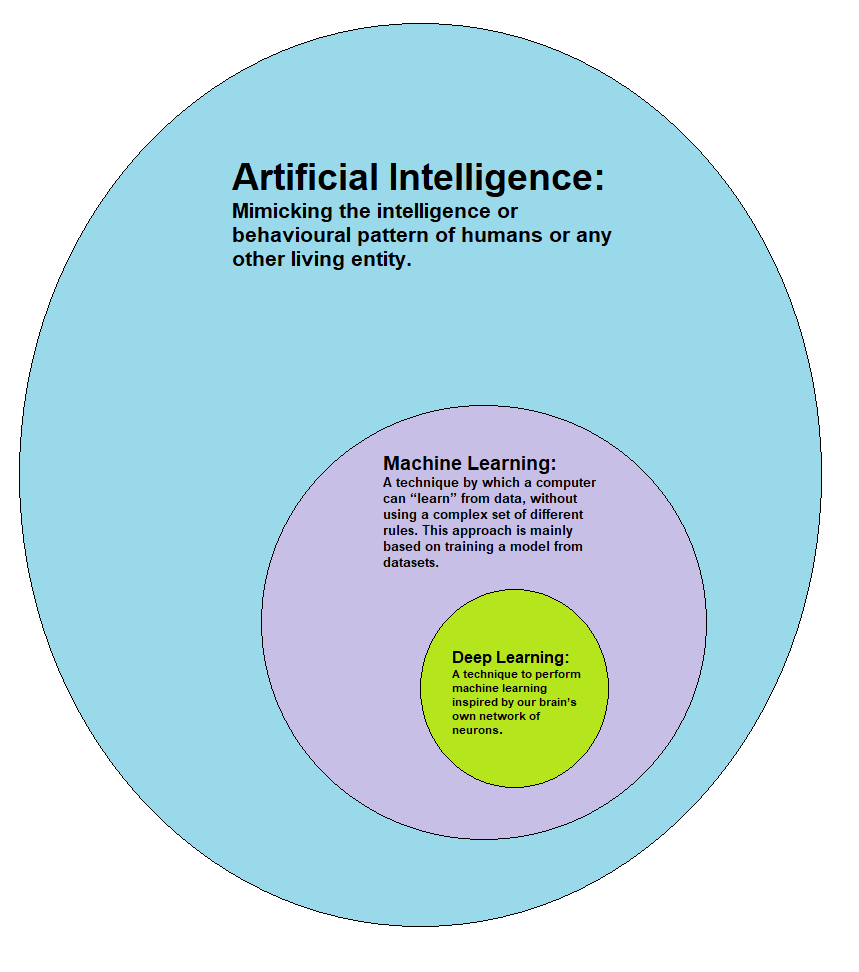
The significance of ML is its ability to process and find insights in massive datasets that would be impossible for a human to analyze. This makes it a powerful tool for everything from recommending movies to detecting diseases.
The Main Flavors of Machine Learning
Machine learning isn't a one-size-fits-all approach. There are three main ways a machine can learn, each suited for different kinds of problems.
The three main types of machine learning are supervised, unsupervised, and reinforcement learning.
Supervised Learning
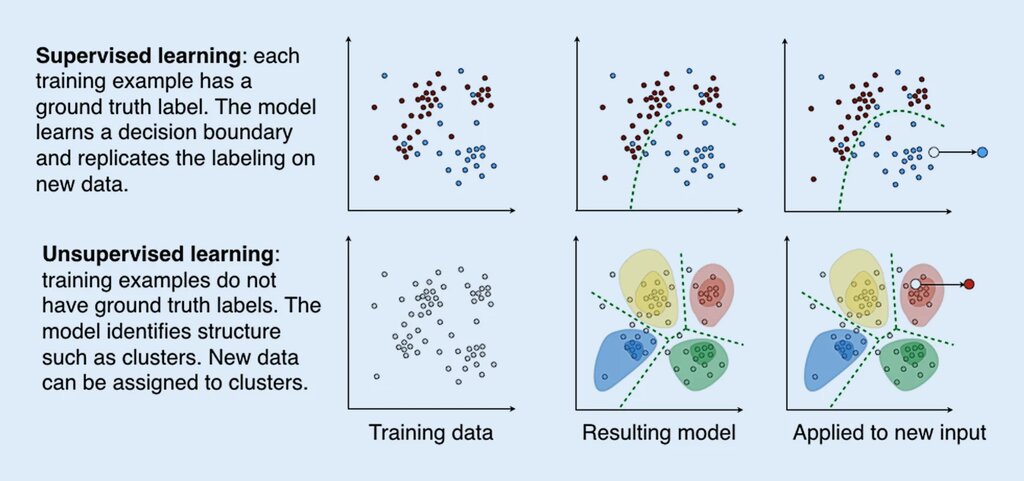
This is the most common type of machine learning. In supervised learning, the computer learns from data that is already labeled. It's like a student learning with a teacher. The algorithm is given a dataset where the "correct answers" are already known.
For example, to train a model to identify spam emails, you would feed it thousands of emails that have been pre-labeled as either "spam" or "not spam." The model learns the features associated with each label (like certain words or sender addresses) and then uses that knowledge to classify new, unlabeled emails.
Unsupervised Learning
In unsupervised learning, the data has no labels. The computer is on its own to find patterns and structure within the data. It's like being given a box of mixed fruits and asked to sort them without knowing their names. You might group them by color, size, or shape.
This method is great for tasks like customer segmentation, where a business might want to group customers based on their purchasing habits to create targeted marketing campaigns. The algorithm identifies these groups without any prior labels telling it which customer belongs to which group.
Reinforcement Learning
Reinforcement learning is about taking suitable actions to maximize reward in a particular situation. It is inspired by how humans and animals learn from the consequences of their actions.
The algorithm, often called an "agent," learns through trial and error. It receives rewards for correct actions and penalties for incorrect ones. The goal is to learn the best strategy, or "policy," to get the most rewards over time. This is the same principle used to train a dog with treats and praise.
Reinforcement learning is the powerhouse behind AIs that can master complex games like Chess or Go, and it's also used to teach robots how to perform tasks in the physical world.
Machine Learning in the Wild
Machine learning is already a part of our daily lives, often in ways we don't even notice. From personalized recommendations to navigating traffic, ML models are working behind the scenes to make services smarter and more efficient.
| Industry | Application | How it Works |
|---|---|---|
| E-commerce | Product Recommendations | Analyzes your past purchases and browsing history to suggest items you might like. |
| Healthcare | Medical Image Analysis | Trains on thousands of scans (X-rays, MRIs) to help doctors detect diseases earlier. |
| Finance | Fraud Detection | Identifies unusual patterns in transaction data to flag potentially fraudulent activity. |
| Entertainment | Content Suggestions | Powers the recommendation engines of services like Netflix and Spotify. |
| Transportation | Ride-Sharing Services | Predicts demand, sets prices, and calculates optimal routes for drivers. |
Now that you have a grasp of the fundamental concepts, let's test your knowledge.
What is the primary characteristic that defines Machine Learning?
You are building a system to predict housing prices. You have a dataset of past sales that includes features like square footage and number of bedrooms, along with the final sale price for each house. Which type of machine learning is most appropriate for this task?
Understanding these core paradigms—supervised, unsupervised, and reinforcement learning—is the first step into the expansive world of machine learning.