Introduction to Machine Learning
Introduction to Machine Learning
What Is Machine Learning?
Machine learning is a way of teaching computers to find patterns. Instead of writing step-by-step instructions for every possible situation, we give the computer a lot of data and let it figure out the rules on its own. It learns from experience, much like we do.
Think about how you learned to identify a dog. You weren't given a long list of rules like "if it has four legs, fur, and a tail, it's a dog." Instead, you saw many different dogs—big ones, small ones, fluffy ones, loud ones. Your brain automatically learned the general pattern of what a "dog" is. Machine learning works in a similar way. An algorithm sifts through thousands of pictures of dogs, learning the common features, until it can spot a dog in a photo it has never seen before.
This ability to learn from data is what makes machine learning so powerful. It's the engine behind the personalized movie recommendations you get, the spam filters that keep your inbox clean, and the navigation apps that find the fastest route home.
The Main Flavors of Learning
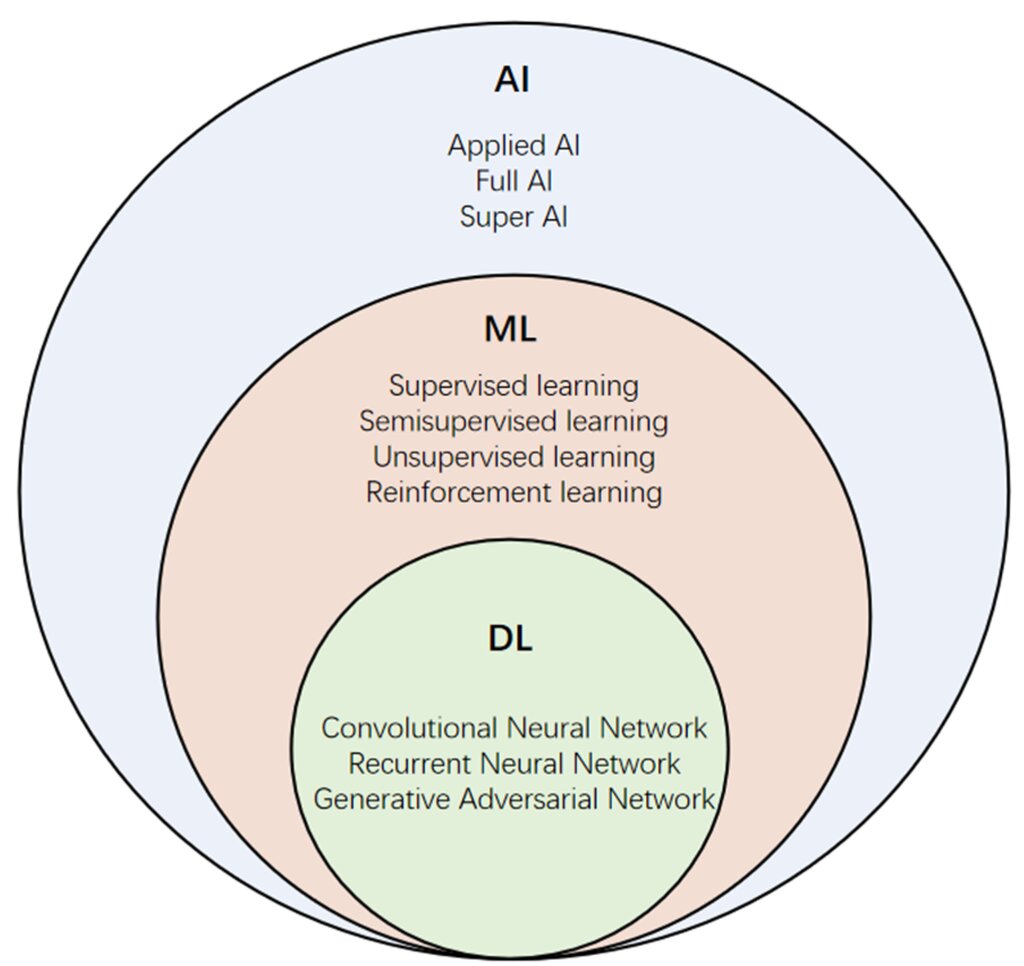
Machine learning isn't just one single technique. It's a broad field with several different approaches. The three most common types are supervised, unsupervised, and reinforcement learning. The right one to use depends on the problem you're trying to solve and the kind of data you have.
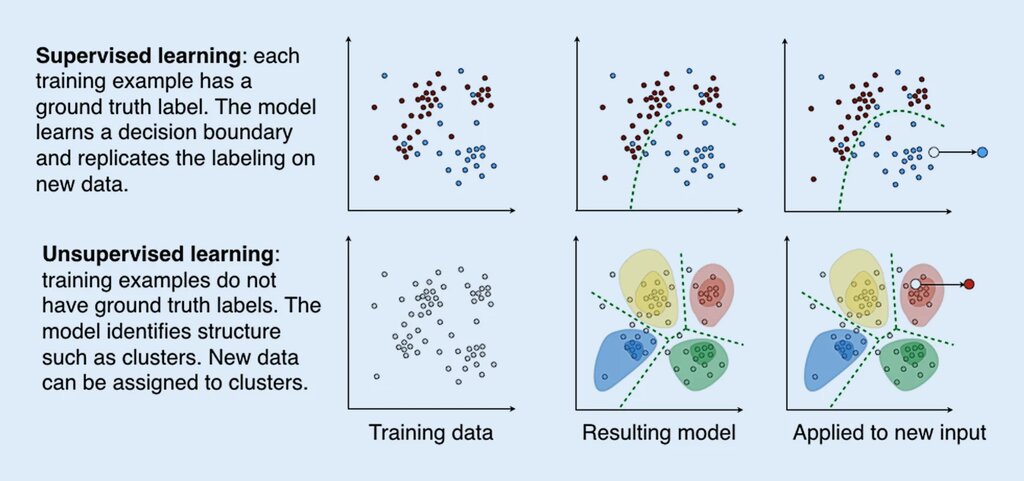
Supervised learning uses labeled data to make predictions.
This is the most common type of machine learning. "Supervised" means the algorithm learns from a dataset that has been labeled with the correct answers. It's like studying for a test with a stack of flashcards. Each card has a question (the input) and the correct answer (the output label).
The algorithm's job is to find the relationship between the inputs and their corresponding outputs. A classic example is an email spam filter. It's trained on a huge dataset of emails that have already been labeled by humans as either "spam" or "not spam." By analyzing these examples, the model learns which words, phrases, or senders are associated with junk mail. Once trained, it can predict whether a new, unlabeled email is spam.
Unsupervised learning finds hidden patterns in unlabeled data.
What if you don't have an answer key? That's where unsupervised learning comes in. With this approach, the algorithm is given data without any labels and is asked to find the underlying structure on its own. It's like being handed a box of mixed Lego bricks and sorting them into piles based on color, shape, and size.
Online retailers use this method for customer segmentation. An algorithm might analyze customer purchase histories and group them into clusters—for example, "budget-conscious weekend shoppers" or "high-end tech enthusiasts." The company didn't define these groups beforehand; the algorithm discovered them by identifying patterns in the shopping data.
Reinforcement learning learns from trial and error.
This type of learning is inspired by how animals (and people) learn from the consequences of their actions. An algorithm, called an "agent," is placed in an environment and learns to achieve a goal by performing actions and getting rewards or penalties in return.
Imagine teaching a dog a new trick. When it performs the correct action, you give it a treat (a reward). When it does something else, it gets nothing (a penalty). Over time, the dog learns which actions lead to a treat. Reinforcement learning works the same way. Self-driving cars use it to learn things like when to change lanes, rewarding the model for safe and efficient maneuvers and penalizing it for actions that could lead to an accident. It's also the secret behind computers that can master complex games like Chess or Go.
A Quick Trip Through Time
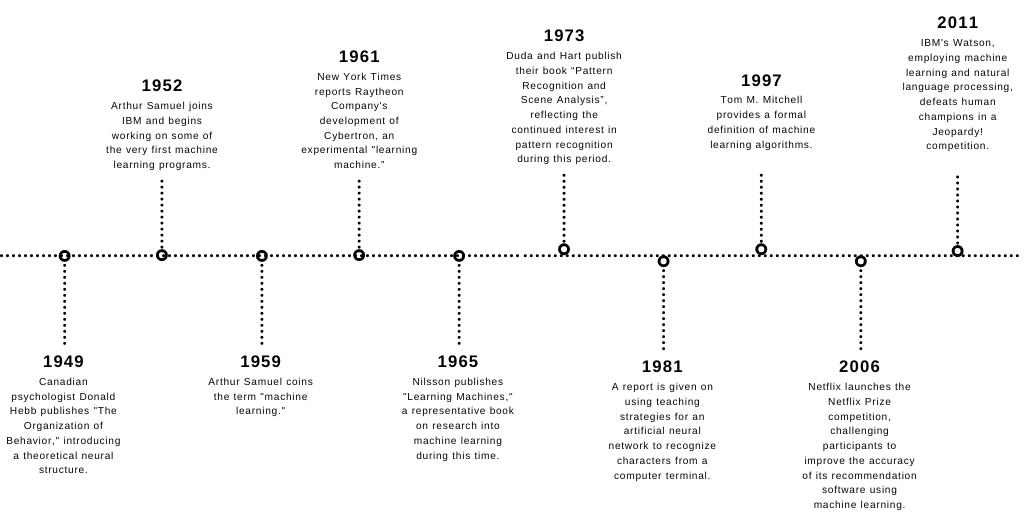
The idea of a thinking machine isn't new, but the field of machine learning really began to take shape in the mid-20th century. Early concepts were mostly theoretical, limited by the high cost and low power of computers. In 1959, Arthur Samuel, a pioneer at IBM, coined the term "machine learning" while working on a program that learned to play checkers better than he could.
For decades, progress was steady but slow. The field was dominated by a few dedicated researchers in universities and corporate labs. But in the 1990s and 2000s, two things changed everything: the explosion of the internet, which created massive amounts of data, and the rapid increase in affordable computing power.
Suddenly, algorithms that were once impractical could be trained on vast datasets. This shift has fueled the AI boom we see today, transforming entire industries from finance and healthcare to entertainment and transportation. Machine learning is no longer just an academic curiosity; it's a fundamental technology shaping our world.
Now that you understand the basic concepts, let's test your knowledge.
What is the primary difference between machine learning and traditional programming?
An online retail company wants to group its customers into different market segments based on their purchasing behavior, without any predefined categories. Which type of machine learning would be most suitable for this task?