Introduction to Machine Learning
Introduction to Machine Learning
What is Machine Learning?
Machine learning is a way of teaching computers to find patterns in data. Instead of writing explicit, step-by-step instructions for every single task, we let the computer learn from examples. It's like showing a child thousands of pictures of cats to teach it what a cat looks like, rather than trying to describe a cat with a long list of rules.
Machine Learning
noun
A field of artificial intelligence that uses statistical techniques to give computer systems the ability to "learn" from data, without being explicitly programmed.
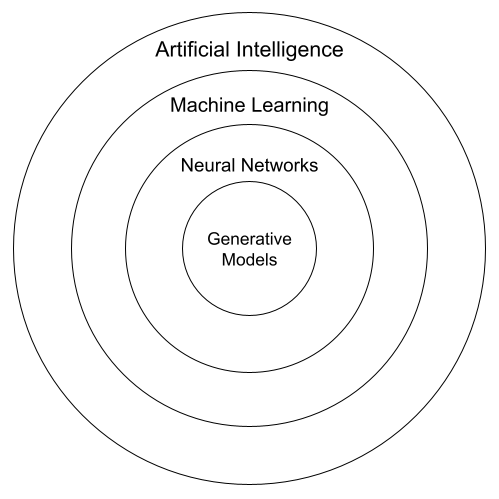
This ability to learn from data is what makes machine learning so powerful. It's a key part of artificial intelligence (AI), but it's not the whole story. Think of AI as the broad goal of creating intelligent machines, and machine learning as one of the most effective methods we have to achieve that goal.
Two Ways to Learn
Machine learning models generally learn in one of two ways. The most common approach is called supervised learning.
In supervised learning, the computer learns from data that has already been labeled with the correct answers. The goal is to learn a mapping function that can predict the output for new, unseen data.
Imagine training a model to predict house prices. You would feed it a dataset of houses where you already know the sale price (the label). For each house, you'd also provide features like square footage, number of bedrooms, and location. After seeing enough examples, the model learns the relationship between these features and the final price, allowing it to predict the price of a new house it has never seen before.
The other approach is unsupervised learning. Here, the data has no labels. The machine's task is to explore the data and find some structure on its own. It’s like being given a box of mixed-up LEGOs and asked to sort them into piles. You might group them by color, shape, or size without anyone telling you those were the categories to look for.
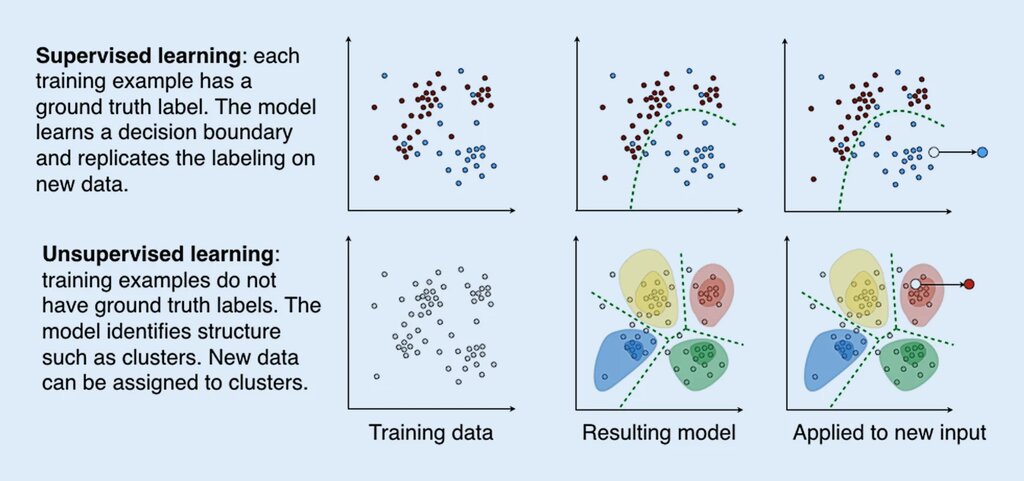
A common use for unsupervised learning is customer segmentation. A company might have a lot of data about its customers' purchasing habits. An unsupervised model can group customers into distinct segments—like "frequent bargain shoppers" or "high-end tech enthusiasts"—so the company can tailor its marketing efforts.
The Project Workflow
Creating a machine learning model isn't just about picking an algorithm and letting it run. It's a multi-step process that requires careful planning and execution.
Here’s a breakdown of the typical steps:
- Data Collection: First, you need data. This could come from anywhere—spreadsheets, databases, sensors, or websites. The quality and quantity of your data are crucial for success.
- Data Preprocessing: Raw data is often messy. It might have missing values, errors, or inconsistencies. This step involves cleaning and formatting the data to make it suitable for a model.
- Model Selection: Based on the problem you're trying to solve, you choose a type of machine learning model. For predicting a number (like a house price), you might use a regression model. For classifying something (like spam vs. not spam), you'd use a classification model.
- Model Training: This is where the learning happens. The model is fed the preprocessed data, and it adjusts its internal parameters to find patterns. For supervised learning, this means learning to map inputs to the correct outputs.
- Evaluation: Once the model is trained, you need to check how well it performs. You test it on a separate set of data it hasn't seen before to get an unbiased measure of its accuracy.
- Deployment: If the model performs well, it's ready to be put into a real-world application. This could mean integrating it into a mobile app, a website, or a business's internal software.
Machine Learning in the Wild
Machine learning isn't just a theoretical concept; it's already a part of our daily lives. Here are a few examples of its impact across different industries:
| Industry | Application | What it Does |
|---|---|---|
| Healthcare | Medical Imaging Analysis | Helps doctors detect diseases like cancer in X-rays and MRIs with greater accuracy. |
| Finance | Fraud Detection | Analyzes transaction patterns in real-time to identify and flag suspicious activity, preventing fraud. |
| Transportation | Self-Driving Cars | Uses data from sensors and cameras to navigate roads, identify obstacles, and make driving decisions. |
| Entertainment | Recommendation Engines | Suggests movies, shows, and music you might like based on your viewing history and the preferences of similar users. |
From personalizing your shopping experience to optimizing supply chains, machine learning is a versatile tool that is reshaping how we work and live.
Which statement best describes the fundamental principle of machine learning?
A bank wants to build a model to detect fraudulent credit card transactions. They have a large dataset of past transactions, each marked as either 'fraudulent' or 'legitimate'. Which type of machine learning is most suitable for this task?