Introduction to Machine Learning
Introduction to Machine Learning
Learning Without Instructions
Imagine trying to teach a computer to recognize a cat. With traditional programming, you'd write a long list of explicit rules: if it has whiskers, pointy ears, and a long tail, it might be a cat. But what about a cat with folded ears, or one whose tail is hidden? The rules quickly become impossibly complex.
Machine learning flips this approach. Instead of giving the computer instructions, you give it examples. Lots and lots of examples.
This is the core idea of machine learning, or ML. It's a field of artificial intelligence where systems learn to find patterns and make decisions from data, rather than being explicitly programmed for a specific task. Think of it less like a calculator following a pre-set formula and more like a student learning a new skill through practice.
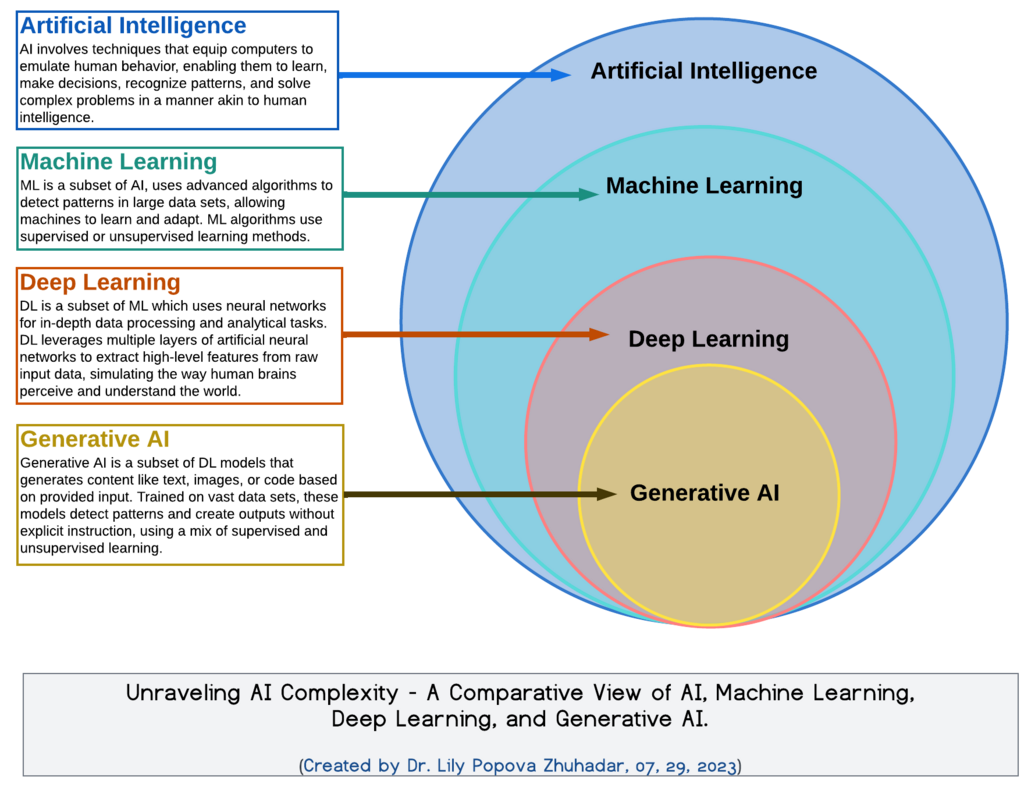
This ability to learn from data is what makes ML so powerful. It drives everything from your email spam filter and the recommendations on streaming services to complex applications like medical diagnoses and self-driving cars. The common thread is data. Data is the textbook from which the machine learns. Without good, plentiful data, a machine learning model can't learn effectively, much like a student can't learn history without history books.
Three Ways to Learn
Machine learning isn't a single technique but a broad field with several different approaches. The way a model learns depends on the kind of data it's given and the problem it's trying to solve. These approaches generally fall into three main categories: supervised, unsupervised, and reinforcement learning.
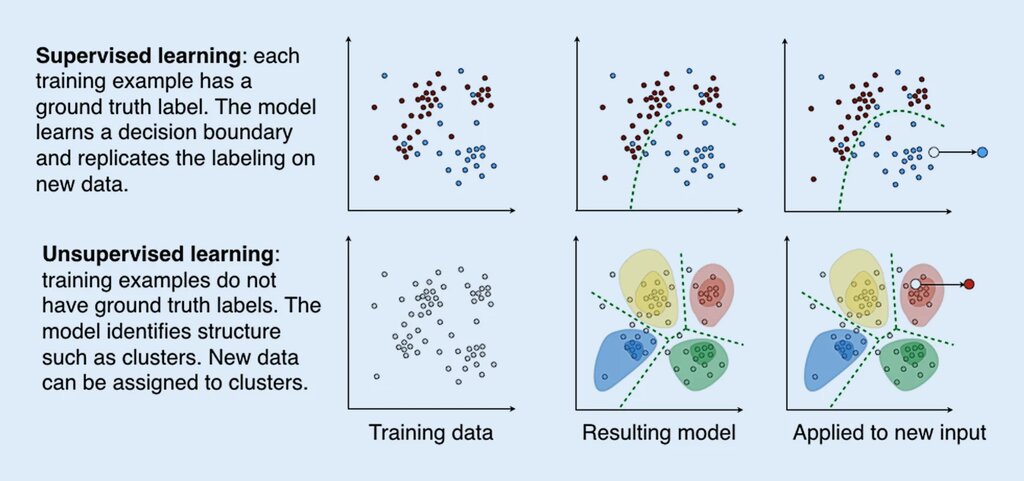
Supervised Learning This is like learning with a teacher. The model is given a dataset where each piece of data is labeled with the correct answer. For example, you'd feed it thousands of images labeled "cat" and thousands labeled "not a cat." The model's job is to learn the relationship between the input (the image) and the output (the label). After training, it can then look at a new, unlabeled image and predict whether it's a cat.
This is the most common type of machine learning and is used for tasks like predicting house prices based on features like size and location (regression) or identifying spam emails (classification).
In supervised learning, the goal is to predict a known outcome based on labeled examples.
Unsupervised Learning Now imagine giving the computer a massive folder of animal photos, but with no labels. The computer has no idea which are cats, dogs, or birds. In unsupervised learning, the model is asked to find patterns and structures in the data on its own.
It might group the photos into different clusters based on visual similarities. It won't know one cluster is "cats" and another is "dogs," but it will recognize that they are distinct groups. This is useful for tasks like customer segmentation, where a business wants to find natural groupings in its customer base without knowing the groups in advance.
Reinforcement Learning This is learning through trial and error, like teaching a dog a new trick. The model, often called an "agent," learns by interacting with an environment. It receives rewards for actions that lead to a good outcome and penalties for those that don't.
For instance, an AI learning to play a video game would get points (a reward) for advancing to the next level and lose points (a penalty) for losing a life. Over millions of attempts, it learns the sequence of actions that maximizes its total reward. Reinforcement learning is the powerhouse behind game-playing AIs and is also used in robotics and optimizing complex systems like energy grids.
| Learning Type | Data Requirement | Core Idea | Example |
|---|---|---|---|
| Supervised | Labeled Data | Learning from examples with correct answers | Spam detection |
| Unsupervised | Unlabeled Data | Finding hidden patterns or structures | Customer segmentation |
| Reinforcement | No initial data | Learning via trial and error with rewards | Game-playing AI |
These three paradigms are the foundation of machine learning, each offering a different way for machines to learn from experience and turn data into insight.
What is the fundamental difference between machine learning and traditional programming?
A machine learning model can learn effectively and make accurate predictions even without a large amount of good-quality data.