Introduction to Machine Learning
Introduction to Machine Learning
What Is Machine Learning?
Traditionally, we tell computers exactly what to do. A programmer writes explicit, step-by-step instructions, and the computer follows them. If you want a program to calculate a 15% tip, you write the exact formula for it. This works perfectly for problems with clear, fixed rules.
But what about problems where the rules aren't so clear? How would you write instructions for a computer to recognize a cat in a photo? You could try to define a cat by its features—whiskers, pointy ears, a tail—but you'd quickly find countless exceptions. A cat might be curled up, hiding its tail, or facing away from the camera.
Machine learning (ML) flips the script. Instead of giving the computer rules, we give it data and let it figure out the rules for itself.
It's a subfield of artificial intelligence that allows systems to learn patterns from data and make predictions or decisions without being explicitly programmed. Think of it as teaching by example. By showing a machine learning model thousands of cat photos, it learns to identify the common patterns that define a cat on its own.
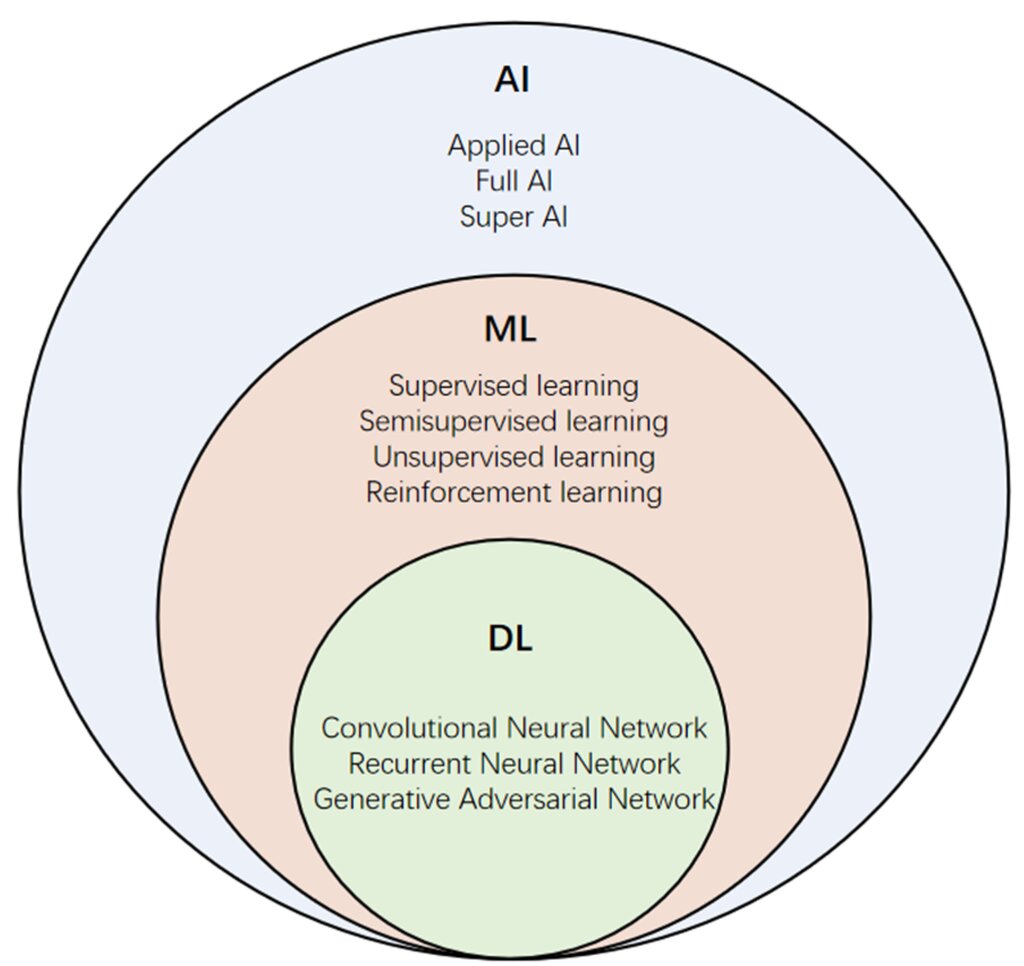
This ability to learn from data makes machine learning incredibly powerful. It drives everything from your email's spam filter and your favorite streaming service's recommendations to complex applications like medical diagnoses and self-driving cars. It's important because it allows us to tackle complex, large-scale problems that would be impossible to solve with traditional programming.
How Machines Learn
Machine learning isn't just one single technique. It's a broad field with several different approaches to learning. The three main types are supervised, unsupervised, and reinforcement learning.
Supervised Learning: Learning with an answer key.
In supervised learning, the model is trained on a dataset where the correct answers are already known. Each piece of data is labeled. For instance, to train a spam detector, you'd feed it a large number of emails that are already labeled as either "spam" or "not spam." The model's job is to learn the relationship between the content of an email and its label. After training, it can look at a new, unlabeled email and predict whether it's spam.
Unsupervised Learning: Finding patterns on its own.
What if you don't have labeled data? That's where unsupervised learning comes in. In this approach, the model is given a dataset without any explicit answers and must find the hidden patterns or structures on its own. A common use case is customer segmentation. An e-commerce company might use unsupervised learning to group its customers into different clusters based on their purchasing habits, without knowing in advance what those groups might be.
Reinforcement Learning: Learning through trial and error.
Reinforcement learning is modeled on how humans and animals learn. An algorithm, called an "agent," learns to make decisions by performing actions and getting feedback in the form of rewards or penalties. The goal is to maximize the total reward over time. This is the approach used to train computers to play complex games like chess or Go. The agent makes a move (an action), and if that move improves its chances of winning, it receives a reward. If the move is bad, it gets a penalty. Over millions of games, it learns the strategies that lead to the most rewards.
Machine Learning in Action
You interact with machine learning every day, often without realizing it. Here are just a few examples:
| Application | How It Works (Learning Type) |
|---|---|
| Recommendation Engines | Analyzes your past behavior (e.g., movies you've watched) to suggest new content you might like. (Supervised & Unsupervised) |
| Voice Assistants | Uses natural language processing, a type of ML, to understand and respond to your spoken commands. (Supervised) |
| Image Recognition | Identifies objects, people, and places in photos, used for everything from tagging friends on social media to medical imaging. (Supervised) |
| Fraud Detection | Banks use ML to identify unusual transaction patterns that might indicate fraudulent activity. (Unsupervised & Supervised) |
These applications are just the beginning. As data becomes more available and computing power increases, machine learning is finding its way into nearly every industry, solving problems and creating new possibilities.
Now, let's check your understanding of these core concepts.
What is the primary difference between machine learning and traditional programming?
Which of the following scenarios is the best example of supervised learning?
Understanding these fundamental types of machine learning is the first step toward appreciating how AI is shaping our world.