Introduction to Machine Learning
Introduction to Machine Learning
What is Machine Learning?
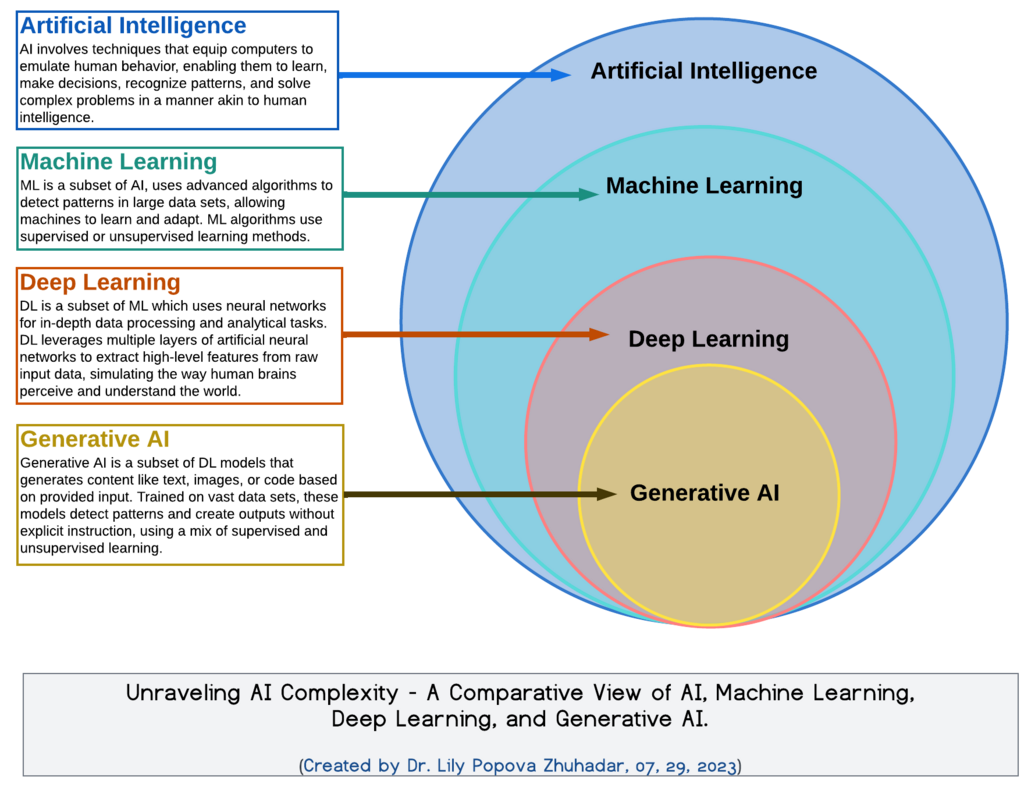
At its core, machine learning is about teaching computers to learn from experience, much like humans do. Instead of writing explicit, step-by-step instructions for every possible scenario, we give a computer a set of data and let it figure out the patterns on its own. It's a way to create programs that can adapt and improve over time.
Machine Learning
noun
A field of artificial intelligence (AI) that gives computers the ability to learn from data and improve their performance on a task without being explicitly programmed.
Think about the difference between a simple calculator and a spam filter. A calculator follows rigid rules: you input , and it always outputs . A spam filter, on the other hand, learns. It looks at thousands of emails you've marked as spam and learns to recognize the characteristics of junk mail. As spammers change their tactics, the filter adapts by learning from new examples.
This ability to learn from data is what makes machine learning so powerful. It's the engine behind personalized recommendations, voice assistants, and medical diagnostics.
Four Ways to Learn
Not all learning is the same. The best approach depends on the type of problem you're trying to solve and, most importantly, the kind of data you have. Machine learning is generally broken down into four main categories.
Let's explore each of these learning styles.
Supervised Learning
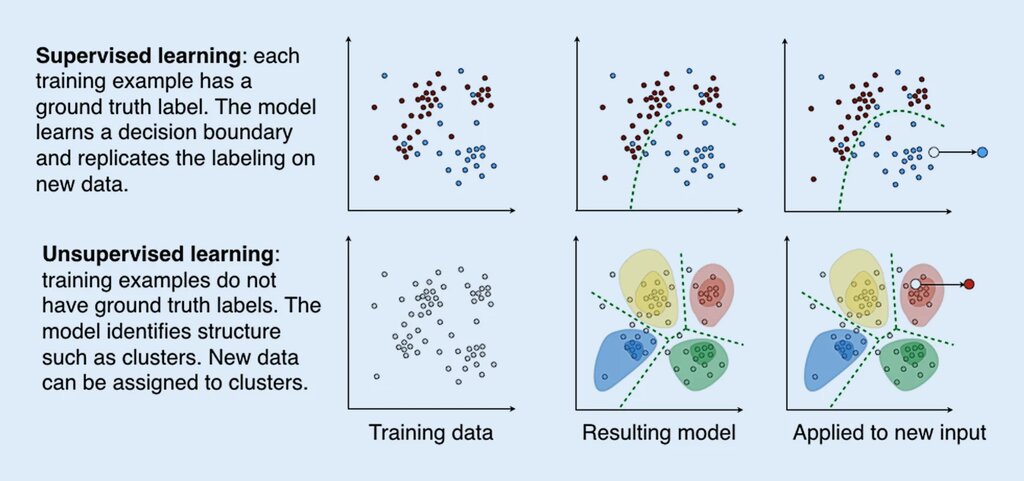
Supervised learning is like studying for a test with an answer key. The machine learning model is given a dataset where each piece of data is labeled with the correct outcome. The model's goal is to learn the relationship between the data and its label so it can predict the labels for new, unseen data.
For example, to train a model to identify pictures of cats, you would feed it thousands of images, each one explicitly labeled as either "cat" or "not a cat." After training, the model can look at a new picture and make an educated guess about whether it contains a cat.
Key takeaway: Supervised learning uses labeled data to make predictions.
This is the most common type of machine learning used today. It's fantastic for tasks like predicting house prices based on features like square footage and location, or classifying emails as spam.
Unsupervised Learning
Now, imagine you're given a box of mixed fruits but you don't know their names. You can still sort them into groups based on their characteristics like color, shape, and size. You might end up with a pile of small, red, round fruits (cherries), and another pile of long, yellow fruits (bananas). You don't know the labels, but you've found the structure.
That's unsupervised learning. The model is given a dataset without any labels and must find patterns or structures on its own. The most common task is clustering, which involves grouping similar data points together.
Key takeaway: Unsupervised learning finds hidden patterns in unlabeled data.
This method is useful for customer segmentation, where a business might want to find distinct groups of customers based on their purchasing habits. It's also used in biology to group genes with similar expression patterns.
Other Learning Methods
Supervised and unsupervised learning are the two main pillars, but two other types are also important.
Semi-Supervised Learning is a hybrid approach. It uses a small amount of labeled data along with a large amount of unlabeled data. This is useful when labeling data is expensive or time-consuming. For instance, a photo service could use a few thousand user-tagged photos (labeled) and millions of untagged photos (unlabeled) to build a powerful face recognition model.
Reinforcement Learning is about learning through trial and error. An 'agent' (the model) takes actions in an environment to maximize a cumulative reward. It's like teaching a dog a new trick. When the dog does the right thing, it gets a treat (a reward). Over time, it learns which actions lead to the best rewards.
This is the technology behind self-driving cars learning to navigate traffic and AI programs that can master complex games like Chess or Go.
What is the fundamental difference between a machine learning model, like a spam filter, and a traditional program, like a calculator?
A machine learning model is trained on a dataset of images, where each image is explicitly marked as either "cat" or "not a cat." What type of learning is this?
These learning paradigms form the foundation of machine learning, enabling computers to tackle an incredible range of complex problems.