Introduction to Machine Learning
Introduction to Machine Learning
Learning from Data
Machine learning is a way of teaching computers to find patterns. Instead of writing explicit, step-by-step instructions for every task, we give a computer a large amount of data and let it figure out the rules for itself. It’s the difference between giving someone a fish and teaching them how to fish. The goal is to create systems that can learn and adapt without being constantly reprogrammed.
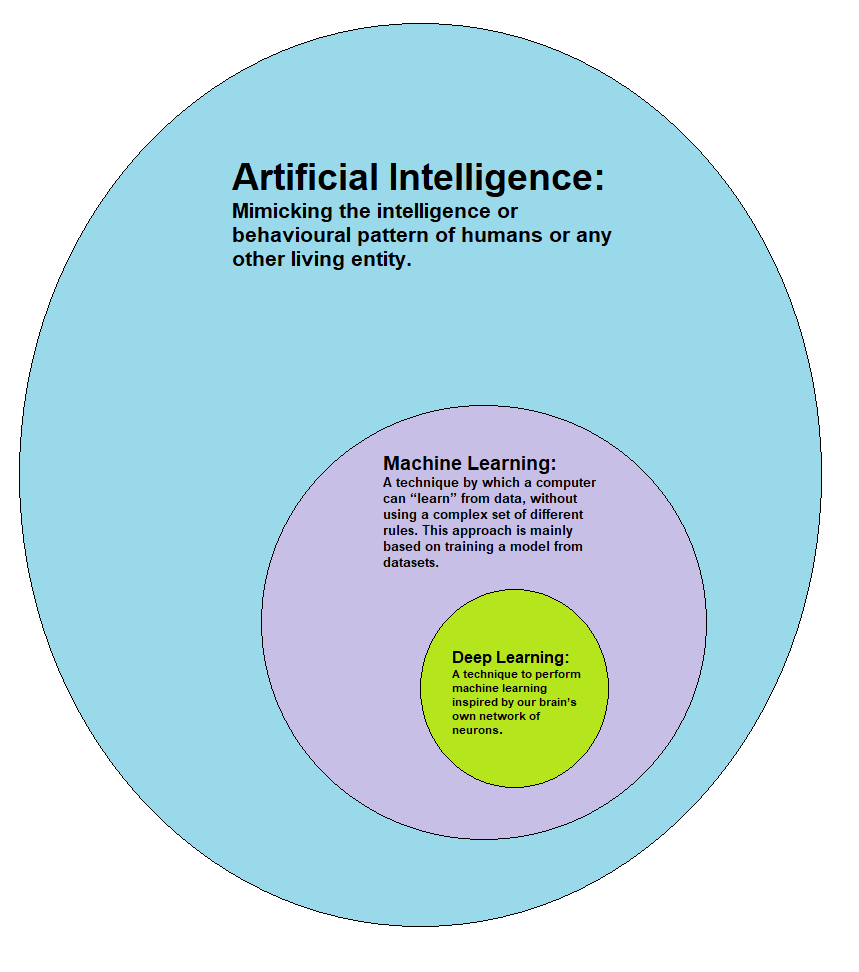
This ability to learn from data is what makes machine learning so powerful. It's the engine behind spam filters that adapt to new tricks from scammers, recommendation systems that know what you want to watch next, and medical tools that can spot diseases in images. It allows us to tackle problems that are too complex or change too quickly for a human to write a complete set of rules.
A New Way to Program
Traditional programming is deterministic. You write the rules, feed in data, and the computer provides answers based on those exact rules. If you want to identify cats in photos, you'd have to write code that describes what a cat looks like: pointy ears, whiskers, a certain eye shape. This is incredibly difficult and brittle; what about a cat with folded ears or one that's facing away?
Machine learning flips this around. We provide the computer with data (thousands of pictures labeled 'cat') and the answers. The computer's job is to figure out the rules for itself, creating a 'model' that can then identify cats in new, unseen photos.
| Traditional Programming | Machine Learning | |
|---|---|---|
| Input | Data + Rules | Data + Answers |
| Process | Computer executes explicit rules | Computer learns the rules from patterns |
| Output | Answers | Rules (a model) |
This shift from rule-based logic to pattern recognition allows us to solve a whole new class of problems. It excels where the rules are not well understood or are too numerous to write down by hand.
The Machine Learning Workflow
A machine learning project follows a general cycle. While the details can get complex, the basic steps are consistent. It's an iterative process that often involves circling back to earlier stages to refine and improve the outcome.
- Define Problem: What question are we trying to answer? For example, will this customer cancel their subscription?
- Gather Data: Collect the information needed to answer the question. This could be customer usage history, past purchases, and support tickets.
- Prepare Data: This is often the most time-consuming step. It involves cleaning the data (handling missing values, correcting errors) and getting it into a format the model can understand.
- Train Model: Here, we select an algorithm and feed it our prepared data. The algorithm learns the patterns connecting the inputs to the outcomes.
- Evaluate Model: We test the model's performance on new data it hasn't seen before. Is it accurate? Does it perform well enough to be useful?
- Deploy & Monitor: If the model is good, we put it into a real-world application. We then monitor its performance over time to make sure it stays accurate as new data comes in.
Three Flavors of Learning
Machine learning isn't a single technique. It's a broad field with several distinct approaches. The three main types are defined by the kind of data they use and the problem they solve.
Supervised Learning is like learning with a teacher. The model is given a dataset where the 'right answers' are already known. For example, you'd show it thousands of emails that have been labeled as either 'spam' or 'not spam.' The model's goal is to learn the function that maps the input (email text) to the output (the label). This is the most common type of machine learning, used for tasks like prediction and classification.
Unsupervised Learning is about finding structure on your own. Here, the data is not labeled. There are no right answers provided. The model's task is to explore the data and find some inherent structure or pattern. A common application is customer segmentation, where a business might want to group its customers into different marketing categories based on their behavior, without knowing those categories in advance.
Reinforcement Learning involves learning through trial and error. An 'agent' (the model) learns to behave in an environment by performing actions and seeing the results. Actions that lead to a good outcome are rewarded, and actions that lead to a bad outcome are penalized. Over time, the agent learns a strategy, or 'policy,' to maximize its reward. This is the approach used to train computers to play games like Go or to control robotic arms.
These three categories form the foundation of machine learning. By understanding them, you can begin to see how computers learn to solve problems that were once thought to be the exclusive domain of human intelligence.
Ready to test your knowledge?