Introduction to Machine Learning
Introduction to Machine Learning
What is Machine Learning?
Machine learning is a way of teaching computers to find patterns. Instead of writing explicit, step-by-step instructions for every single task, we give a computer a large amount of data and let it learn for itself. It's like showing a child thousands of pictures of cats until they can recognize a cat in a new photo they've never seen before.
This ability to learn from data is what makes machine learning so powerful. It's the engine behind personalized movie recommendations, spam filters that keep your inbox clean, and virtual assistants that understand your voice. As we generate more data than ever, machine learning helps us make sense of it all, automating tasks and uncovering insights that would be impossible for a human to find alone.
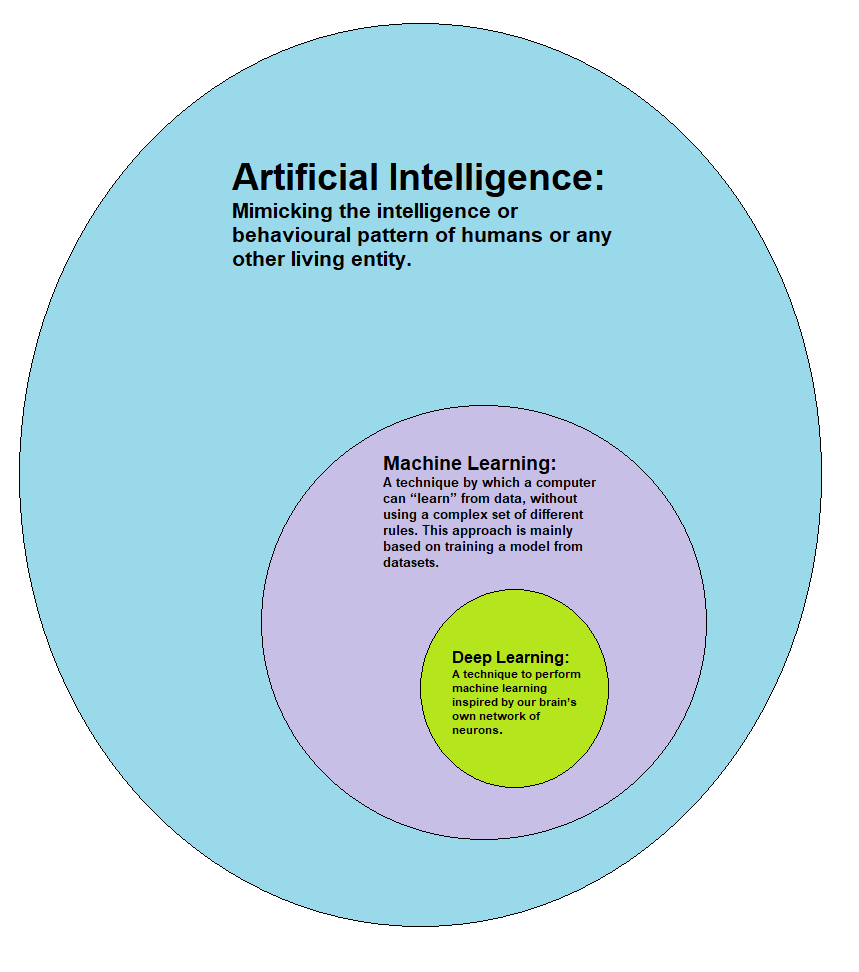
At its core, machine learning is about creating a model, which is a mathematical representation of a real-world process. The process of showing the model data so it can learn is called training. Just as people learn in different ways, so do machines.
Three Ways to Learn
Machine learning is generally broken down into three main categories, each defined by the way the model learns from the data.
Supervised Learning: Learning with an Answer Key
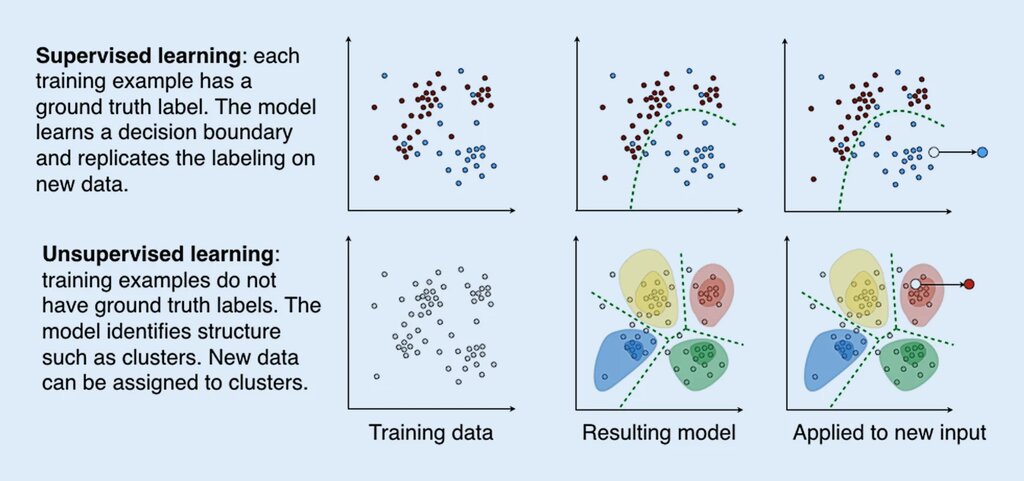
Supervised learning is like studying for a test with flashcards. You have a question on one side and the answer on the other. The data you feed the model is labeled, meaning each piece of data is tagged with the correct outcome.
The goal is for the model to learn the relationship between the inputs and the outputs, so it can eventually predict the output for new, unseen inputs. Your email's spam filter is a classic example. It learns from millions of emails that have been labeled as either "spam" or "not spam" to decide where a new email should go.
Unsupervised Learning: Finding Patterns on Its Own
What if you don't have an answer key? In unsupervised learning, the model receives data that isn't labeled. Its job is to explore the data and find hidden patterns or structures on its own. It's like being given a box of mixed Lego bricks and asked to sort them into groups based on color, shape, or size.
This is incredibly useful for tasks like customer segmentation, where a company might group its customers based on purchasing habits to create targeted marketing campaigns. It's also used for anomaly detection, like identifying unusual transactions that could signal credit card fraud.
Reinforcement Learning: Learning Through Trial and Error
Reinforcement learning is about learning to make decisions. The model, often called an "agent," learns by interacting with an environment. It performs actions and receives rewards or penalties based on the outcomes of those actions. The goal is to maximize the total reward over time.
Think of training a dog. When it sits on command, it gets a treat (a reward). When it chews the furniture, it gets a scolding (a penalty). Over time, the dog learns which actions lead to the best results. This approach is used to train AI to play complex games like chess and Go, and it also has applications in robotics and optimizing supply chains.
The Machine Learning Workflow
Developing a machine learning model isn't a single event; it's a cyclical process. While the details can get complex, the overall workflow follows a consistent path.
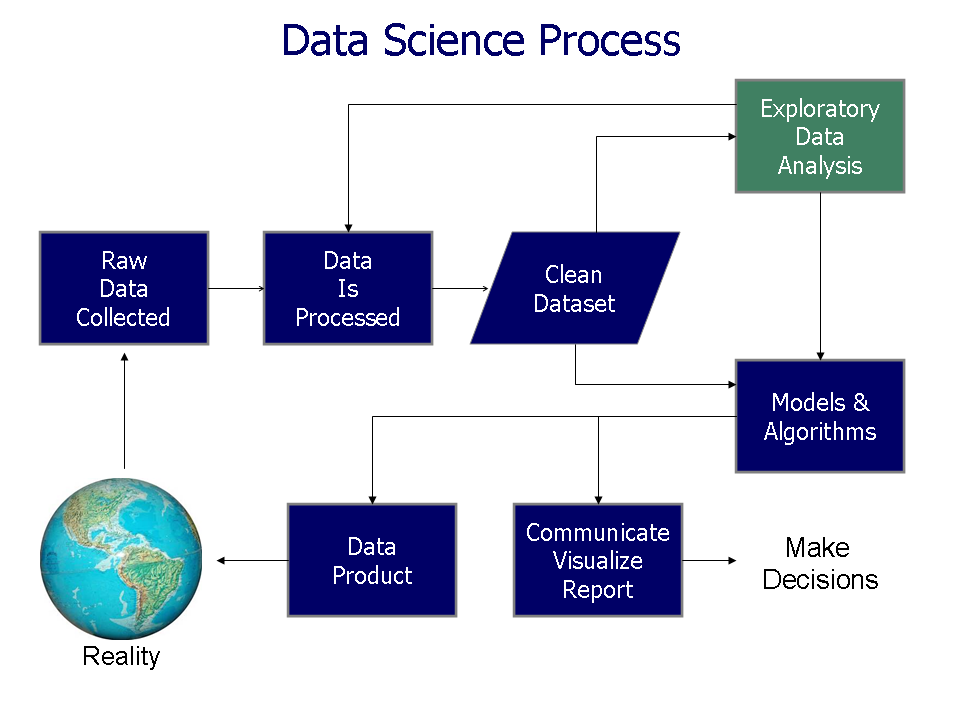
1. Data Collection: Every machine learning project starts with data. This could be anything from spreadsheets of sales figures to a library of images or text from customer reviews.
2. Data Preparation: Raw data is often messy. It might have missing values, errors, or irrelevant information. This step involves cleaning and formatting the data to make it suitable for a model to learn from. This is often the most time-consuming part of the process.
3. Model Training: This is where the learning happens. The prepared data is fed into a chosen algorithm, which tunes its internal parameters to find patterns. For supervised learning, this involves showing the model both the input data and the correct answers. The data is typically split, using one part for training and another for testing.
4. Model Evaluation: Once the model is trained, you need to check how well it performs. This is done by using the test data that was set aside earlier. You give the model the inputs from the test set and compare its predictions to the actual, known answers. This helps you understand how accurate and reliable the model is.
5. Deployment and Monitoring: If the model performs well, it can be deployed into a real-world application. But the work doesn't stop there. The model's performance must be monitored over time to ensure it continues to make accurate predictions as new data comes in. Over time, it may need to be retrained with new information to stay relevant.
Developing a machine learning model is an iterative process that consists of several phases: starting with requirements engineering, data gathering, preprocessing, and feature engineering; moving on to model training and tuning; and ending with model evaluation, deployment, and monitoring.
This framework provides a structured way to approach complex problems and build powerful, data-driven solutions.
What is the primary goal of machine learning?
A retail company wants to group its customers into different segments based on their purchasing habits, but it doesn't have any predefined categories for these groups. Which type of machine learning would be most suitable for this task?