Introduction to Machine Learning
Introduction to Machine Learning
What is Machine Learning?
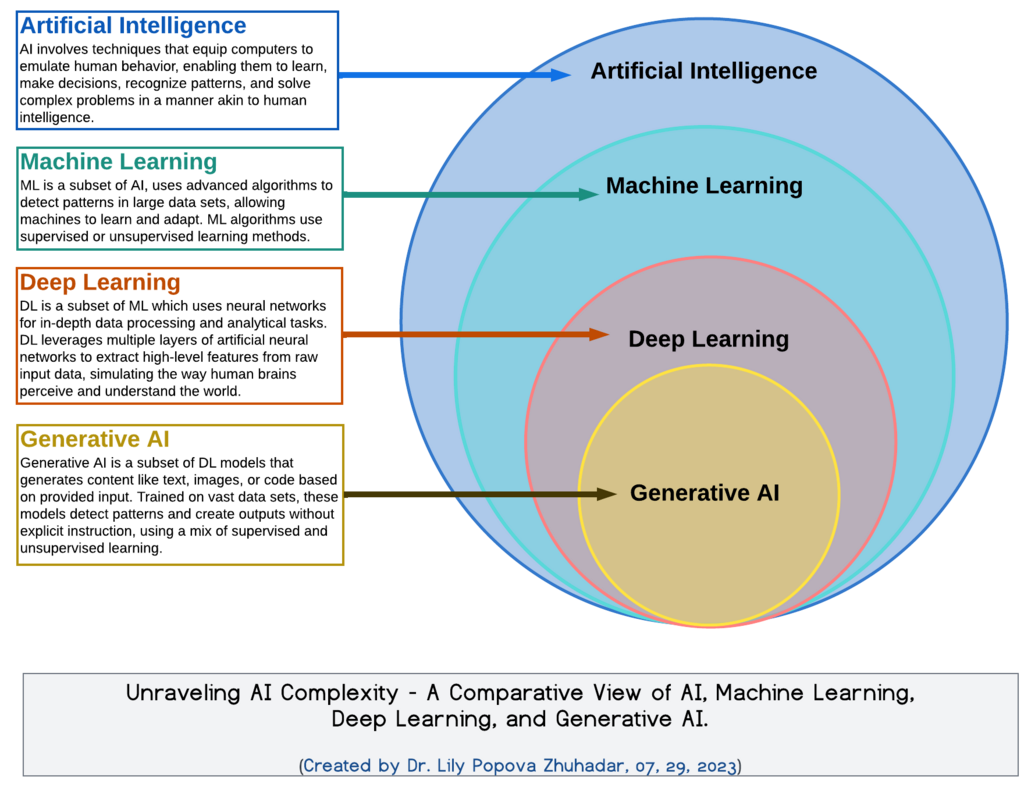
Machine learning is a way of teaching computers to find patterns. Instead of writing step-by-step instructions for every possible situation, we give the computer a lot of data and let it figure things out on its own. It learns from experience, much like we do.
Think about how your email service knows which messages are junk. No one wrote a rule for every single possible spam email. Instead, the computer was shown millions of emails that people had marked as spam. It learned the common traits of spam and now applies that knowledge to your inbox.
This ability to learn from data makes machine learning a core part of artificial intelligence. It's the engine behind many tools we use daily, from movie recommendations on Netflix to voice assistants like Siri.
The Three Main Flavors
Machine learning isn't a single technique; it's a broad field with several different approaches. The three most common types are supervised, unsupervised, and reinforcement learning. Each is suited for different kinds of problems.
Supervised Learning: Learning with a Teacher
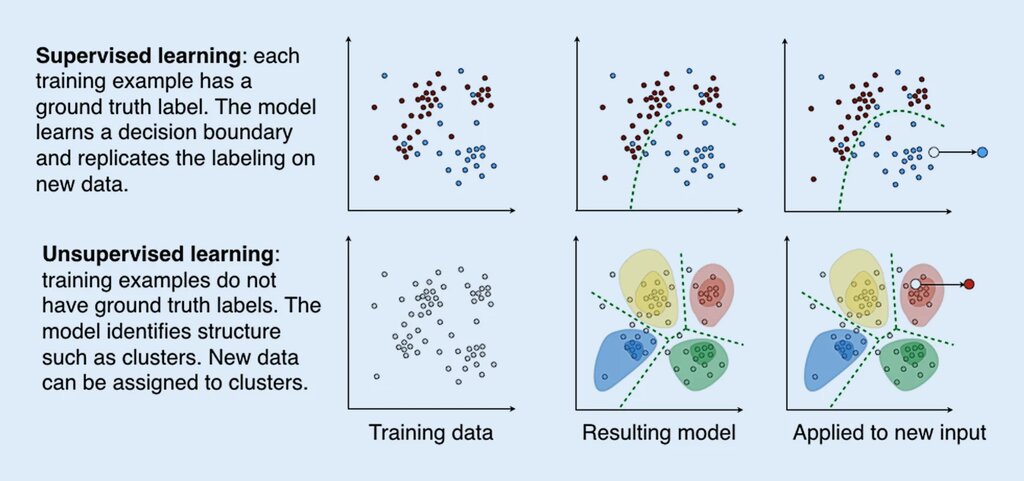
Supervised learning is like studying for a test with an answer key. The machine learning model is given a dataset where the correct answers, or labels, are already known. Its job is to learn the relationship between the data and those labels.
For the spam filter example, the data would be the text of the emails, and the labels would be 'spam' or 'not spam'. The model studies these examples until it's good enough to correctly label new, unseen emails.
label
noun
The correct answer or outcome for a given piece of data in a supervised learning problem.
Unsupervised Learning: Finding Patterns on Its Own
With unsupervised learning, there's no answer key. The model gets a dataset without any labels and has to find the hidden structures or patterns all by itself. It’s like being given a box of mixed Lego bricks and asked to sort them into logical piles.
A common use is customer segmentation. An online store might use unsupervised learning to group customers with similar purchasing habits. This helps them create targeted marketing campaigns without knowing in advance what the customer groups would be.
Reinforcement Learning: Learning from Feedback
Reinforcement learning is about learning through trial and error. The model, often called an agent, operates in an environment and learns to make decisions by receiving rewards or penalties.
Imagine training a dog. When it performs a trick correctly, you give it a treat (a reward). When it doesn't, it gets nothing (or a gentle correction). Over time, the dog learns which actions lead to treats. Reinforcement learning works the same way, and it's the technique used to train computers to play complex games like chess or Go, and even to control robotic arms.
| Learning Type | How it Works | Example |
|---|---|---|
| Supervised | Learns from labeled data. | Predicting house prices. |
| Unsupervised | Finds patterns in unlabeled data. | Grouping similar news articles together. |
| Reinforcement | Learns via rewards and penalties. | A self-driving car learning to navigate. |
Data is the Fuel
No matter the type of machine learning, it all starts with data. Data is the fuel that powers the learning process. The quality and quantity of your data directly impact how well your model can learn and make accurate predictions.
Think of it like cooking. Even the best chef can't make a great meal with spoiled ingredients. Similarly, a machine learning model trained on bad data will produce bad results. That's why a huge part of any machine learning project is spent on data preprocessing — cleaning, organizing, and preparing the data so the model can understand it.
feature
noun
An individual measurable property or characteristic of a phenomenon being observed.
The model learns from specific characteristics in the data, called features. In a housing price model, features could be the square footage, the number of bedrooms, and the age of the house. The label would be the actual selling price.
The Golden Rule of Data
To build a reliable model, data is split into different sets. The majority of the data is used for the training dataset. This is what the model learns from. It's the textbook the student studies.
Once the model is trained, we need to see how well it performs on new, unseen data. That’s the job of the testing dataset. This is the final exam. By using separate data for testing, we get an honest assessment of how the model will perform in the real world.
Let's check your understanding of these core concepts.
Which statement best describes the core idea behind machine learning?
An email service uses an algorithm to identify junk mail. The algorithm was trained on millions of emails that were already marked as 'spam' or 'not spam' by users. What type of machine learning is this an example of?
You've now covered the basic building blocks of machine learning. You understand what it is, its main types, and the crucial role that data plays in the process. This foundation will be essential as you explore how these models are built and applied.