Introduction to Machine Learning
Introduction to Machine Learning
What Is Machine Learning?
At its core, machine learning is a way of teaching computers to find patterns. Instead of writing step-by-step instructions for every possible scenario, we give the computer a large amount of data and let it figure out the rules for itself.
Think about how a child learns to recognize a dog. You don't give them a checklist of features like "has four legs," "has a tail," and "barks." Instead, you point out different dogs, and over time, the child's brain builds its own model of what a dog looks like. Machine learning works in a similar way. An algorithm sifts through thousands of labeled dog photos, learning the common features until it can spot a dog in a new picture it has never seen before.
The goal isn't just to memorize the data it's seen, but to generalize from that data to make accurate predictions about new, unseen data.
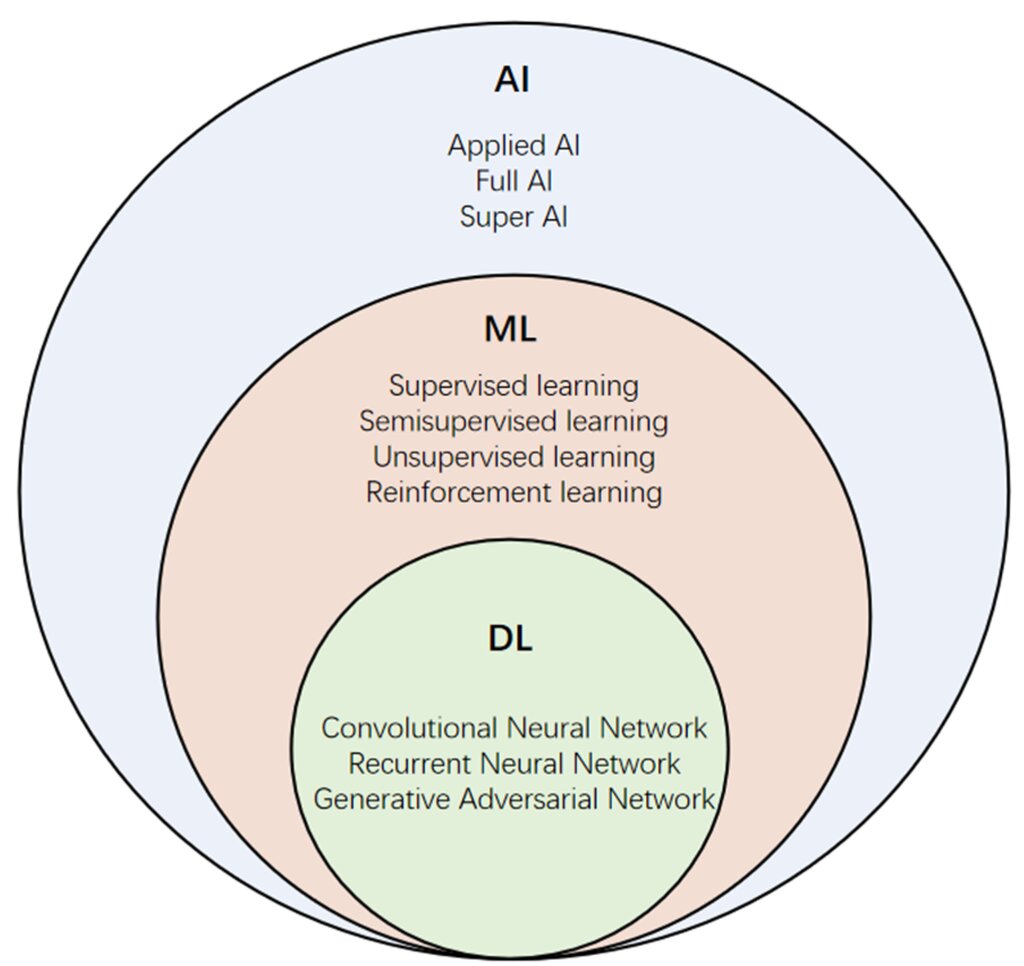
Machine learning is a subfield of artificial intelligence (AI). While AI is the broader concept of creating intelligent machines, machine learning is the specific practice of using algorithms to parse data, learn from it, and then make a determination or prediction.
Three Ways Machines Learn
Just as people have different learning styles, machines can learn in a few different ways. The method a developer chooses depends on the problem they're trying to solve and the kind of data they have available. The three most common approaches are supervised, unsupervised, and reinforcement learning.
Algorithm
noun
A set of rules or instructions given to a computer to help it solve a problem or perform a task.
Supervised Learning is like studying with flashcards. The machine is given a dataset where all the answers are already labeled. For example, it might get thousands of emails that are already marked as "spam" or "not spam." The algorithm's job is to learn the relationship between the input (the email text) and the output (the label). After training, it can look at a new email and predict whether it's spam.
This method is called "supervised" because it's like a teacher supervising the learning process by providing the correct answers. It's incredibly useful for tasks like predicting house prices based on features like square footage and location, or identifying fraudulent credit card transactions.
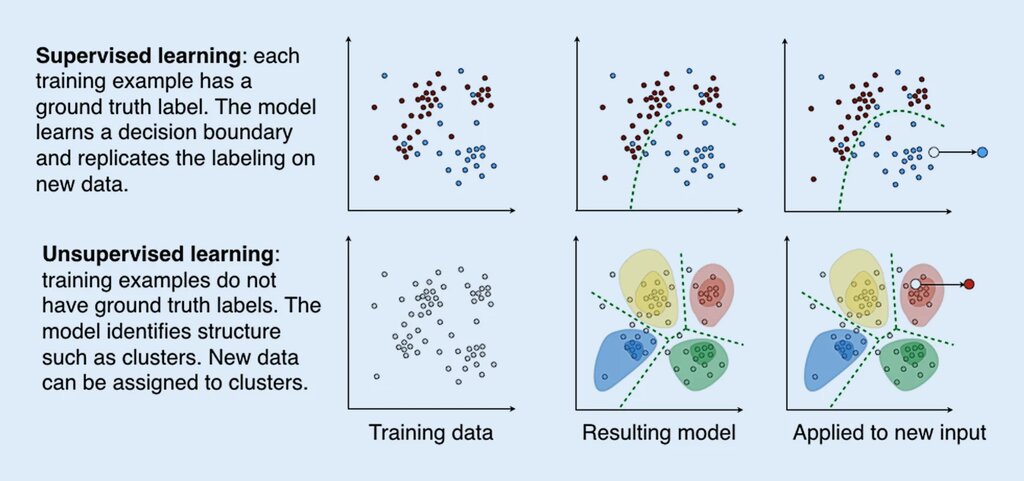
Unsupervised Learning is more like being a detective. Here, the algorithm is given data without any labels or correct answers. Its task is to explore the data and find any hidden structures or patterns on its own. For instance, you could give it a database of customer purchase histories, and it might group customers into different segments—like "frequent shoppers" and "weekend bargain hunters"—without being told what to look for.
This type of learning is perfect for discovering underlying trends. It powers recommendation engines that suggest movies you might like and helps researchers group similar genes together to understand diseases.
Reinforcement Learning is based on trial and error. The algorithm, often called an "agent," learns by interacting with an environment. It receives rewards for performing correct actions and penalties for incorrect ones. The goal is to learn the best strategy, or "policy," to maximize the total reward over time.
Imagine teaching a computer to play a video game. It doesn't know the rules at first. It just mashes buttons. When it gets a high score (a reward), it learns that the actions leading to that score were good. When it loses a life (a penalty), it learns to avoid those actions. Over millions of trials, it can become a superhuman player. This is the same technique used to train self-driving cars to navigate traffic and robotic arms to perform complex tasks in a factory.
Machine Learning in the Wild
Machine learning isn't just a concept from science fiction; it's already a part of our daily lives. When your streaming service recommends a new show, that's machine learning analyzing your viewing habits. When you use a translation app to understand a foreign menu, that's a machine learning model at work. It powers the voice assistants on our phones, the product recommendations on shopping sites, and the navigation apps that find the fastest route home.
| Industry | Application of Machine Learning |
|---|---|
| Healthcare | Predicting diseases from medical images like X-rays and MRIs. |
| Finance | Detecting fraudulent transactions and assessing loan risk. |
| Retail | Personalizing marketing and managing inventory. |
| Transportation | Optimizing routes for delivery trucks and developing self-driving cars. |
| Entertainment | Recommending movies, music, and articles to users. |
From helping farmers monitor crop health to enabling scientists to discover new drugs, the applications are vast and growing every day. By learning from data, machines are helping us solve some of the world's most complex and important problems.
Now, let's test your understanding of these foundational ideas.
What is the primary goal of machine learning?
An algorithm is trained on a dataset of thousands of emails, each already marked as 'spam' or 'not spam'. The goal is for the algorithm to learn how to classify new, incoming emails. What type of learning is this?
Understanding these basic concepts is the first step into the world of machine learning. It's a field built on the simple but powerful idea that machines can learn from experience, just like we do.