Introduction to Machine Learning
Introduction to Machine Learning
What Is Machine Learning?
Machine learning lets computers learn from data without being explicitly programmed. Instead of writing step-by-step instructions for a task, we give a computer lots of examples. It then figures out the patterns on its own.
Think about how you learned to recognize a cat. No one gave you a list of rules like "if it has pointy ears, fur, and whiskers, it's a cat." You just saw lots of cats and eventually learned to identify them. Machine learning works in a similar way. It's the engine behind spam filters, recommendation engines, and voice assistants.
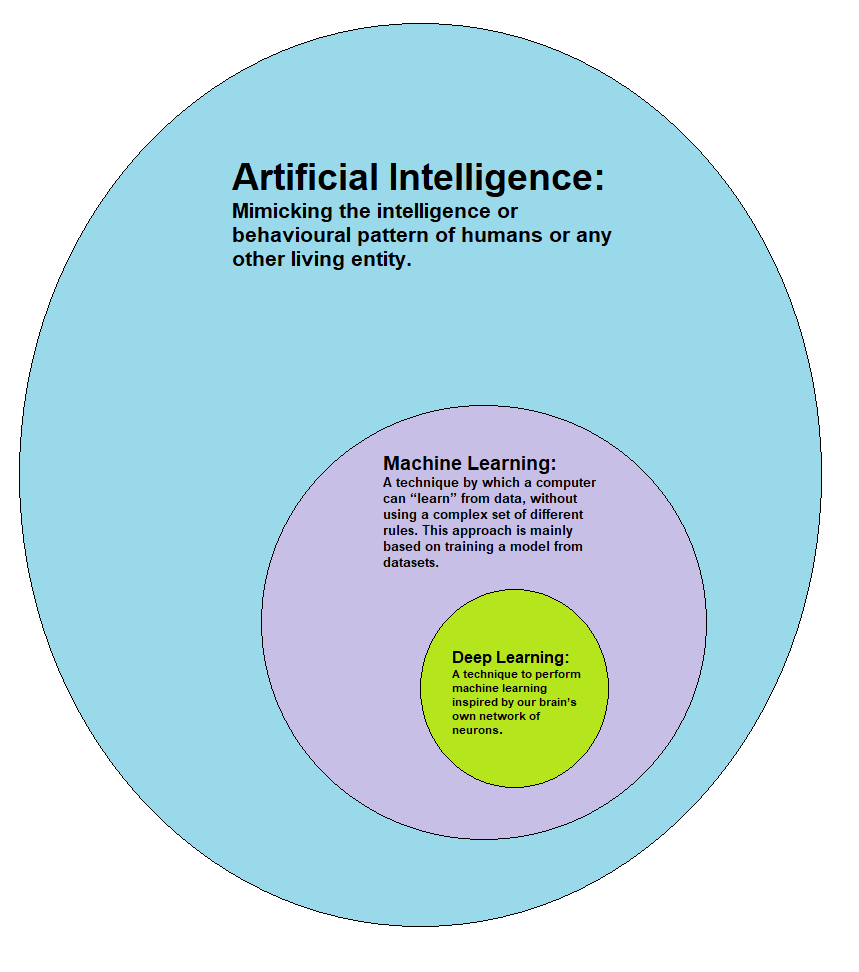
This ability to learn from data makes it incredibly powerful. We can use it to solve problems that are too complex or change too quickly for traditional programming. There are three main ways a machine can learn, each suited for different kinds of tasks.
Supervised Learning
Supervised learning is like studying with flashcards. You're given a problem and the correct answer, and you learn by seeing many examples. In machine learning, this means feeding the computer data that's already been labeled with the right outcomes.
For instance, to teach a computer to identify spam emails, you'd give it thousands of emails already labeled as either "spam" or "not spam." The machine analyzes these examples to find patterns associated with each label. What words appear in spam? What about the sender's address? After training on this labeled data, it can look at a new, unseen email and make an educated guess about whether it's junk.
In supervised learning, the goal is to predict an outcome based on labeled examples. It's all about learning a mapping from inputs to outputs.
This is the most common type of machine learning. It's used for tasks like predicting house prices based on features like square footage and location, or diagnosing diseases from medical images.
Unsupervised Learning
What if you don't have labeled data? That's where unsupervised learning comes in. This approach is like being given a box of mixed-up photos and asked to sort them into piles. You don't know the categories beforehand; you have to discover them yourself.
Unsupervised learning algorithms look for hidden structures in unlabeled data. For example, a streaming service might use this method to group users with similar viewing habits. It doesn't know what to call the groups—maybe "sci-fi fans" or "comedy lovers"—it just knows that the people within each group are alike in some way. Once these clusters are found, the service can recommend new shows to everyone in a group.
This type of learning is great for tasks involving customer segmentation, anomaly detection (like finding fraudulent transactions), and data compression.
Reinforcement Learning
Reinforcement learning is about learning through trial and error, much like training a pet. The computer, called an "agent," learns to operate in an environment by performing actions and receiving feedback in the form of rewards or punishments.
The goal is to maximize the total reward over time. Imagine an AI learning to play a video game. It starts by making random moves. When it gets a high score (a reward), it learns that the preceding actions were good. When it loses a life (a punishment), it learns those moves were bad. Over millions of games, it develops a strategy to win.
This type of learning is defined by an agent, an environment, and a system of rewards. It's focused on making optimal decisions sequentially.
Reinforcement learning powers self-driving cars, robotics, and resource management systems. It's ideal for any problem that involves making a series of decisions to achieve a long-term goal.
| Learning Type | Data Used | Goal | Example |
|---|---|---|---|
| Supervised | Labeled Data | Predict Outcomes | Spam detection |
| Unsupervised | Unlabeled Data | Find Structure | Customer segmentation |
| Reinforcement | No initial data | Maximize Reward | Game playing AI |
These three types of learning provide a framework for solving a huge range of problems. Understanding their differences is the first step in understanding the world of machine learning.
Ready to check your understanding?
Which statement best describes the core idea behind machine learning?
An email service is trained to identify junk mail by being fed thousands of emails that have already been marked as 'spam' or 'not spam'. Which type of learning is this?
Each of these learning models has its own strengths and is a powerful tool for different kinds of challenges. As you continue, you'll see how these fundamental ideas are applied to build complex and intelligent systems.