Introduction to Machine Learning
Introduction to Machine Learning
What Is Machine Learning?
Machine learning is a way of teaching computers to find patterns. Instead of writing explicit, step-by-step instructions for every task, we give a computer a large amount of data and let it figure out the rules on its own. It's like showing a child thousands of pictures of cats and dogs. Eventually, they learn to tell the difference without you explaining what whiskers or floppy ears are.
This ability to learn from data is what makes machine learning so powerful. It's the engine behind everything from spam filters in your email to recommendation systems that suggest what you should watch next. By finding patterns in data, machines can make predictions, classify information, and make decisions in complex situations where writing rules by hand would be impossible.
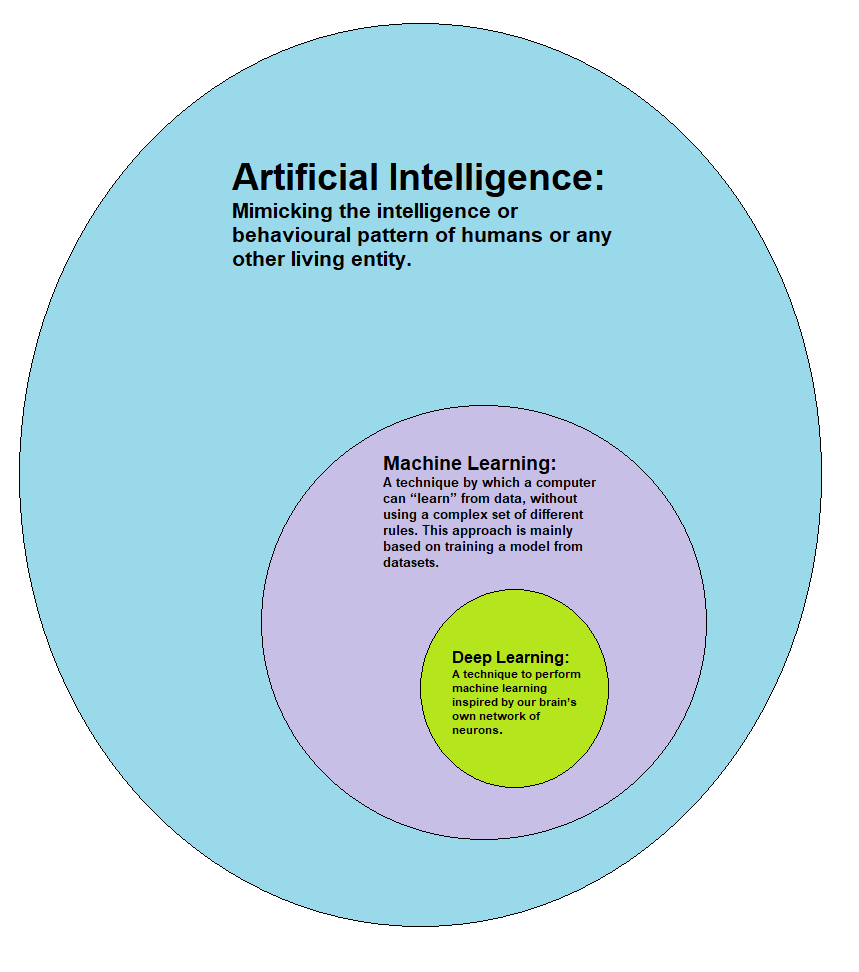
Machine learning isn't a single technique but a broad field with several different approaches. The best approach depends on the type of problem you're trying to solve and the kind of data you have available. These methods are generally grouped into a few main categories.
How Machines Learn
The most common type of machine learning is called supervised learning. In this approach, the machine learns from data that has already been labeled with the correct answers. It's like learning with a set of flashcards where each card has a question on the front and the answer on the back.
The goal is for the model to learn the relationship between the inputs (the questions) and the outputs (the answers) so well that it can predict the answer for new, unseen data. For example, you could train a model with thousands of emails labeled as either "spam" or "not spam." The model learns the features associated with each label and can then classify new emails it has never seen before.
Next is unsupervised learning, which is what you use when your data isn't labeled. Instead of predicting a known outcome, the goal is to find hidden structures or patterns within the data itself. It’s like being given a box of mixed-up Lego bricks and asked to sort them into piles of similar pieces without any instructions.
Unsupervised learning is great for tasks like customer segmentation, where a business might want to group customers with similar purchasing habits, or for identifying anomalies, like fraudulent transactions that don't fit the usual pattern.
Supervised learning uses labeled data to make predictions. Unsupervised learning explores unlabeled data to find hidden patterns.
There are also hybrid approaches. Semi-supervised learning uses a small amount of labeled data and a large amount of unlabeled data. This is useful when labeling data is expensive or time-consuming. The model learns from the few labeled examples and then uses that knowledge to help it understand the structure of the unlabeled data.
Finally, reinforcement learning is a different beast altogether. It's about teaching an agent to make a sequence of decisions to achieve a goal. The agent learns through trial and error, receiving rewards for good decisions and penalties for bad ones. Think of training a dog: it gets a treat (a reward) when it sits on command but gets nothing (or a gentle correction) when it doesn't. Over time, the agent learns the best strategy, or "policy," to maximize its cumulative reward. This is the technology behind self-driving cars and AI that can play complex games like Go or chess.
| Learning Type | Input Data | Goal | Example |
|---|---|---|---|
| Supervised | Labeled | Predict an outcome | Spam detection |
| Unsupervised | Unlabeled | Find hidden structure | Customer segmentation |
| Semi-supervised | Mostly unlabeled | Find structure and predict | Image classification with few labels |
| Reinforcement | None (learns via interaction) | Maximize reward | Game playing AI |
A Quick History
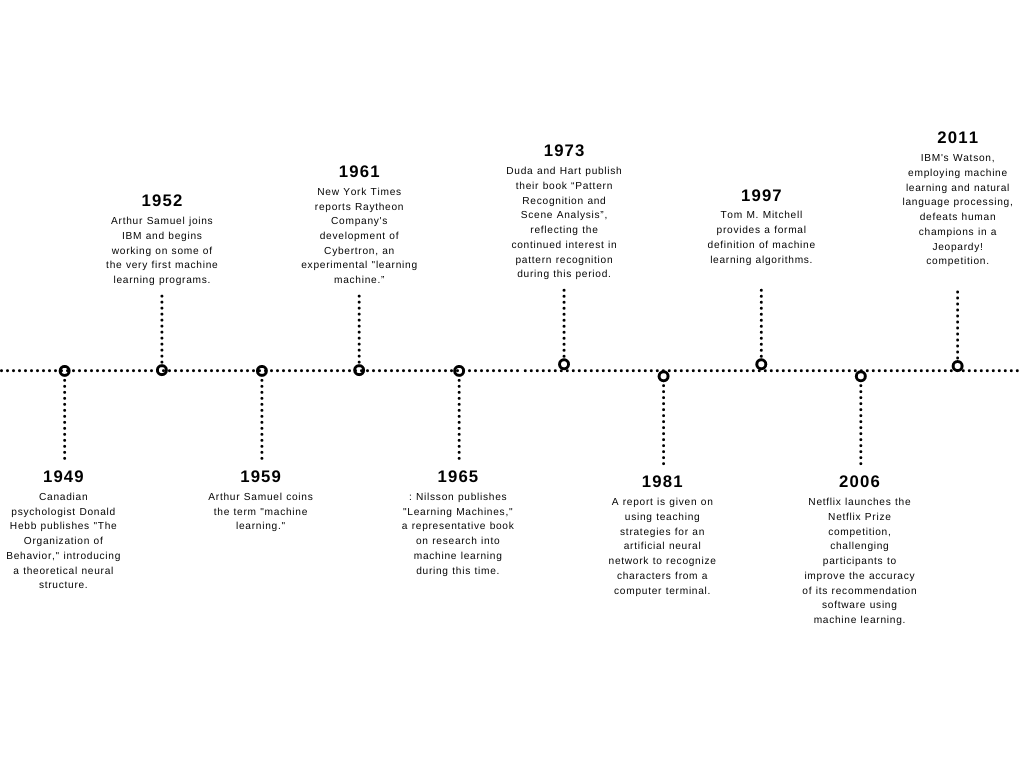
The ideas behind machine learning aren't new. They date back to the mid-20th century, shortly after the first computers were built. Early pioneers imagined machines that could learn and think for themselves.
In 1959, Arthur Samuel, an American computer scientist, created a checkers-playing program that could learn from its own mistakes. It played against itself thousands of time, gradually getting better until it could challenge and beat respectable human players. This was one of the first successful demonstrations of machine learning.
For decades, progress was slow. Computers weren't powerful enough, and there wasn't enough data to train complex models. But in recent years, the explosion of data from the internet and the massive increase in computing power have brought machine learning out of the research labs and into our daily lives.
Now you have a grasp of what machine learning is, why it's important, and the main ways it works. Let's test your understanding.
What is the fundamental difference between machine learning and traditional programming?
You are building a system to predict housing prices based on a dataset of homes where the features (square footage, number of bedrooms) and the final sale price are known. Which type of machine learning is most appropriate?