Introduction to Machine Learning
Introduction to Machine Learning
What Is Machine Learning?
Imagine trying to teach a computer to recognize a cat. You could write millions of lines of code describing every possible feature: pointy ears, whiskers, fur, four legs, a tail. But what about a cat without a tail? Or a cat hiding behind a bush? This rule-based approach quickly becomes impossible.
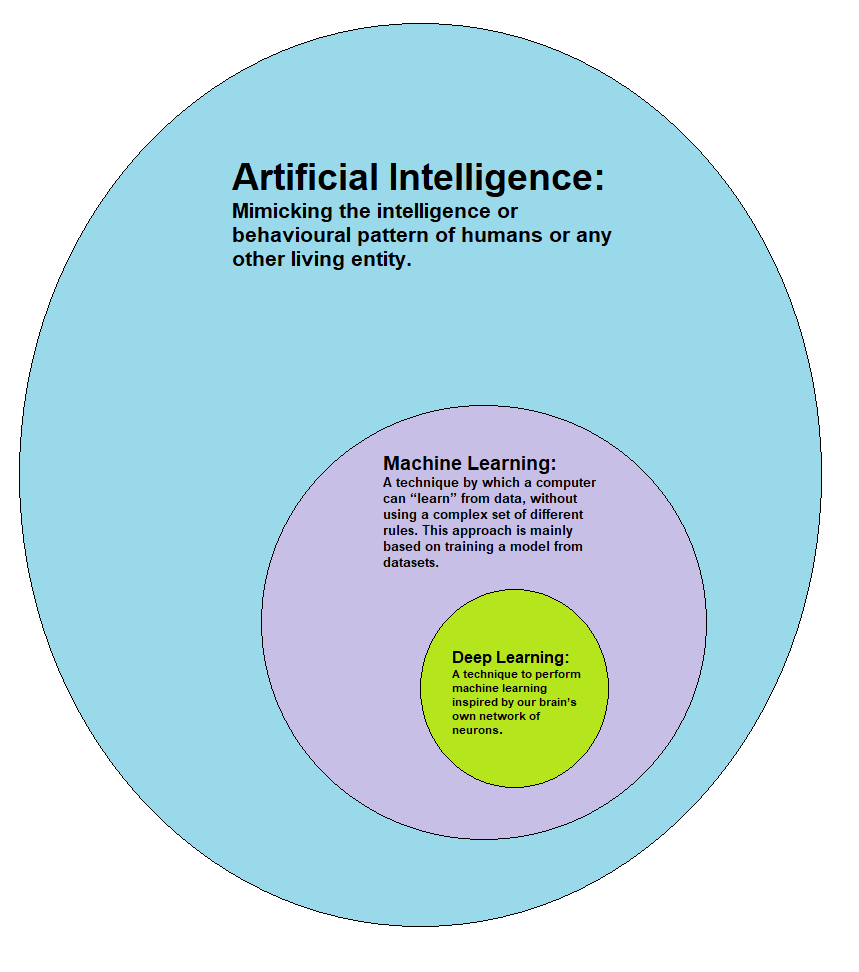
Machine learning (ML) flips this idea on its head. Instead of giving the computer explicit instructions, you give it data—in this case, thousands of pictures of cats—and let it figure out the patterns on its own. It learns from examples, just like we do.
Machine learning
noun
A field of artificial intelligence where computer systems learn from data and experience to identify patterns and make decisions, without being explicitly programmed for every task.
At its core, machine learning is about creating algorithms that can improve automatically through experience. This ability to learn without human intervention is why ML has become so important. As we generate more and more data from phones, websites, and sensors, machine learning provides the tools to make sense of it all, finding insights that would be impossible for a person to uncover.
Three Main Flavors
Machine learning isn't a single, monolithic thing. It's a broad field with several different approaches. Most methods, however, fall into one of three main categories.
1. Supervised Learning
This is the most common type of machine learning. In supervised learning, the algorithm learns from data that is already labeled. Think of it like studying with flashcards. Each card has a question (the input) and an answer (the correct output or label). The model's job is to learn the relationship between the inputs and outputs.
Email spam filtering is a classic example. The model is trained on thousands of emails that have been labeled as either "spam" or "not spam." After training, it can look at a new, unlabeled email and predict which category it belongs to.
Supervised learning uses labeled data to make predictions.
2. Unsupervised Learning
What if you don't have any labeled data? That's where unsupervised learning comes in. Here, the algorithm is given a dataset and must find patterns or structures within it on its own, without any predefined labels.
Imagine being handed a box of assorted fruits and being asked to sort them. You might group them by color, shape, or size. You're creating categories without being told what they are. In the same way, an unsupervised learning model might group customers into different segments based on their purchasing behavior, helping a company tailor its marketing.
Unsupervised learning uncovers hidden patterns in unlabeled data.
3. Reinforcement Learning
This type of learning is inspired by how animals (and humans) learn: through trial and error. The algorithm, often called an "agent," learns by interacting with an environment. It receives rewards for good actions and penalties for bad ones.
The goal is to develop a strategy, or policy, that maximizes the total reward over time. This is the approach used to train computers to play complex games like Go or chess. The agent plays millions of games, slowly learning which moves lead to a higher chance of winning. It's also used in robotics, where a robot might learn to walk by being rewarded for moving forward without falling.
Reinforcement learning learns by taking actions and receiving feedback.
Machine Learning in Your Daily Life
You might not realize it, but you likely interact with machine learning systems every day. They operate quietly in the background, making many of the services you use smarter and more personal.
- Recommendation Engines: When Netflix suggests a movie or Spotify creates a personalized playlist for you, it's using ML to analyze your past behavior and predict what you'll enjoy next.
- Voice Assistants: Siri, Alexa, and Google Assistant use machine learning to understand your spoken commands and respond appropriately. This involves complex models for speech recognition and natural language processing.
- Navigation and Ride-Sharing: Apps like Google Maps and Uber use machine learning to predict traffic patterns and estimate your arrival time. They learn from the real-time data of thousands of drivers to find the most efficient routes.
- Social Media Feeds: The posts you see on platforms like Instagram and TikTok are not random. ML algorithms curate your feed based on what you've liked, shared, and watched in the past, aiming to show you more content you'll find engaging.
From detecting fraudulent credit card transactions to helping doctors diagnose diseases, machine learning is a powerful tool that's already reshaping our world. By understanding its basic principles, you're better equipped to understand the technology driving the future.
Ready to check your understanding?
What is the core idea behind machine learning, as opposed to traditional programming?
An e-commerce company wants to group its customers into different segments based on their purchasing behavior, but it doesn't have any predefined categories for these groups. Which type of machine learning would be most suitable for this task?