Introduction to Lua Programming
Introduction to Lua
Meet Lua
Lua is a powerful, fast, and lightweight scripting language. Its name, pronounced "LOO-ah," means "Moon" in Portuguese, a nod to its Brazilian origins.
Moon
Unlike some languages designed to build entire applications from scratch, Lua's specialty is being embedded within other programs. Think of it as a smart, adaptable helper that can be added to a larger system to make it more flexible and programmable without slowing it down.
A Quick History
Lua was born in 1993 at the Pontifical Catholic University of Rio de Janeiro, Brazil. It was created by a team of three researchers: Roberto Ierusalimschy, Luiz Henrique de Figueiredo, and Waldemar Celes.
At the time, Brazil had strict trade barriers that made it difficult and expensive to import software. The team needed a simple, customizable scripting language for various engineering and industrial projects, but they couldn't just buy or license one. So, they decided to build their own.
They designed Lua to be simple, portable, and easily integrated with code written in other languages, particularly C. This practical, problem-solving origin is key to understanding Lua's design philosophy. It wasn't made in an academic vacuum; it was built to get real-world work done efficiently.
Key Features
Lua's design gives it a unique set of advantages that make it popular in specific domains.
Lightweight
adjective
The core language is very small. The entire interpreter can be compiled into a tiny file, making it perfect for devices with limited memory and processing power, like microcontrollers or older game consoles.
Another core feature is that it's easily embeddable. Lua was built from the ground up to work inside a host application. A program written in C or C++ can include the Lua interpreter and use it to run scripts. This allows developers to add scripting capabilities to their software, letting users or designers modify the program's behavior without needing to recompile the whole thing.
This two-way communication is Lua's superpower. The host program can run Lua scripts, and the Lua scripts can call back into the host program to use its features.
Lua is also known for its simple and clean syntax. The language has a small set of rules and concepts, making it relatively easy for beginners to pick up. The syntax is straightforward and often reads like plain English.
It uses dynamic typing. This means you don't have to declare the type of a variable (like integer, string, etc.) when you create it. A variable can hold a number at one moment and a string of text the next. This provides flexibility and makes scripting faster.
Where is Lua Used?
Thanks to its design, Lua has found a home in many different industries. You've likely used software that runs Lua without even knowing it.
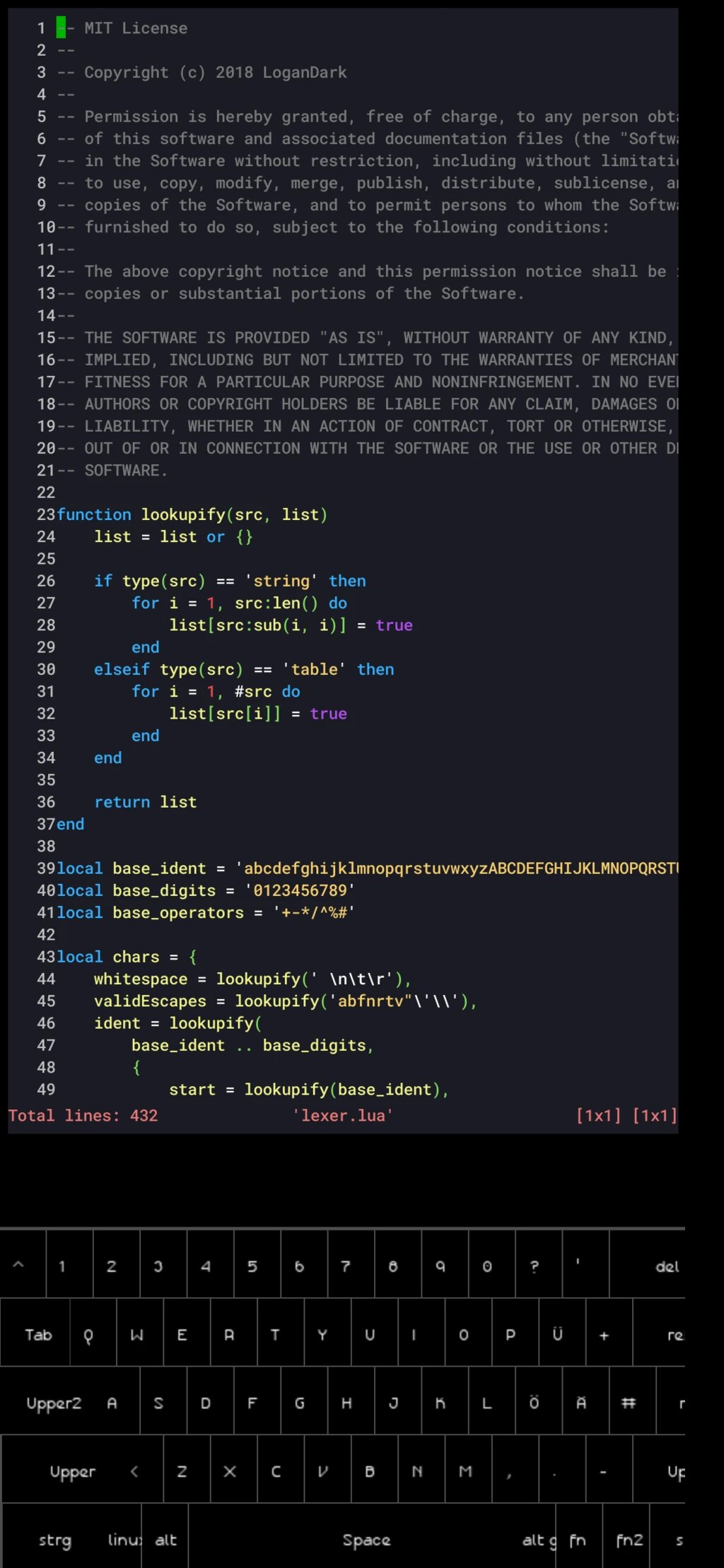
One of its most famous applications is in game development. Game engines often use Lua for scripting game logic, character behaviors, and user interfaces. The popular game creation platform Roblox uses a modified version of Lua called Luau. Other hit games like World of Warcraft use it to allow players to create custom add-ons and UI modifications. Developers use a fast, compiled language like C++ for the core engine, then expose parts of it to Lua for designers and players to script with.
It's also common in web applications. The Nginx web server can use Lua for scripting to handle complex requests, and the Redis database uses it to run complex commands atomically on the server. Even creative tools like Adobe Lightroom Classic use Lua for developing plugins.
Finally, its small footprint makes it a great choice for embedded systems. These are small computers inside larger devices, like routers, printers, and industrial robots. Lua allows developers to easily script and configure these devices.
| Industry | Example Use Case |
|---|---|
| Game Development | Scripting AI behavior, quests, and UI add-ons. |
| Web Infrastructure | Customizing web server logic with Nginx. |
| Application Plugins | Creating plugins for Adobe Lightroom. |
| Embedded Systems | Configuring network devices and industrial robots. |
Now that you have a sense of what Lua is and where it comes from, let's test your knowledge.
What does the name "Lua" mean in Portuguese?
What was the primary design philosophy behind Lua's creation?
Understanding these core ideas gives you a solid foundation as we move forward to explore how the language actually works.