Introduction to Linux
Introduction to Linux
What is Linux?
At its heart, Linux is an operating system kernel. Think of a kernel as the engine of a car. It manages the computer's hardware, like the processor, memory, and storage, but it isn't the whole vehicle. You still need a body, seats, and a steering wheel to actually drive it.
That's where the GNU Project comes in. In the 1980s, Richard Stallman started the GNU Project to create a free and open-source operating system. They built all the essential parts—the steering wheel, the seats, the dashboard—but they were missing an engine. In 1991, a Finnish student named Linus Torvalds created the Linux kernel and made it freely available. When you combine the Linux kernel with the tools and applications from the GNU Project, you get a complete operating system. This is why you'll sometimes hear it called GNU/Linux.
When people say they're using 'Linux,' they are typically talking about a complete operating system built around the Linux kernel.
The Open Source Philosophy
Linux is the world's most famous example of open-source software. This means its source code—the human-readable instructions that make the program work—is available for anyone to view, use, modify, and share.
Imagine a chef who not only serves you a delicious meal but also gives you the exact recipe. You're free to make it yourself, tweak the ingredients, or even open your own restaurant using an improved version. Proprietary software, like Microsoft Windows or Apple's macOS, is like a secret recipe from a big chain restaurant. You can enjoy the meal, but you can't see the recipe or change it.
The open-source approach fosters a global community of developers who collaborate to improve the software. This transparency often leads to more secure, stable, and flexible systems.
kernel
noun
The core component of an operating system that manages the system's resources and the communication between hardware and software.
A World of Flavors
Since anyone can take the Linux kernel and bundle it with their own selection of software, there are hundreds of different versions of Linux. These versions are called distributions, or 'distros' for short. Each distro offers a different experience, tailored for a specific type of user or task.
Choosing a distro is like picking a car. Some are built for speed, others for comfort, and some for heavy-duty work. They all share the same basic engine (the Linux kernel), but the design, features, and target audience can be very different.
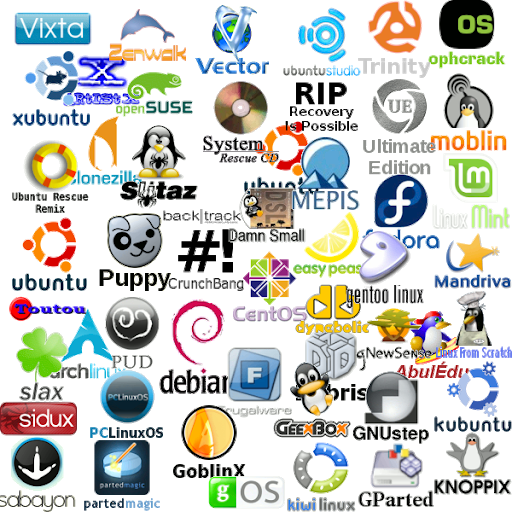
Here are a few of the most popular distributions:
| Distribution | Best For | Key Feature |
|---|---|---|
| Ubuntu | Beginners | Very user-friendly and has a large community. |
| Fedora | Developers | Features the latest software and technologies. |
| Debian | Servers & Power Users | Known for its extreme stability and reliability. |
| Arch Linux | Experts | A minimalist base that you build yourself. |
| Linux Mint | Windows Migrants | Offers a familiar desktop experience for those new to Linux. |
A Linux distribution (or distro) is an operating system (OS) compiled from components developed by open source projects/programmers.
The great thing is you don't have to commit. Most distributions can be run directly from a USB drive, allowing you to try them out before installing anything on your computer.
Why Use Linux?
So, why do so many people, from individual programmers to the world's largest companies, choose Linux? There are several key benefits:
- Cost: Linux is free. You can download, install, and use it on as many computers as you like without paying any licensing fees.
- Security: The open-source nature of Linux means that many developers are constantly examining the code for security flaws. This community-driven approach makes it a very secure operating system.
- Flexibility: You can customize almost everything in Linux, from the look of your desktop to the core functions of the system. This makes it ideal for a wide range of tasks.
- Stability: Linux is renowned for its reliability. It's the backbone of the internet, powering the majority of web servers, cloud infrastructure, and supercomputers. It's also the foundation for Android, the most popular mobile operating system in the world.
Now that you have a grasp of what Linux is and the philosophy behind it, let's test your knowledge.
At its most fundamental level, what is Linux?
What is the common name for a complete operating system that combines the Linux kernel with tools and applications from the GNU Project?
Understanding these core concepts provides the foundation you need as you begin to explore the practical side of using Linux.