Introduction to Learning Management Systems
Introduction to LMS
The Digital Classroom
A Learning Management System, or LMS, is a software platform that acts as a central hub for online learning. Think of it as a digital school building. It’s where instructors create and organize courses, where students access materials and submit assignments, and where all the administrative tasks of learning happen in one place.
A Learning Management System is a digital platform designed to facilitate the management, delivery, and tracking of educational courses and training programs.
The core purpose is to streamline the entire learning process. For educators, it’s a tool for distributing course materials, grading work, and communicating with students. For learners, it provides a single, organized location for everything they need: lecture notes, discussion forums, quizzes, and gradebooks. The system tracks progress, making it easy for both the learner and the instructor to see how things are going.
From Mailbox to Moodle
The idea of learning from a distance isn't new. It began over a century ago with correspondence courses, where lessons and assignments were sent back and forth through the mail. This was the original form of asynchronous learning—learning that doesn't happen in the same place or at the same time.
The rise of the internet in the 1990s transformed this model. The first true LMS platforms emerged, moving the mail-based system online. Instead of waiting for the postman, students could now download materials and upload assignments instantly. These early systems were often clunky, but they laid the groundwork for the sophisticated platforms we use today.
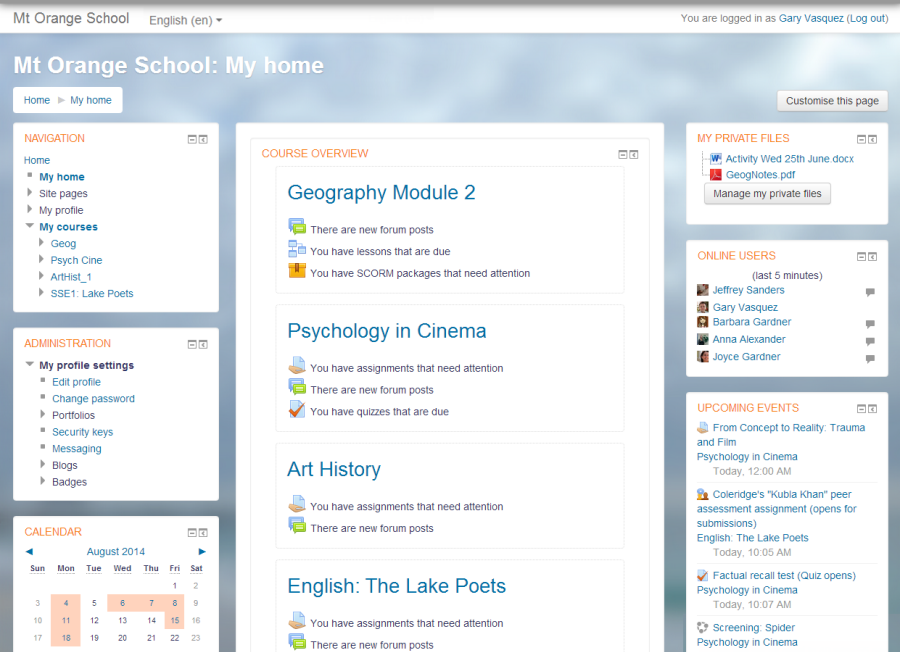
Modern systems have evolved far beyond simple file sharing. They integrate video conferencing, interactive quizzes, social forums, and personalized learning paths, creating a comprehensive digital environment.
Beyond the Traditional Classroom
LMS platforms are now essential in two main areas: education and corporate training.
In schools and universities, an LMS can support a traditional in-person class by hosting syllabi and readings. It can also be the entire foundation for a fully online degree program. This flexibility allows institutions to reach students who might not be able to attend classes on a physical campus.
In the business world, companies use an LMS to manage employee training. This includes everything from onboarding new hires and teaching them company policies to providing ongoing professional development. An LMS ensures that every employee receives consistent, high-quality training and allows the company to track completion for compliance purposes.
By centralizing learning, an LMS makes education more accessible, scalable, and measurable than ever before.
The impact on traditional learning has been significant. An LMS shifts the focus from a purely lecture-based model to a more flexible, learner-centered approach. Students can review materials at their own pace, and instructors can spend less time on administrative tasks and more time engaging with learners. It hasn't replaced the classroom, but it has certainly redefined its boundaries.
What is the primary function of a Learning Management System (LMS)?
The concept of asynchronous learning, a key feature of modern LMS platforms, has its roots in what earlier form of distance education?