Introduction to Latin
Introduction to Latin
The Language of an Empire
Latin began as the local dialect of a small region in central Italy called Latium, where a settlement named Rome was founded. As Rome grew from a small town into a sprawling republic and then a massive empire, it took its language with it. For over a thousand years, Latin was the official language of government, law, business, and daily life across the Mediterranean world.
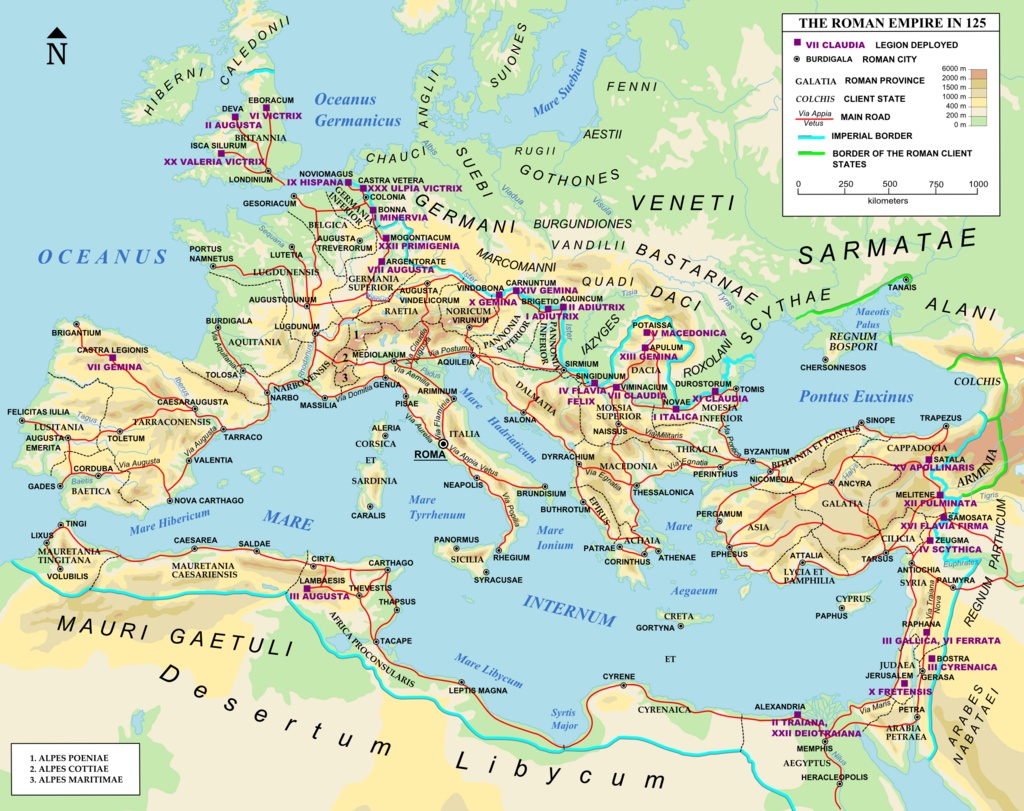
Roman soldiers, governors, and merchants spread Latin from Britain to North Africa and from Spain to the Black Sea. It became the common tongue, a lingua franca, that connected diverse peoples under Roman rule. While educated Romans wrote in a polished, standardized form called Classical Latin, the language spoken on the streets was a more fluid version known as Vulgar Latin.
From One, Many
When the Western Roman Empire collapsed in the 5th century AD, political unity dissolved. The common, spoken form of Latin, however, lived on. In the isolated regions of the former empire, Vulgar Latin began to drift and change, mixing with local languages and developing its own unique flavors.
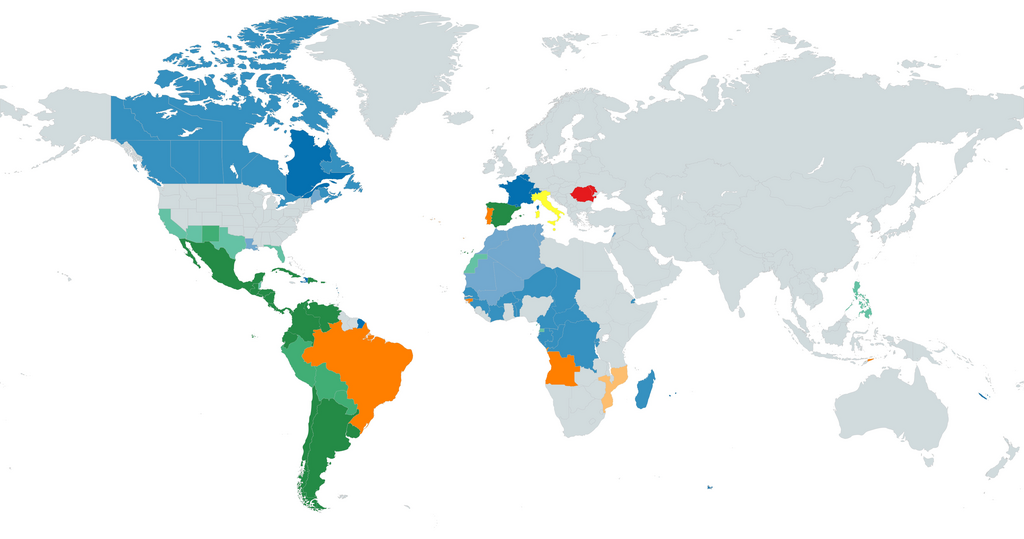
After the fall of the Roman Empire, Latin evolved (or degraded, as some people might view it) via Vulgar Latin into a multitude of varieties, which later became the Romance languages.
Over centuries, these regional dialects evolved into a new family of languages: the Romance languages. This group includes some of the world's most widely spoken languages today, such as Spanish, Portuguese, French, Italian, and Romanian. Each one is a direct descendant of the Latin spoken by Roman citizens two millennia ago.
A Living Legacy
Latin's influence didn't stop with the Romance languages. It has profoundly shaped countless others, including English. Although English is a Germanic language, more than half of its vocabulary comes directly or indirectly from Latin. This happened in waves: first through the Roman occupation of Britain, then the Christianization of the Anglo-Saxons, and later through the Norman Conquest of 1066, which brought Old French (a Latin descendant) to England.
Words like 'video' (I see), 'audio' (I hear), 'agenda' (things to be done), and 'memo' (thing to be remembered) are all Latin words we use every day.
This legacy is especially visible in academic and professional fields. Science, medicine, and law rely heavily on Latin for terminology. Think of scientific names for species (Homo sapiens), legal terms (pro bono, habeas corpus), and religious texts. The Catholic Church still uses Latin as its official language. By learning about Latin, you gain a key to understanding the deep history and structure of many modern languages.
Let's review the main ideas we've covered.
Now, test your knowledge with a few questions.
The Romance languages, such as Spanish and French, evolved primarily from which form of Latin?
True or False: English is considered a Romance language because more than half of its vocabulary comes from Latin.
The story of Latin is the story of how a single language can shape the world, leaving its mark long after its original speakers are gone.