Introduction to Large Language Models
Introduction to LLMs
What Are Large Language Models?
At their core, Large Language Models, or LLMs, are sophisticated AI programs designed to understand and generate human language. Think of them as incredibly well-read students. They've processed a vast library of text and images from the internet, books, and other sources. This massive amount of training data allows them to recognize patterns, context, and nuances in language.
Their main purpose is to process our instructions, given in plain language, and generate useful, relevant, and coherent responses. They don't "think" or "understand" in the human sense, but they are exceptionally good at predicting the next most likely word in a sequence, which allows them to write essays, answer questions, translate languages, and even generate computer code.
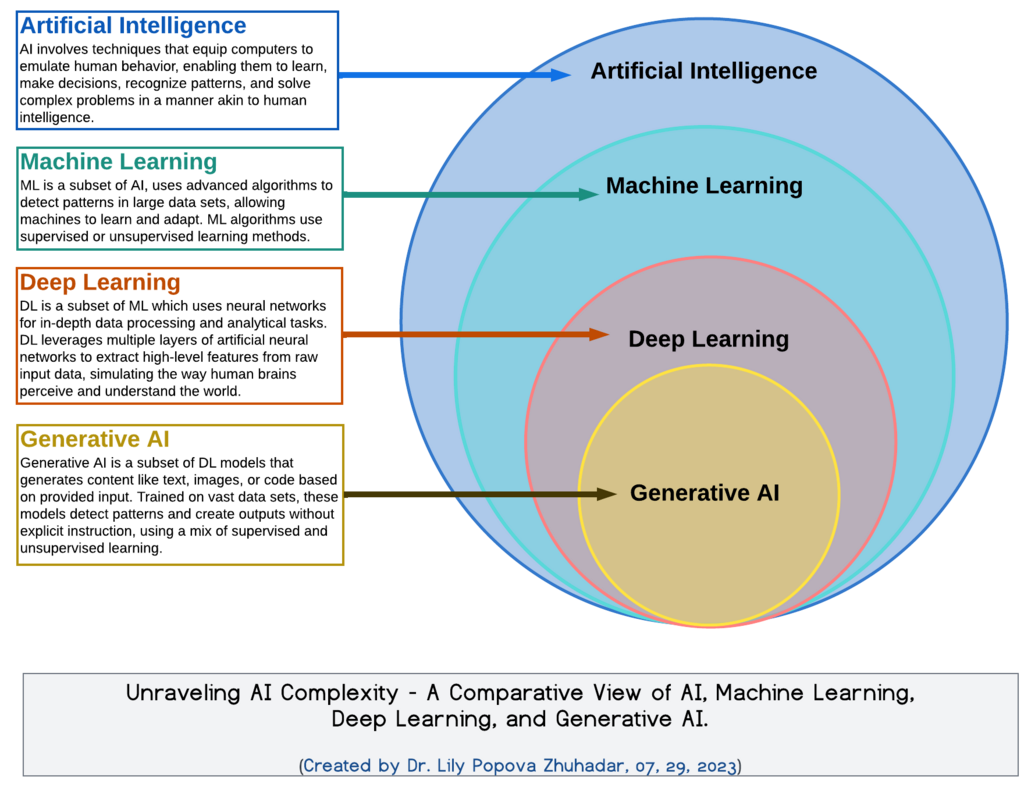
Large Language Models (LLMs) are advanced AI systems trained on massive datasets to understand and generate human-like text, powered by deep learning techniques.
The term "large" refers to two key aspects: the enormous size of the dataset they are trained on and the huge number of parameters they contain. Parameters are the internal variables the model learns from the training data, essentially shaping its knowledge and capabilities. Early models had thousands of parameters, while modern LLMs can have hundreds of billions or even trillions, making them incredibly powerful.
A Brief History
The journey to today's LLMs began decades ago. Early attempts at natural language processing (NLP) relied on complex, hand-written rules. Linguists and programmers would try to create a comprehensive set of grammatical rules for a computer to follow. This approach was brittle and couldn't handle the endless exceptions and ambiguities of human language.
The next big step was the move to statistical models in the 1990s. Instead of using hard-coded rules, these models learned patterns from large amounts of text data. They were better at handling ambiguity but still lacked a deep sense of context.
The modern era of LLMs was kicked off by advancements in neural networks and a key architectural innovation called the Transformer, introduced in 2017. This new design allowed models to handle long-range dependencies in text far more effectively, paving the way for the powerful models we use today.
| Year | Milestone | Significance |
|---|---|---|
| ~1966 | ELIZA | An early chatbot that used simple keyword matching, showing the possibility of human-computer conversation. |
| 2017 | Transformer Architecture | A new neural network design that revolutionized how models process sequential data like text. |
| 2018 | BERT (Google) | Introduced a new technique allowing models to understand the context of a word from both directions (left and right). |
| 2018 | GPT (OpenAI) | Showcased the power of large-scale, generative pre-training for a wide range of NLP tasks. |
| 2020 | GPT-3 (OpenAI) | A massive leap in scale (175 billion parameters) that demonstrated surprisingly powerful abilities with minimal prompting. |
A World of Applications
The impact of LLMs is hard to overstate. They have fundamentally changed what's possible in the field of AI and are being integrated into countless products and industries.
LLMs have shifted the paradigm from building specialized models for specific NLP tasks to using a single, large model for a wide range of language tasks.
Here are just a few areas where they're making a difference:
- Search Engines: Providing direct, conversational answers to complex questions instead of just a list of links.
- Content Creation: Assisting writers, marketers, and developers by drafting emails, writing articles, and generating code snippets.
- Customer Support: Powering chatbots that can handle complex queries and provide 24/7 assistance.
- Education: Acting as personalized tutors that can explain difficult concepts and adapt to a student's learning style.
- Healthcare: Summarizing patient records, analyzing medical research, and helping to draft clinical notes.
Let's review what you've learned about the fundamentals of Large Language Models.
What is the primary function of a Large Language Model?
The term "large" in Large Language Models refers to the enormous size of their training data and the huge number of __________ they contain.
This is just the beginning. By understanding what LLMs are and where they came from, you're ready to explore how they actually work.