Introduction to Large Language Models
Introduction to Large Language Models
What Are Large Language Models?
A Large Language Model, or LLM, is a type of artificial intelligence designed to understand and generate human-like text. Think of it as an incredibly advanced form of autocomplete. It's trained on vast amounts of text data from the internet, books, and other sources, allowing it to learn the patterns, grammar, and nuances of language.
At its core, an LLM's primary task is to predict the next word in a sequence. Given the text "The cat sat on the," it calculates the most probable next word, which might be "mat," "couch," or "floor." By repeatedly performing this task, it can generate entire sentences, paragraphs, and even complete articles. This simple-sounding ability is the foundation for everything LLMs can do, from answering questions to writing code.
The key insight behind LLMs is that understanding language can be framed as a massive word-prediction problem.
From Rules to Predictions
Early attempts at natural language processing (NLP) relied heavily on hand-written rules. Linguists and programmers would try to create a comprehensive grammar for a computer to follow. This approach was brittle and couldn't handle the messy, unpredictable nature of real human language.
Later, statistical models came along. These were an improvement, as they used data to learn the probability of word sequences. For example, a model might learn that "ice" is often followed by "cream." However, these models had a very short memory. They could only consider the last few words, which limited their ability to understand complex sentences and maintain context.
The real breakthrough came with neural networks, which could learn much more complex patterns. But it wasn't until the arrival of a specific architecture that modern LLMs became possible.
The Transformer Architecture
In 2017, a research paper introduced the Transformer model. Its key innovation was a mechanism called attention. Attention allows the model to weigh the importance of different words in the input text when making a prediction. It can "pay attention" to words far apart from each other, solving the context problem that plagued earlier models.
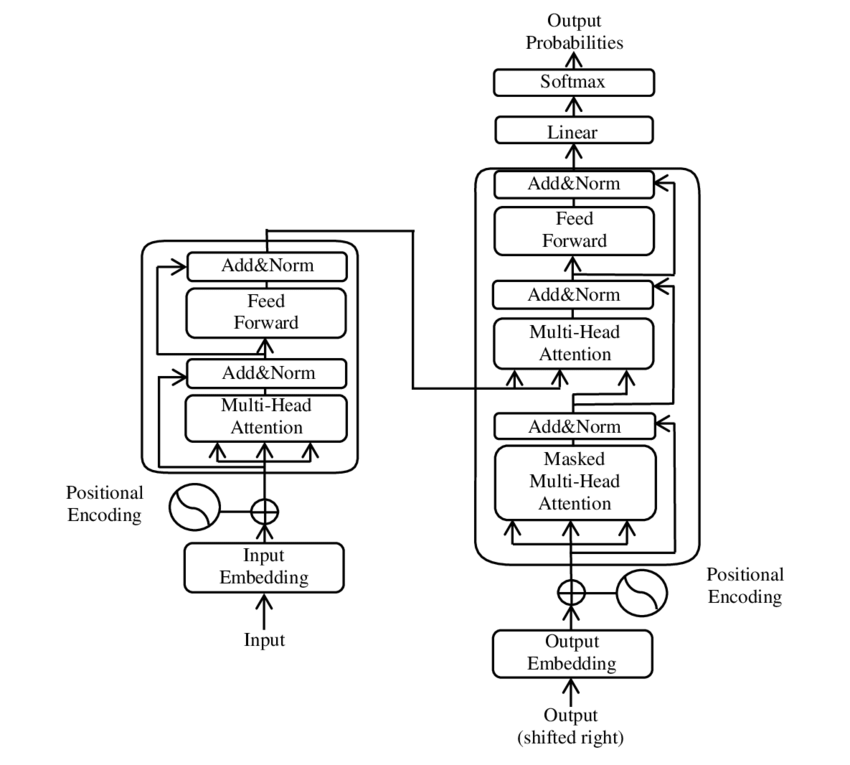
For example, in the sentence, "The robot picked up the ball and threw it to the dog," an older model might struggle to know what "it" refers to. The Transformer's attention mechanism can easily link "it" back to "ball," even though several words separate them. This ability to handle long-range dependencies is what makes LLMs so powerful.
The Power of Scale
The "Large" in Large Language Model is critical. Researchers discovered that as you increase the size of the model (the number of parameters) and the amount of training data, the model's capabilities don't just improve linearly—they undergo a phase shift. Suddenly, new, unexpected abilities emerge.
A smaller model might be good at completing sentences. A much larger one, trained on the same type of data, might suddenly become capable of translating languages, writing poetry, or solving logic puzzles, even if it wasn't explicitly trained on those specific tasks.
This scaling effect is why companies invest billions of dollars to train ever-larger models. More data and more parameters lead to more sophisticated understanding and a wider range of surprising skills. The transition from simple statistical models to massive, Transformer-based architectures marks a fundamental shift in how we approach artificial intelligence.
What is the core, fundamental task that a Large Language Model (LLM) is trained to perform?
What key mechanism, introduced by the Transformer architecture, allows LLMs to effectively understand relationships between words that are far apart in a sentence?