Introduction to Large Language Models
Introduction to LLMs
What Are Large Language Models?
A large language model, or LLM, is a type of artificial intelligence designed to understand and generate human language. Think of it as a very advanced prediction engine. By analyzing immense amounts of text from books, articles, and websites, it learns the patterns, grammar, and nuances of how we communicate. At its core, it's constantly predicting the next word in a sequence. By doing this repeatedly, it can write paragraphs, answer questions, and even create code.
The 'large' part is key. These models contain billions or even trillions of parameters, which are like internal variables the AI adjusts during its learning process. This immense scale allows them to grasp complex relationships in language, making their responses sound surprisingly natural and coherent.
Large Language Models (LLMs) have transformed numerous domains by providing advanced capabilities in natural language understanding, generation, and reasoning.
Their significance lies in this ability to work with language in a flexible, general-purpose way. Instead of being built for a single function, like only translating French to English, a single LLM can be prompted to perform many different tasks.
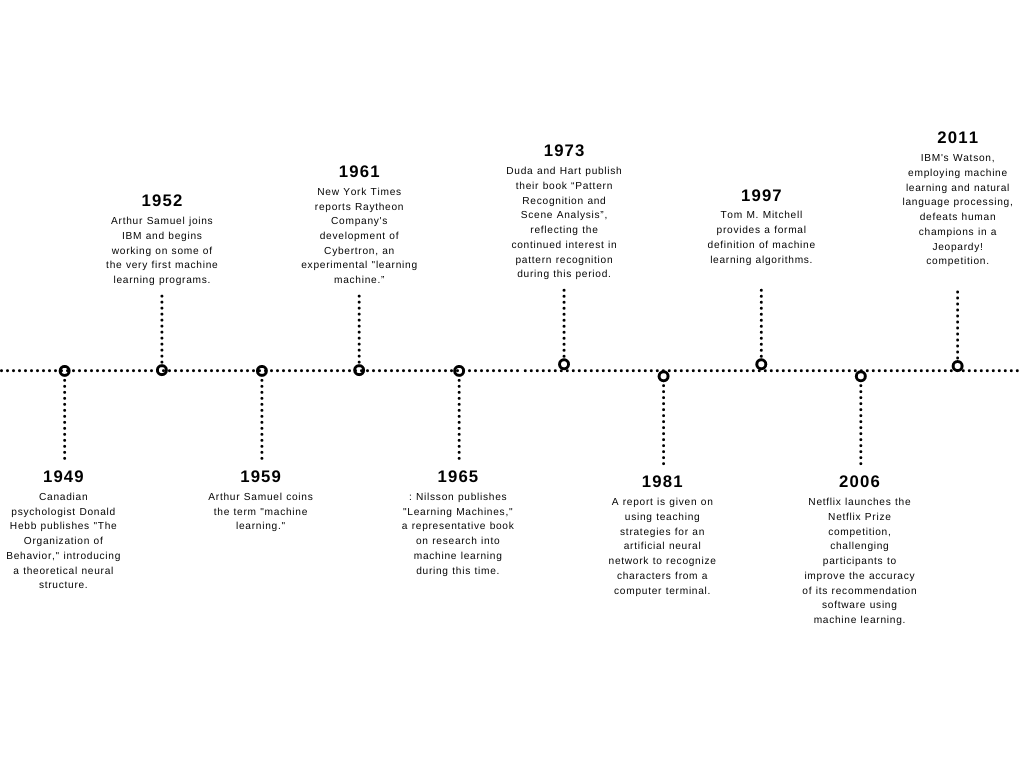
A Quick Trip Through Time
Language models aren't new. Early versions were statistical. They looked at which words commonly appeared together to guess the next word. These n-gram models were useful but had a very short memory. They could only consider the last few words, which limited their ability to produce complex or logical sentences.
Later, neural networks like Recurrent Neural Networks (RNNs) offered an improvement. They could 'remember' earlier parts of a sentence, giving them a better sense of context. However, RNNs struggled to maintain context over long paragraphs, a problem known as the vanishing gradient. They were a step forward, but still had trouble keeping the plot straight in a long story.
The Transformer Revolution
Everything changed in 2017 with the invention of the transformer architecture. This new design solved the memory problem in a clever way. Instead of processing words one by one in sequence, transformers can look at all the words in a sentence at once. They use a mechanism called attention to weigh the importance of every word in relation to every other word.
This parallel processing and attention mechanism allowed models to handle much longer texts and capture subtle, long-range dependencies. More importantly, it made it possible to build much, much larger models. The transformer architecture is the foundation that enables modern LLMs to be so powerful and versatile.
The Transformer model is the core architecture behind LLMs (Large Language Models).
What Can They Do?
Thanks to their deep understanding of language, LLMs have a broad range of abilities. They can generate creative text, from poems and scripts to emails and articles. They excel at summarizing long documents, pulling out the key points without losing the core message.
LLMs can also act as powerful question-answering systems, drawing on their vast training data to provide detailed explanations on countless topics. They can translate languages, rephrase text to be simpler or more formal, and even write computer code based on a plain-language description of the desired function.
Ask an LLM to write a song about a cactus who dreams of being a sailor, and it will. Ask it to explain quantum physics in simple terms, and it will try its best. This flexibility is what makes them so transformative.
This introduction just scratches the surface of what LLMs are and how they came to be. Their capabilities are built upon the foundational principles of transformers and large-scale data, opening up new possibilities in how we interact with information and technology.
At its most fundamental level, what is a Large Language Model continuously doing?
What key architectural innovation, introduced in 2017, enabled the development of modern, powerful LLMs?