Introduction to Large Language Models
Introduction to Natural Language Processing
Teaching Computers Our Language
Natural Language Processing, or NLP, is the field of artificial intelligence dedicated to helping computers understand, interpret, and generate human language. It's the science of teaching machines to read, listen, and communicate a lot like we do. From your phone's autocorrect to the spam filter in your email, NLP is working behind the scenes in many tools you use every day.
The ultimate goal of NLP is to bridge the communication gap between humans and computers, making technology more accessible and intuitive.
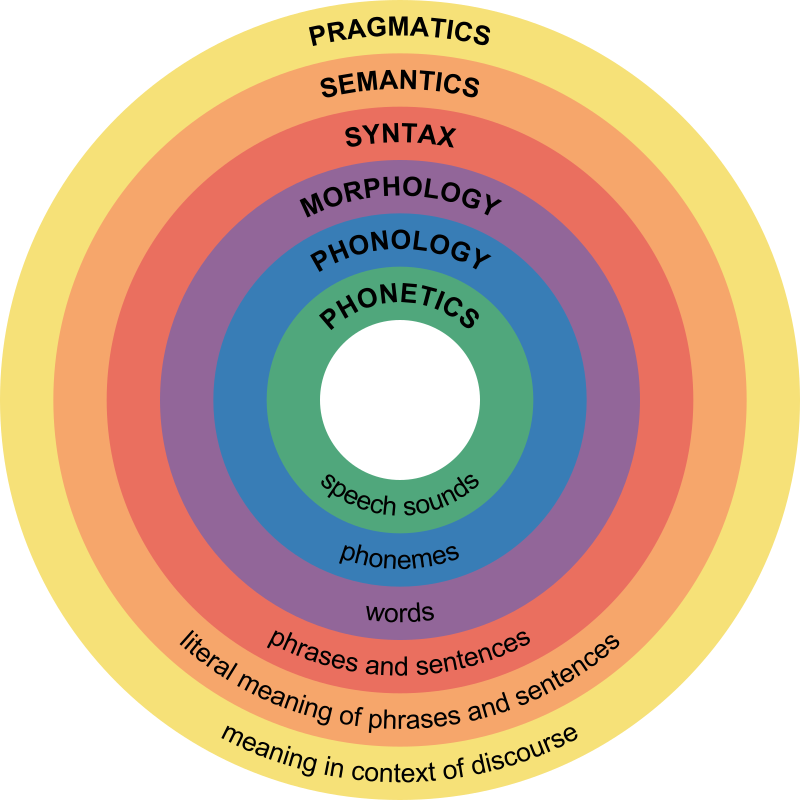
From Sentences to Signals
Humans read sentences and grasp their meaning instantly. Computers can't do that. They see language as a string of characters and need a methodical way to process it. The very first step is breaking text down into smaller, more manageable pieces.
Tokenization
noun
The process of splitting a piece of text into smaller units called tokens, which can be words, characters, or subwords.
For example, the sentence "The quick brown fox jumps." would be tokenized into a list of words: ["The", "quick", "brown", "fox", "jumps", "."]. Notice that even the period is its own token. This allows a computer to look at each piece of the sentence one by one.
After tokenization, text often goes through other preprocessing steps. This can include converting all words to lowercase to treat "The" and "the" as the same word, or removing punctuation and common words like "a," "an," and "the" that may not carry much specific meaning.
Finding Structure and Meaning
Once text is broken into tokens, the next challenge is understanding its structure. This is where syntax comes in. Syntax is the set of grammatical rules that govern how words combine to form sentences in a language. The process of analyzing a sentence to determine its grammatical structure is called parsing. A parser might identify "The quick brown fox" as the subject and "jumps" as the verb.
But knowing the grammar isn't enough. A computer also needs to understand semantics, which refers to the meaning of the words and the sentence as a whole. This is one of the hardest parts of NLP because language is often ambiguous. For example, the word "bank" can mean a financial institution or the side of a river. An NLP system must use context to figure out the intended meaning.
Common NLP in Action
By combining these techniques, developers can build tools that perform useful tasks. Here are a few common examples:
Text Classification: This involves assigning a category or label to a piece of text. Email spam detection is a classic example, where every incoming email is classified as either "spam" or "not spam."
Another powerful application of text classification is sentiment analysis.
Sentiment Analysis: This task determines the emotional tone behind a body of text. Businesses often use it to analyze customer reviews or social media posts, classifying them as positive, negative, or neutral to gauge public opinion about their products.
Beyond classifying entire documents, NLP can also identify specific pieces of information within the text.
Named Entity Recognition (NER): This technique seeks to locate and classify named entities in text into pre-defined categories such as the names of persons, organizations, locations, dates, and so on. In the sentence "Apple was founded by Steve Jobs in Cupertino on April 1, 1976," an NER system would identify "Apple" as an organization, "Steve Jobs" as a person, "Cupertino" as a location, and "April 1, 1976" as a date.
These foundational tasks are the building blocks for more complex applications, including the powerful Large Language Models that are becoming increasingly common.
Now, let's test your understanding of these core concepts.
What is the primary goal of Natural Language Processing (NLP)?
How would the sentence "NLP is fascinating!" most likely be tokenized?
Understanding these fundamentals of NLP gives you a solid base for exploring how more advanced models, like LLMs, learn to process and generate language with remarkable fluency.