Introduction to Large Language Models
Introduction to LLMs
What Are Large Language Models?
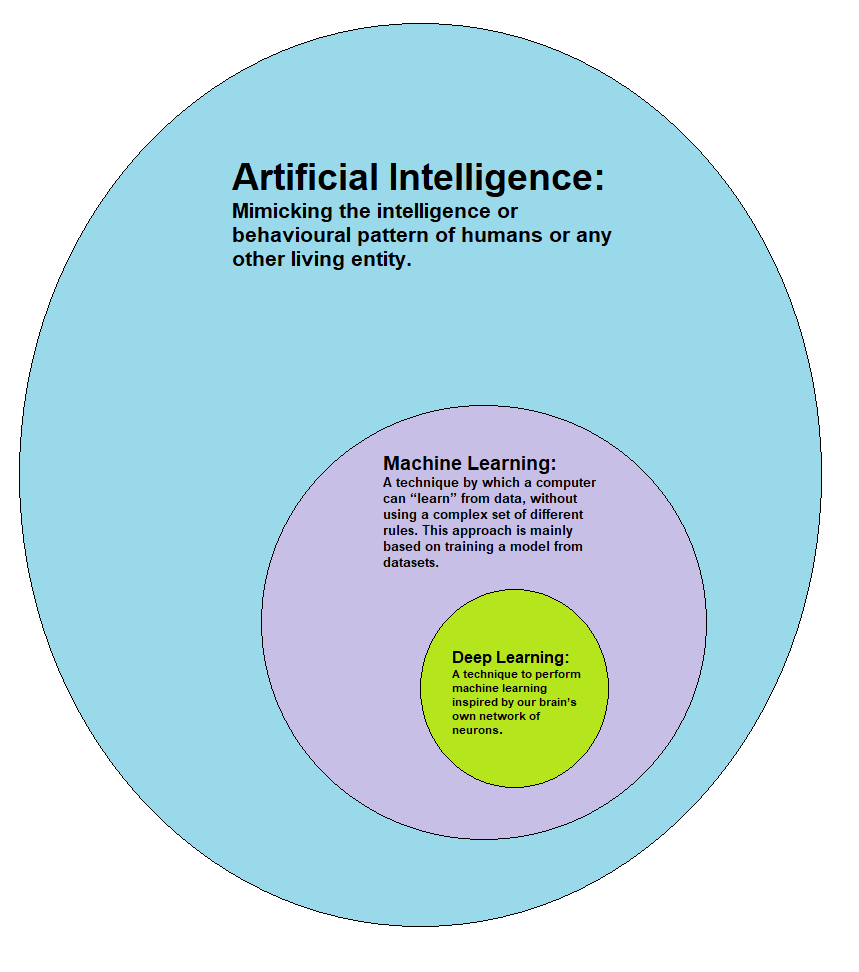
Large Language Models, or LLMs, are a type of artificial intelligence designed to understand and generate human-like text. Think of them as incredibly advanced prediction engines. After being trained on enormous amounts of text data from books, websites, and articles, they become masters at recognizing patterns, grammar, and even context in language.
Large Language Models (LLMs) are machine learning models trained on vast amount of textual data to generate and understand human-like language.
Their ability to process and produce text makes them a cornerstone of modern Natural Language Processing (NLP), a field of AI focused on the interaction between computers and human language. LLMs aren't just a small step forward; they represent a massive leap in how machines can work with words, ideas, and information.
A Quick Trip Through Time
The idea of a computer understanding language isn't new, but the power behind it has grown exponentially. Early language models were statistical. They worked by calculating the probability of a word appearing after another. For example, after seeing "the cat sat on the," a simple model might guess "mat" is more likely than "skyscraper."
These models were useful but limited. The real breakthrough came with neural networks, and later, a specific architecture called the Transformer. This architecture, introduced in 2017, allowed models to handle long-range dependencies in text and process information much more efficiently. It paved the way for models to become truly "large," scaling up to billions of parameters and being trained on internet-scale data.

How Do They Work?
At its core, an LLM is a next-token predictor. It looks at a sequence of text and calculates the most probable next piece of text. It's like a supercharged autocomplete on your phone.
First, the text is broken down into smaller pieces called tokens. A token can be a word, part of a word, or even just a punctuation mark. The model then analyzes the sequence of tokens and predicts the most likely token to come next. It adds that token to the sequence and repeats the process, generating text one token at a time.
Token
noun
A fundamental unit of text that a language model uses for processing and generation. It can be a word, a subword, or a character.
By repeating this simple prediction process over and over, LLMs can write essays, answer questions, and even generate computer code. The magic is in the scale. By training on vast datasets, they learn intricate patterns that allow them to produce coherent, relevant, and surprisingly creative text.
Think of it this way: An LLM doesn't 'know' anything. It's just exceptionally good at predicting which word should follow another based on the patterns it saw in its training data.
Prominent LLMs and Their Uses
You've likely already encountered LLMs. Several have become household names, each with its own strengths.
GPT Series (Generative Pre-trained Transformer): Developed by OpenAI, models like GPT-3 and GPT-4 are known for their powerful text generation capabilities. They excel at tasks like writing, summarization, and conversation.
BERT (Bidirectional Encoder Representations from Transformers): Developed by Google, BERT is designed to understand the context of a word in a sentence by looking at the words that come before and after it. This makes it excellent for tasks like search query analysis and sentiment analysis.
The applications of these models are transforming industries. They power chatbots and virtual assistants, translate languages in real time, help developers write code faster, analyze customer feedback, and even assist scientists with research by summarizing complex papers. From content creation to data analysis, LLMs are becoming an essential tool across many fields.
Ready to test your knowledge? Let's see what you've learned.
At its most fundamental level, what is the core function of a Large Language Model?
What architectural innovation, introduced in 2017, was a major breakthrough that enabled the creation of modern, truly "large" language models?
This is just the beginning of what's possible with large language models. By understanding these foundational concepts, you're ready to explore their complex architecture and how they're trained.