Introduction to Large Language Models
Introduction to LLMs
What Are Large Language Models?
A Large Language Model, or LLM, is a type of artificial intelligence designed to understand, generate, and interact with human language. Think of it as a complex program that has read a massive library of books, articles, and websites. By processing all this information, it learns the patterns, grammar, context, and nuances of language.
The main goal of an LLM is to predict the next word in a sequence. While this sounds simple, mastering this task allows LLMs to write essays, answer questions, translate languages, and even write computer code.
LLMs are built on neural networks, which are computing systems inspired by the human brain. These networks have many layers of interconnected nodes, or neurons, that process information. The "large" in Large Language Model refers to the enormous number of parameters—the internal variables the model uses to make predictions—which can be in the billions or even trillions.
The Transformer Architecture
The breakthrough that enabled modern LLMs was the invention of the Transformer architecture in 2017. Before the Transformer, models processed text sequentially, word by word. This made it difficult to keep track of context in long sentences.
The Transformer changed the game by allowing the model to process every word in a sentence at the same time. This parallel processing lets it weigh the importance of different words when analyzing and generating text, no matter where they are in the sentence.
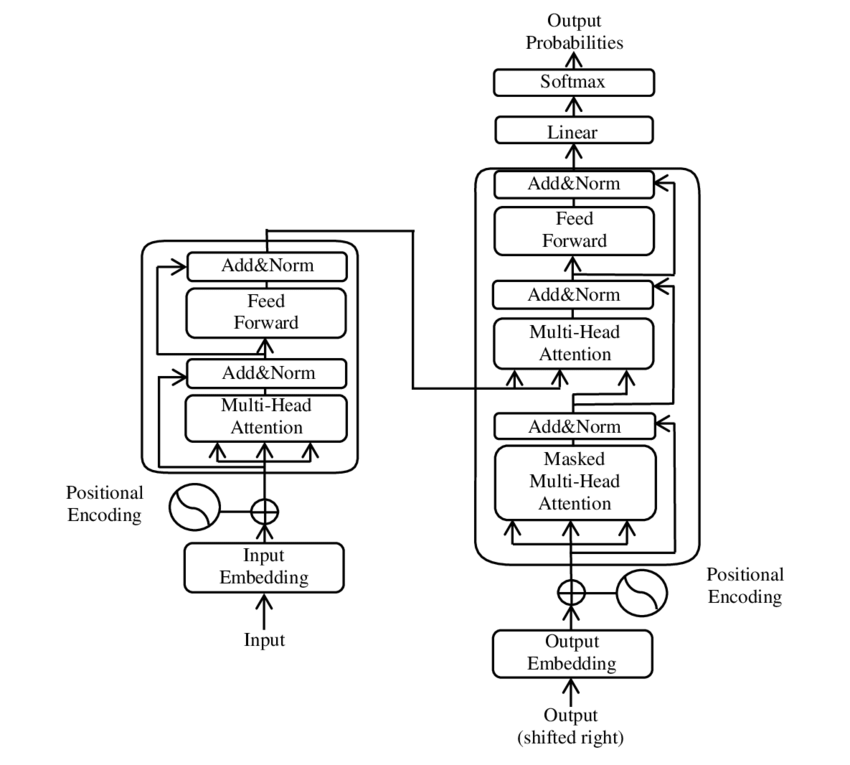
Two key components make the Transformer so powerful: the attention mechanism and feedforward networks.
The attention mechanism allows the model to focus on specific parts of the input text that are most relevant to the task at hand. When translating a sentence, for example, it helps the model pay special attention to the subject and verb to ensure they agree, even if they are far apart.
After the attention mechanism has identified which words are most important, the information is passed to a feedforward network. This network acts as a processing station. It applies complex calculations to the information, allowing the model to capture intricate patterns and relationships in the language. Each layer of the Transformer contains these components, enabling the model to develop a progressively deeper understanding of the text.
Training an LLM
Training an LLM is an enormous undertaking that requires two main things: a vast amount of data and immense computational power. The training data is typically a diverse collection of text and code scraped from the internet, including websites like Wikipedia, books, and programming repositories.
The process begins with pre-training. During this phase, the model is given an enormous dataset and tasked with a simple objective: predict the next word in a sentence. For instance, given the phrase "The cat sat on the ___", the model learns to predict "mat". By doing this billions of times, the model learns grammar, facts, reasoning abilities, and even some biases from the training data.
This pre-training phase is incredibly resource-intensive, often taking weeks or months on thousands of specialized computer chips.
How Good Is It?
Once a model is trained, we need a way to measure its performance. Researchers use several metrics to evaluate how well an LLM understands and generates language.
One common metric is perplexity. It measures how surprised or "perplexed" a model is by a sequence of words. A lower perplexity score means the model is better at predicting the next word, indicating a stronger grasp of the language.
For specific tasks like translation, a metric called BLEU (Bilingual Evaluation Understudy) is often used. It compares the model's output to one or more high-quality human translations. A higher BLEU score suggests the model's translation is closer to a human's.
By understanding these core concepts, you can appreciate the complexity and power behind the LLMs that are reshaping technology.