Introduction to Large Language Models
Introduction to Large Language Models
What Are Large Language Models?
At its core, a Large Language Model, or LLM, is a type of artificial intelligence designed to understand and generate human language. Think of it as an advanced autocomplete, but instead of just suggesting the next word, it can write entire paragraphs, answer complex questions, and even translate between languages. It learns these skills by analyzing enormous amounts of text data from books, articles, and websites.
A Large Language Model (LLM) is a type of artificial intelligence program designed to understand, generate, and work with human language.
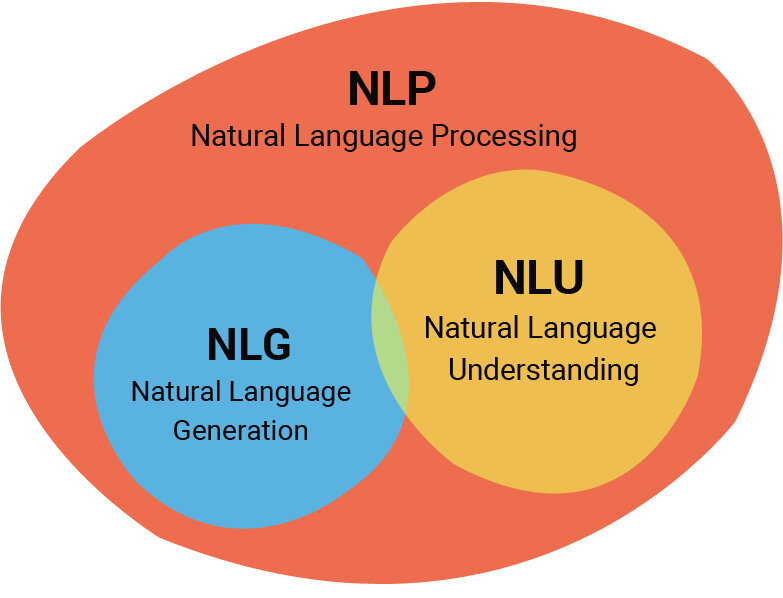
This ability to process and produce text makes LLMs a cornerstone of Natural Language Processing (NLP), a field of AI focused on enabling computers to comprehend and interact with human language. Before LLMs, NLP tasks required highly specialized models for each specific job, like one for translation and another for summarizing. LLMs changed the game by creating a single, powerful foundation that can be adapted for a huge range of tasks.
A Brief History
The journey to today's powerful LLMs has been a long one. Early language models, developed decades ago, were based on statistical methods. They worked by calculating the probability of a word appearing after another. These models, known as n-gram models, were useful but had a very limited memory. They could only look back at a few previous words to guess the next one, making their responses short-sighted and often nonsensical.
The next big leap came with the introduction of neural networks. These models, inspired by the structure of the human brain, could consider a much wider context. Recurrent Neural Networks (RNNs) were a significant step forward because they had a form of memory, allowing them to process sequences of words more effectively. However, they still struggled with long-term dependencies, meaning they would often forget the beginning of a long sentence by the time they reached the end.
The breakthrough that paved the way for modern LLMs was the invention of the Transformer architecture in 2017. This new design allowed models to weigh the importance of different words in the input text simultaneously, revolutionizing their ability to handle long-range dependencies and understand complex context.
This innovation, combined with access to massive datasets and more powerful computers, allowed researchers to scale up models dramatically. This led to the creation of the first true Large Language Models, which have continued to grow in size and capability ever since.
LLMs in Action
The versatility of LLMs means they are now used in countless applications we interact with every day. Their impact can be seen across several key NLP tasks.
Sentiment Analysis
noun
The process of computationally identifying and categorizing opinions expressed in a piece of text to determine whether the writer's attitude is positive, negative, or neutral.
One common use is text generation. This can range from drafting emails and writing articles to creating dialogue for video games. By providing a simple prompt, a user can have an LLM generate coherent and contextually relevant text on almost any topic.
Another major application is translation. LLMs can translate text between dozens of languages with a high degree of accuracy, capturing nuances and idiomatic expressions that were challenging for older machine translation systems. They learn the patterns and structures of multiple languages from their training data, allowing them to act as a bridge between them.
LLMs also excel at sentiment analysis. Businesses use this to analyze customer reviews, social media comments, and survey responses to understand public opinion about their products or services. The model reads the text and determines if the underlying sentiment is positive, negative, or neutral. This provides valuable insights that can inform business decisions.
Finally, they power sophisticated question-answering systems, chatbots, and virtual assistants that can understand user queries and provide detailed, helpful responses.