Introduction to Large Language Models
Introduction to LLMs
What Are Large Language Models?
At its heart, a Large Language Model (LLM) is an AI program trained to understand and generate human language. Think of it as an incredibly advanced version of the autocomplete on your phone. It works by predicting the next word in a sequence, but it does so with a stunning level of sophistication. It has learned the patterns, grammar, context, and even some of the nuances of language from being trained on a massive amount of text data.
Large Language Model
noun
A type of artificial intelligence program designed to understand, generate, and work with human language, trained on vast quantities of text data.
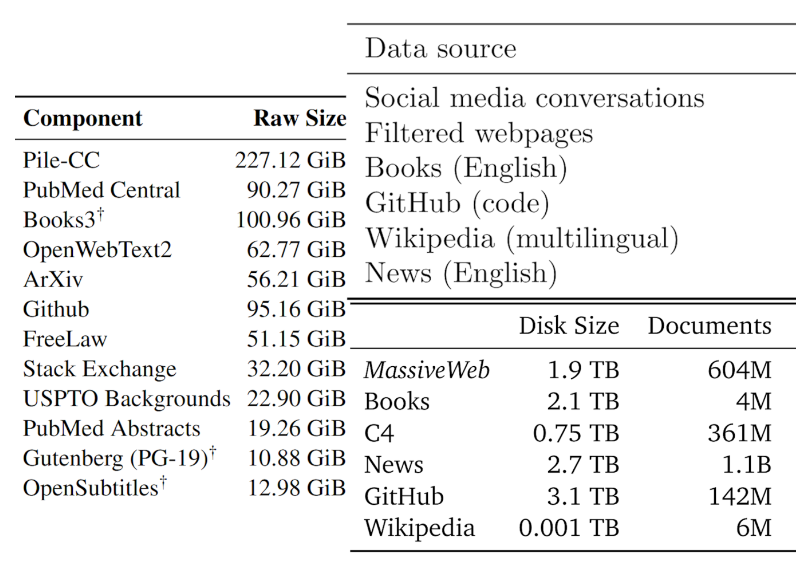
The "large" in the name isn't an exaggeration. These models are trained on datasets that are almost unimaginably vast, encompassing huge swaths of the internet, digital books, and other text sources. This immense training library is what allows an LLM to generate text that is coherent, contextually relevant, and often indistinguishable from what a human might write.
A Quick Trip Through Time
Before LLMs, language models were much simpler and more specialized. An old-school translation program was only good for translation, and a spam detector just detected spam. Each task required its own unique model built for that specific purpose.
The big shift came with the development of the "Transformer" architecture in 2017. This new design allowed models to handle long-range dependencies in text much more effectively—essentially, they got much better at keeping track of the context of a conversation or document. This innovation paved the way for the LLMs we see today.
This marked a major change: instead of building many small, specialized models, researchers could now build a single, massive model that could be adapted for many different tasks.
Two of the earliest and most influential LLMs built on this architecture are BERT and GPT.
BERT (Bidirectional Encoder Representations from Transformers) was revolutionary because it learned to look at the entire context of a sentence at once—both the words that come before and after a target word. This bidirectional approach gave it a much deeper understanding of language nuance. BERT became excellent at tasks like analyzing sentiment or answering questions about a given text.
GPT (Generative Pre-trained Transformer), on the other hand, was designed to be generative. It excels at creating new text. By predicting the next word in a sequence, it can write essays, compose emails, and carry on conversations. Each new version of GPT has grown larger and more capable, pushing the boundaries of what's possible.
What Can LLMs Actually Do?
Large Language Models are versatile tools. Their ability to process and generate text has had a huge impact on technology. They are the engines behind many of the AI tools we now use every day.
Some of their key capabilities include:
- Text Generation: Writing anything from poetry and marketing copy to computer code.
- Summarization: Condensing long articles or documents into a few key points.
- Translation: Translating languages with more accuracy and nuance than older tools.
- Question Answering: Acting as conversational search engines, providing direct answers to user questions.
This versatility has woven LLMs into the fabric of many applications, from powering more helpful customer service chatbots to assisting developers in writing code more efficiently.
Large Language Models (LLMs) have transformed numerous domains by providing advanced capabilities in natural language understanding, generation, and reasoning.
The Not-So-Fine Print
For all their power, LLMs are not perfect. It's crucial to understand their limitations and the ethical considerations that come with them.
One major issue is bias. Because LLMs learn from a vast trove of human-written text from the internet, they can absorb and reproduce the biases present in that data. This can lead to outputs that are unfair, stereotypical, or otherwise problematic.
A second challenge is their tendency to "hallucinate." This is when an LLM generates information that sounds plausible and confident but is completely false. It's not lying in the human sense; it's simply generating a statistically likely sequence of words without any real understanding of truth.
Finally, the sheer size of these models means they require enormous amounts of computational power to train and run, raising concerns about their environmental impact and the concentration of this technology in the hands of a few large companies.
Using LLMs effectively means being a critical consumer of the information they provide. Always verify important facts and be aware of their potential for error and bias.
Now, let's test your understanding of these foundational concepts.
What is the fundamental task a Large Language Model (LLM) is trained to perform at its core?
Which architectural innovation, introduced in 2017, was a major breakthrough for the development of modern LLMs like GPT and BERT?
Understanding these basics is the first step. As we continue, we'll delve deeper into how these fascinating models are built and used.