Introduction to Knowledge Graphs
Introduction to Knowledge Graphs
What Is a Knowledge Graph?
Think about how your brain stores information. You don't just have a list of facts. Instead, you have a web of interconnected ideas. You know that Paris is a city, that it's in France, and that the Eiffel Tower is in Paris. These concepts aren't isolated; they're linked together. A knowledge graph does the same thing, but for a computer.
A knowledge graph is a way of representing information by connecting real-world entities and the relationships between them. Instead of just storing raw data, it captures context. This allows systems to understand information more like a human would, making it a powerful tool for everything from search engines to artificial intelligence.
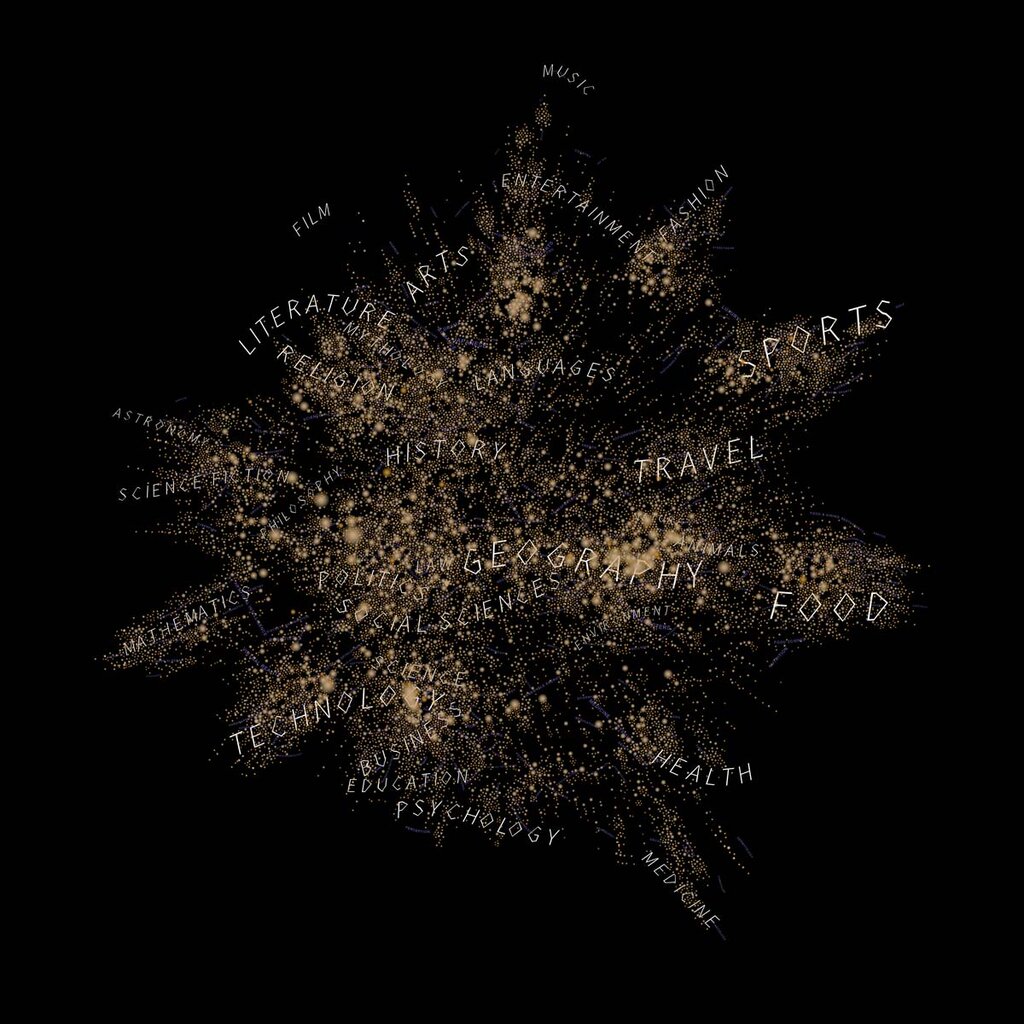
Nodes, Edges, and Labels
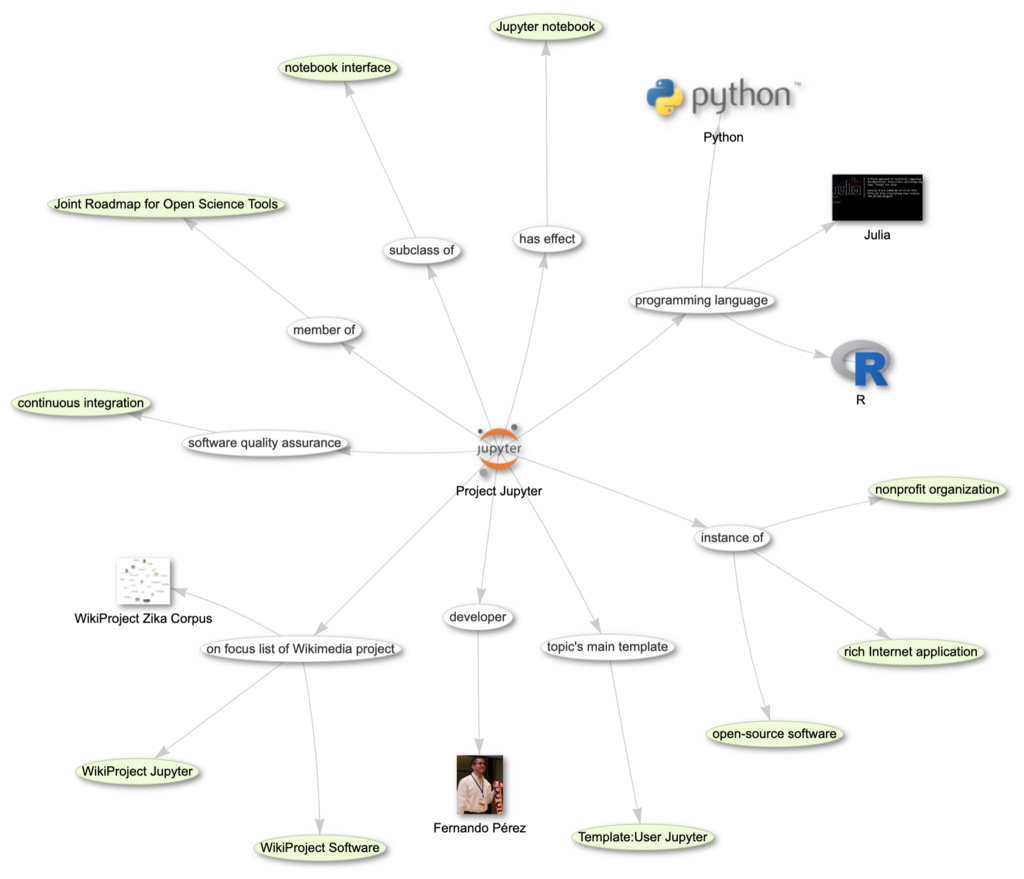
Knowledge graphs are built from three simple parts: nodes, edges, and labels.
A node represents an entity, which can be a person, place, object, or even an abstract concept. Think of nodes as the nouns in our information network. For example, Leonardo da Vinci and the Mona Lisa would each be a node.
An edge is the line that connects two nodes. It represents the relationship between them. Edges are the verbs that link our nouns together. An edge between Leonardo da Vinci and the Mona Lisa could represent the fact that he painted it.
A label is simply the name we give to a node or an edge. The label for one node would be "Leonardo da Vinci," and the label for the edge connecting it to another node would be "painted."
Together, these components form simple facts called "triples": (Node 1) -> [Edge] -> (Node 2). For example: (Leonardo da Vinci) -> [painted] -> (Mona Lisa).
Different from a Database
You might be thinking this sounds a bit like a traditional database. While they both store information, their structures are fundamentally different.
A traditional database, like a spreadsheet, organizes data into tables with rigid rows and columns. To find connections between tables, you have to perform complex queries called joins. This can be slow and inefficient, especially as the data grows.
A knowledge graph, on the other hand, stores relationships as a core part of its structure. The connections are already there, making it fast and intuitive to explore how different pieces of information relate to one another. Adding new types of data or relationships is also much simpler. You just add new nodes and edges without having to redesign the entire structure.
| Feature | Traditional Database | Knowledge Graph |
|---|---|---|
| Structure | Rigid tables (rows, columns) | Flexible network (nodes, edges) |
| Relationships | Inferred via complex queries | Stored directly as edges |
| Flexibility | Difficult to change structure | Easy to add new data types |
| Best For | Storing structured, uniform data | Exploring complex, connected data |
Real World Uses
Knowledge graphs are already a part of your daily life. When you search for "movies directed by Steven Spielberg," the rich information box that appears is powered by a knowledge graph. It understands that Steven Spielberg is a person, that he is a director, and it can quickly pull up all the movie nodes connected to him by the "directed by" edge.
They are also crucial for recommendation systems. When a streaming service suggests a new show, it's using a knowledge graph to see what other shows are similar in genre, share the same actors, or are liked by people with similar tastes to yours. Other applications include fraud detection, supply chain management, and organizing scientific research.
Let's review the key terms we've covered.
Now, check your understanding of these fundamental concepts.
What are the three fundamental components that form a 'triple' in a knowledge graph?
A key advantage of a knowledge graph over a traditional relational database is its ability to...
By focusing on relationships, knowledge graphs provide a powerful and intuitive way to model the world and uncover insights hidden within data.