Introduction to Knitting
Knitting Tools and Materials
Choosing Your Tools
Knitting is wonderfully simple at its core. You only need two things to create fabric: a pair of needles and a strand of yarn. Everything else just makes the process a little smoother. Let's look at how to pick the right tools to get started.
Picking Your Needles
Knitting needles are the tools you use to form loops of yarn into stitches. They come in a few different shapes, each suited for different kinds of projects.
There are three main types of needles: straight, circular, and double-pointed.
Straight needles are what most people picture when they think of knitting. They're two separate sticks, each with a point at one end and a stopper at the other. They're used for knitting flat pieces, like scarves or dishcloths.
Circular needles are two short needle tips connected by a flexible cable. They are the most versatile type. You can use them to knit flat pieces back and forth, or you can join your stitches into a loop to knit in the round, creating seamless tubes for things like hats and sweaters.
Double-pointed needles (DPNs) come in sets of four or five. These short needles have points at both ends, allowing you to knit from either side. They are used for small circular projects, like the tops of hats, socks, or sleeves.
Needles also come in different materials, like wood, bamboo, metal, and plastic. Wooden needles have a bit of grip, which is helpful for beginners because stitches are less likely to slide off accidentally. Metal needles are slick and fast, which many experienced knitters prefer.
Finally, needles are categorized by size, which refers to their diameter. Thicker needles create larger stitches, while thinner needles create smaller ones. Your knitting pattern will always tell you what size needle to use.
The World of Yarn
Choosing yarn is one of the most exciting parts of starting a project. Yarns come in every color imaginable and are made from a variety of fibers.
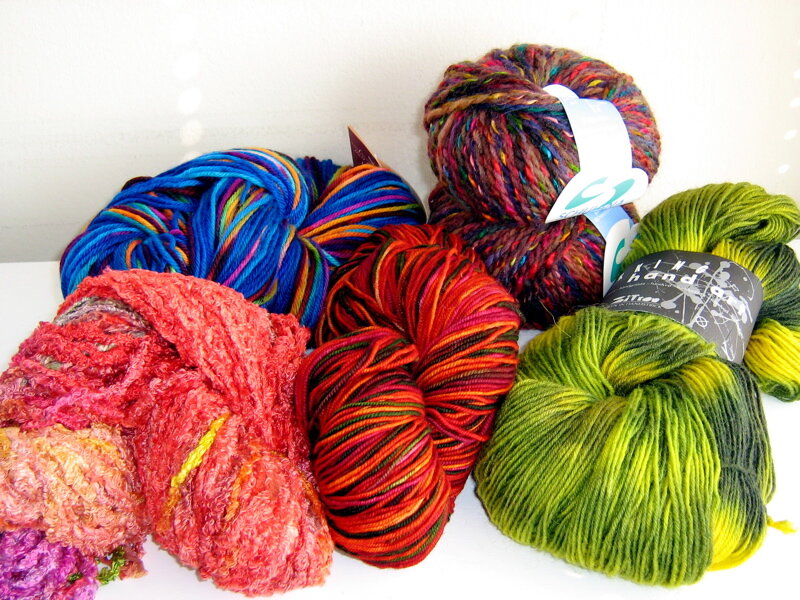
Fibers can be grouped into three categories: animal, plant, and synthetic. Animal fibers like wool and alpaca are warm and elastic. Plant fibers such as cotton and linen are breathable and strong. Synthetic fibers like acrylic and nylon are durable, affordable, and easy to care for. Many yarns are a blend of different fibers to combine their best qualities.
Begin with a light-colored, medium-weight yarn (also called worsted-weight or size 4). Light colors make it easier to see your stitches, and the medium weight is easy to handle.
Yarn is also categorized by its thickness, or "weight." This has nothing to do with how heavy it is, but rather how thick the strand is. Using the right yarn weight for your project is key to making sure it comes out the right size.
| Weight Category | Number | Common Uses |
|---|---|---|
| Lace | 0 | Shawls, doilies |
| Super Fine | 1 | Socks, baby clothes |
| Fine | 2 | Sweaters, accessories |
| Light | 3 | Lighter sweaters, shawls |
| Medium | 4 | Sweaters, scarves, blankets |
| Bulky | 5 | Chunky blankets, warm hats |
| Super Bulky | 6 | Thick cowls, quick blankets |
For a beginner, a medium weight yarn, often called "worsted weight," is a perfect place to start. It's not too thick or too thin, making it easy to handle and see your stitches.
A Few Helpful Extras
Besides needles and yarn, a few other tools will make your knitting life much easier. You don't need a lot, just a small pouch of essentials.
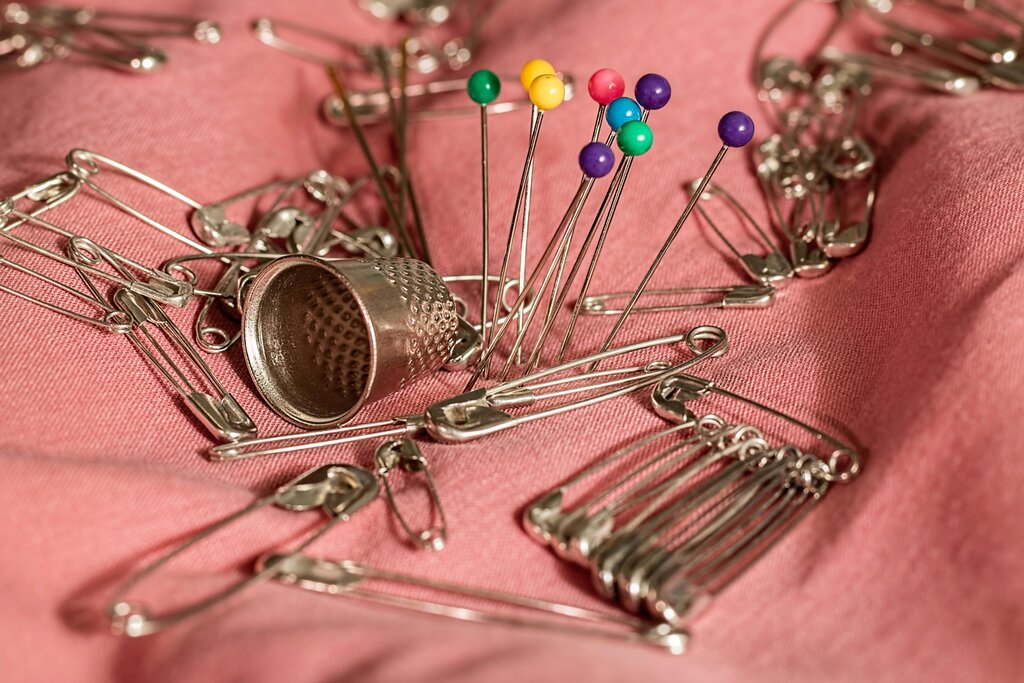
Here’s a quick list of must-haves:
- Scissors: Any small, sharp pair will do for snipping yarn.
- Tape Measure: Crucial for checking your gauge (the size of your stitches) and measuring your work as it grows.
- Tapestry Needle: This is a large, blunt-tipped needle used for weaving in the loose ends of yarn when you're finished.
- Stitch Markers: These are small rings or clips that you place on your needle to mark a specific spot, like the beginning of a round or a pattern repeat. They're like little signposts in your knitting.
With a good pair of needles, some inviting yarn, and these few accessories, you have everything you need to start knitting.