Introduction to Jungian Psychology
Introduction to Jungian Psychology
The Man and His Mind
Carl Jung was a Swiss psychiatrist who began his career as a protégé of Sigmund Freud. The two men shared a fascination with the unconscious mind, but their paths eventually diverged over fundamental disagreements. While Freud saw repressed sexuality as the primary driver of human behavior, Jung believed the psyche was more complex and spiritual.
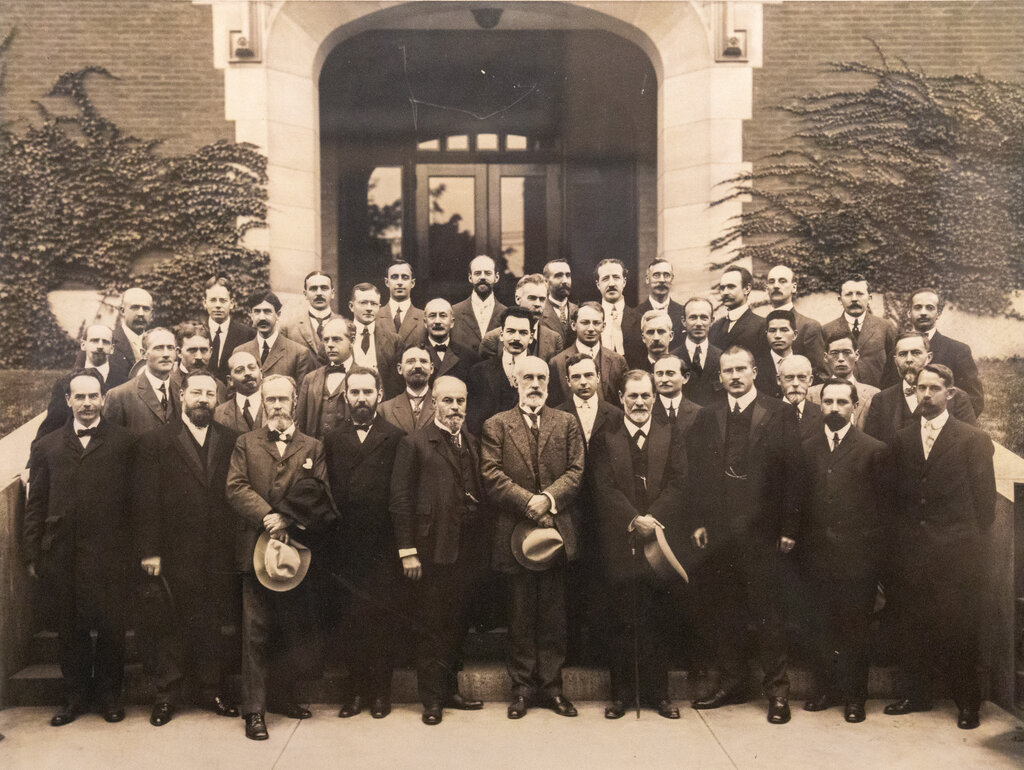
This split led Jung to develop his own school of thought, known as analytical psychology. Instead of focusing solely on what was wrong with a person, Jung was interested in the whole self. He saw the psyche not as a battleground of conflicting drives, but as a dynamic system striving for balance and wholeness. His goal was to help people integrate the conscious and unconscious parts of their minds to become more complete individuals.
Mapping the Psyche
To understand his approach, we need to look at Jung's model of the mind. He divided the psyche into three main parts: the ego, the personal unconscious, and the collective unconscious. These aren't physical locations in the brain, but rather concepts to describe how our minds work.
Let's break down each component, starting from the part we know best.
The Conscious Ego
The ego is the center of your conscious world. It’s the part of your mind that you identify as "I" or "me." It holds all the thoughts, feelings, memories, and sensations you are currently aware of. Think of it as the captain of a ship, responsible for steering your day-to-day life and giving you a sense of identity and continuity.
ego
noun
The conscious part of the mind that contains our awareness and sense of personal identity.
However, the ego is only a small fraction of the total psyche. It sees the surface of the water but is mostly unaware of the vast ocean currents moving beneath it. Those deeper currents are found in the unconscious.
The Unconscious Depths
Jung split the unconscious into two distinct layers. The first is the personal unconscious. This is a holding area for all of your own experiences that have been forgotten, repressed, or were never strong enough to reach consciousness in the first place. It includes everything from a childhood memory you can no longer recall to the name of a person you just met.
Your personal unconscious is unique to you. It's like a personal filing cabinet of your life's experiences that aren't currently on your desk.
Beneath this personal layer lies Jung's most famous and controversial idea: the collective unconscious. He proposed that humans share a psychic inheritance, a universal reservoir of experiences and images from our ancestral and evolutionary past. It's not made of personal memories, but of latent predispositions and patterns that are common to all humanity.
Jung believed this shared foundation explains why people across different cultures and time periods have similar myths, symbols, and religious beliefs. These universal patterns, which he later called archetypes, emerge from this deep, collective layer of the human psyche.
Time to check your understanding of these foundational concepts.
What was the fundamental point of disagreement that led to the split between Carl Jung and Sigmund Freud?
Which component of the psyche, according to Jung, is responsible for your sense of identity and conscious awareness in daily life?
Jung's model of the psyche provides a framework for understanding ourselves beyond just our conscious thoughts. By acknowledging the personal and collective depths within, we can begin to see how much of our inner world is waiting to be explored.