Introduction to Java Programming
Introduction to Java
Meet Java
Back in the early 1990s, a team at Sun Microsystems wanted to create a language for smart electronics, like early interactive TVs. The problem was that these devices all used different computer chips. Code written for one wouldn't work on another. Their solution was a new programming language called Java.
The big idea behind Java was "write once, run anywhere." This meant a developer could write a program one time, and it could run on any device, whether it was a Windows PC, a Mac, or a tiny chip in a coffee machine. This philosophy made Java incredibly versatile and popular, especially as the internet grew.
Java is an object-oriented, high-level programming language. This means it organizes code into self-contained objects and uses a syntax that's closer to human language than to machine code, making it easier to write and maintain.
The Java Platform
How does Java achieve its "run anywhere" magic? It doesn't run directly on your computer's hardware. Instead, it runs on a special, intermediate layer. This layer is part of the Java platform, which has three key components.
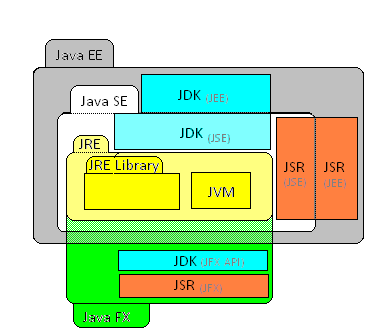
Think of these components as nested boxes. You have a small box inside a medium box, which is inside a large box. Each one builds on the one before it.
-
Java Virtual Machine (JVM): This is the heart of Java. It's a program that creates a virtual computer inside your real computer. When you run a Java application, it's the JVM that actually executes the code, translating it for the specific hardware you're using. This is what makes platform independence possible.
-
Java Runtime Environment (JRE): To run a Java application, you need the JRE. It contains the JVM, along with a set of core libraries and files that Java programs need to function. If you've ever seen a prompt to install Java to run a program, you were installing the JRE.
-
Java Development Kit (JDK): This is the full toolkit for Java developers. The JDK includes everything in the JRE, plus tools needed for writing and testing code, like a compiler (which turns your code into something the JVM can understand) and a debugger (which helps you find and fix errors).
So, to write Java code, you need the JDK. To just run a Java application someone else wrote, you only need the JRE.
This layered structure is the secret to Java's flexibility. It separates the code you write from the machine it runs on, freeing developers to build applications that can reach a massive audience without worrying about the underlying hardware. Now, let's test your understanding of these core concepts.
What was the primary motivation for creating Java's "write once, run anywhere" principle?
Which component is the 'heart' of Java, responsible for translating code for the specific hardware it's running on?
With these fundamentals in place, you're ready to start exploring the syntax and structure of the Java language itself.