Introduction to Japanese Language
Hiragana
The Foundation of Japanese
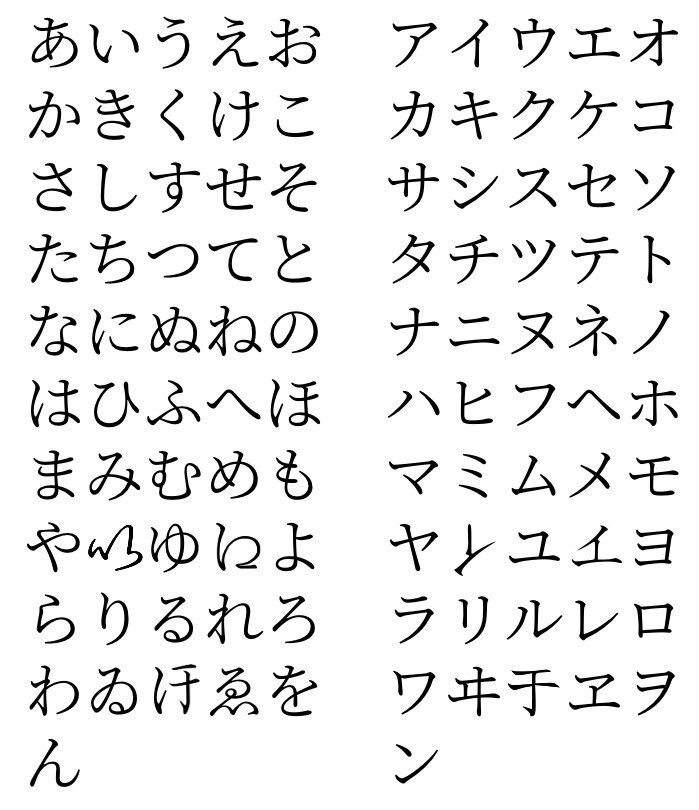
Japanese has three writing systems, and the first one you'll learn is hiragana (ひらがな). Think of it as the bedrock. Hiragana characters don't represent individual letters like in English; instead, most represent a whole syllable, like "ka" or "mo."
There are 46 basic hiragana characters. Mastering them is your first big step because they're used for grammatical particles, verb endings, and native Japanese words that don't have a more complex character assigned to them. Essentially, you can write any Japanese sentence entirely in hiragana.
Hiragana is the most fundamental script used in Japanese writing.
Each character is made of simple, flowing strokes. Their curvy, rounded appearance distinguishes them from the more angular katakana script, which you'll learn about later. For now, focus on recognizing and writing these foundational shapes.
Writing and Pronunciation
Every hiragana character is written with a specific stroke order. Following this order isn't just about tradition—it helps you write faster, more accurately, and makes your handwriting legible. The general rules are simple: write from top to bottom, and from left to right.
Let's look at the first five characters, which represent the five vowel sounds in Japanese: あ (a), い (i), う (u), え (e), お (o). Every other character (except one) is a combination of a consonant and one of these vowels.
| Character | Romaji | Pronunciation (like the vowel in...) |
|---|---|---|
| あ | a | father |
| い | i | ski |
| う | u | flute |
| え | e | bet |
| お | o | open |
These sounds are always pronounced the same way, which makes Japanese pronunciation very consistent. Once you learn the sound for each character, you can read any hiragana word.
The rest of the characters follow a grid pattern, often called the gojūon (五十音), or "fifty sounds." For example, the 'k' row combines 'k' with the five vowels: か (ka), き (ki), く (ku), け (ke), こ (ko).
Consistency is key. The sound of a hiragana character never changes, no matter where it appears in a word.
Hiragana in Action
You can already form simple words with just a few characters. These words are fundamental and used constantly in daily conversation.
Yes
Here's another one. Notice how it combines a character from the 'i' column with another from the 'e' column.
House
Hiragana also plays a crucial grammatical role. It's used for particles, which are small words that mark the function of another word in a sentence. For example, the particle は (pronounced 'wa' when used as a particle) marks the topic of a sentence. The particle を (pronounced 'o') marks the direct object of a verb.
Consider this simple sentence: ねこはさかなをたべる (neko wa sakana o taberu). It means "The cat eats fish."
- ねこ (neko) means cat.
- さかな (sakana) means fish.
- たべる (taberu) means to eat.
The particles は and を connect these words and give the sentence its structure. Without them, you'd just have a list of nouns and a verb. Hiragana is the glue that holds Japanese sentences together.
Ready to check your understanding?
What does a single hiragana character, like 'か' (ka), most often represent?
Which of the following best describes the primary role of hiragana in a typical Japanese sentence?
Learning hiragana is the single most important step you can take at the beginning of your Japanese journey. Practice recognizing them, writing them, and saying them aloud. Everything else will build on this foundation.