Introduction to Japanese Language
Hiragana
Meet Hiragana
Japanese uses three main scripts, and the first one to learn is Hiragana. Think of it as the foundation. Unlike an alphabet where letters represent single sounds (like 'b' or 'c'), Hiragana characters almost always represent a full syllable, like 'ka', 'shi', or 'to'.
This script is essential. It’s used for native Japanese words, grammatical particles that connect words in a sentence, and the endings of verbs and adjectives. Essentially, you can't form proper sentences without it. Hiragana characters have a distinct, curvy, and flowing appearance.
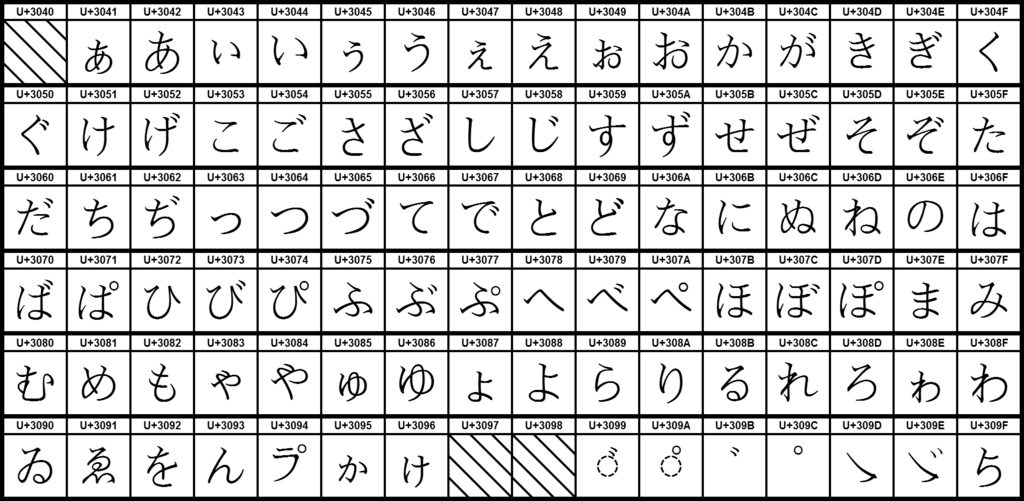
The chart might look intimidating, but it’s organized logically. It's a grid based on five core vowel sounds that combine with different consonants. The first row contains the five standalone vowels: あ (a), い (i), う (u), え (e), お (o). Every other row pairs a consonant with these vowels. For example, the 'k' row is か (ka), き (ki), く (ku), け (ke), こ (ko).
Sounding It Out
One of the best things about Hiragana is its consistent pronunciation. Each character represents one specific sound, with very few exceptions. Once you learn the sound for a character, you can pronounce it correctly in any word.
Everything is built on those five basic vowels.
| Hiragana | Romaji | Pronunciation Guide |
|---|---|---|
| あ | a | like the 'a' in 'father' |
| い | i | like the 'ee' in 'see' |
| う | u | like the 'oo' in 'moon' |
| え | e | like the 'e' in 'get' |
| お | o | like the 'o' in 'go' |
Consonants are then added to form the rest of the syllables. For example, the 's' row combines the 's' sound with each vowel: さ (sa), し (shi), す (su), せ (se), そ (so).
Notice that one is a little different. Instead of 'si', we have し (shi). You'll find a few of these special cases, like ち (chi) instead of 'ti' and つ (tsu) instead of 'tu'. These are just quirks to memorize as you go.
The Importance of Stroke Order
When you learn to write Hiragana, following the correct stroke order is critical. Each character has a specific sequence of strokes. Writing them in the right order and direction makes your handwriting legible, balanced, and faster. It might feel slow at first, but it builds the muscle memory needed for fluency.
Think of it as a dance for your pen. There's a correct, efficient path for every character.
Learning Hiragana isn't just about memorizing characters; it's about understanding its job in a sentence. Hiragana acts as the glue that holds everything together.
For example, in the sentence わたしはすしをたべる (watashi wa sushi o taberu), which means "I eat sushi," the particles は (wa) and を (o) and the verb ending る (ru) are all written in Hiragana. They provide grammatical context that the nouns and verb stem alone cannot.
You will also see Hiragana used to spell out words that have very complex or rare kanji (the characters borrowed from Chinese). Sometimes it's even written in small characters above a kanji to show its pronunciation. This is why mastering Hiragana is your first, most important step.
Ready to test your knowledge?
What is the primary function of Hiragana in a typical Japanese sentence?
The entire Hiragana system is built upon combinations with the five core ______ sounds.
With these fundamentals, you're on your way to reading and writing Japanese.