Introduction to Japanese Language
Japanese Writing Systems
Three Scripts, One Language
When you first see written Japanese, it can look like a complex mix of different characters. That's because it is. Unlike English, which uses a single alphabet, Japanese uses three distinct scripts that work together in every sentence: Hiragana, Katakana, and Kanji.
The Japanese writing system consists of three main scripts: Hiragana, Katakana, and Kanji.
Think of them as different tools for different jobs. Each one has a specific role, and understanding these roles is the first step to reading and writing Japanese. Let's break them down one by one.
Hiragana The Native Script
Hiragana (ひらがな) is the foundational script. It's a syllabary, meaning each character represents a syllable, like ka, shi, or mo. With its 46 basic characters, you can technically write any Japanese word. Hiragana is known for its smooth, rounded, and flowing shapes.
You'll see Hiragana used for native Japanese words that don't have a Kanji representation, as well as for grammatical elements. These include particles that mark the subject or object of a sentence (like は, が, and を) and verb and adjective endings.
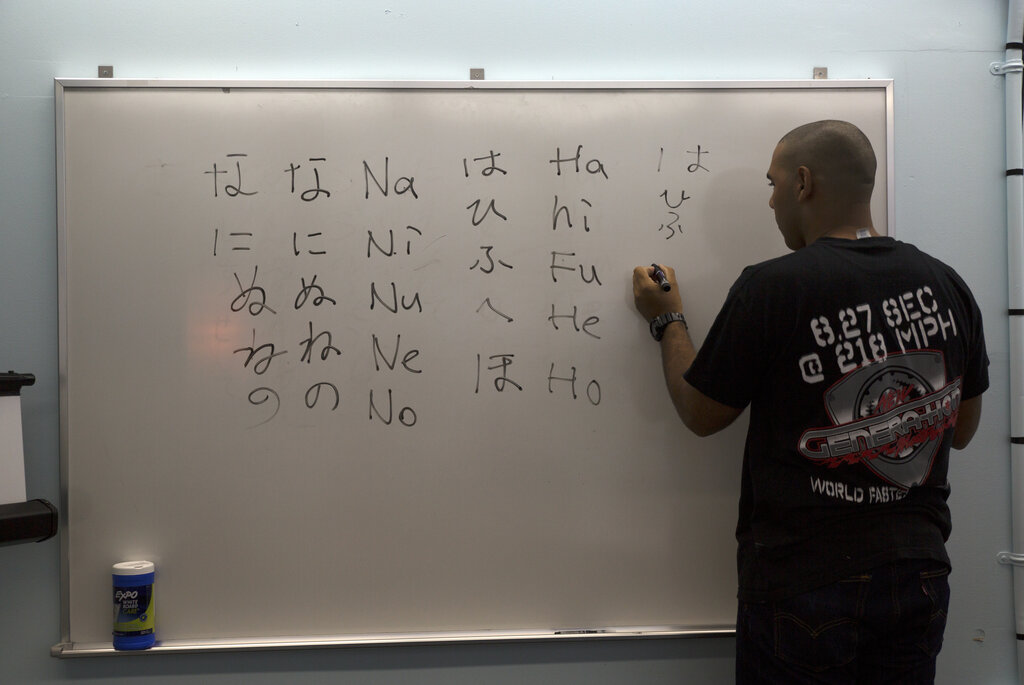
For example, in the verb 食べます (tabemasu, to eat), the first character 食 is Kanji, but the べます part is written in Hiragana to show its grammatical function.
Here are the basic Hiragana characters. Mastering these is your first major goal.
| a | i | u | e | o | |
|---|---|---|---|---|---|
| - | あ | い | う | え | お |
| k | か | き | く | け | こ |
| s | さ | し | す | せ | そ |
| t | た | ち | つ | て | と |
| n | な | に | ぬ | ね | の |
| h | は | ひ | ふ | へ | ほ |
| m | ま | み | む | め | も |
| y | や | ゆ | よ | ||
| r | ら | り | る | れ | ろ |
| w | わ | を | |||
| n | ん |
Katakana For Borrowed Words
Katakana (カタカナ) is the second syllabary. It has the exact same number of characters and represents the exact same sounds as Hiragana. The difference is its appearance and its job. Katakana characters are sharp and angular, created from parts of more complex Kanji.
Its main purpose is to write words borrowed from other languages. English words are very common in modern Japanese, so you'll see Katakana all the time. For example, "computer" becomes コンピューター (konpyūtā) and "taxi" is タクシー (takushī).
Katakana is also used for emphasis (like italics in English), onomatopoeia (sound words like "bang" or "woof"), and the names of many plants and animals.
Learning Katakana alongside Hiragana is crucial. Because they represent the same sounds, you can practice them together. Here's the basic Katakana chart.
| a | i | u | e | o | |
|---|---|---|---|---|---|
| - | ア | イ | ウ | エ | オ |
| k | カ | キ | ク | ケ | コ |
| s | サ | シ | ス | セ | ソ |
| t | タ | チ | ツ | テ | ト |
| n | ナ | ニ | ヌ | ネ | ノ |
| h | ハ | ヒ | フ | ヘ | ホ |
| m | マ | ミ | ム | メ | モ |
| y | ヤ | ユ | ヨ | ||
| r | ラ | リ | ル | レ | ロ |
| w | ワ | ヲ | |||
| n | ン |
Kanji Characters with Meaning
Finally, there's Kanji (漢字). These are characters originally borrowed from China. Unlike Hiragana and Katakana, which represent sounds, Kanji represent ideas or entire words. For example, the single character 木 means "tree," and 人 means "person."
There are thousands of Kanji in use. While that sounds intimidating, they make the language much easier to read. Because Japanese doesn't use spaces between words, Kanji act as signposts, clearly marking where one word ends and another begins. They also distinguish between homophones—words that sound the same but have different meanings. For instance, kami could mean 紙 (paper), 髪 (hair), or 神 (god).
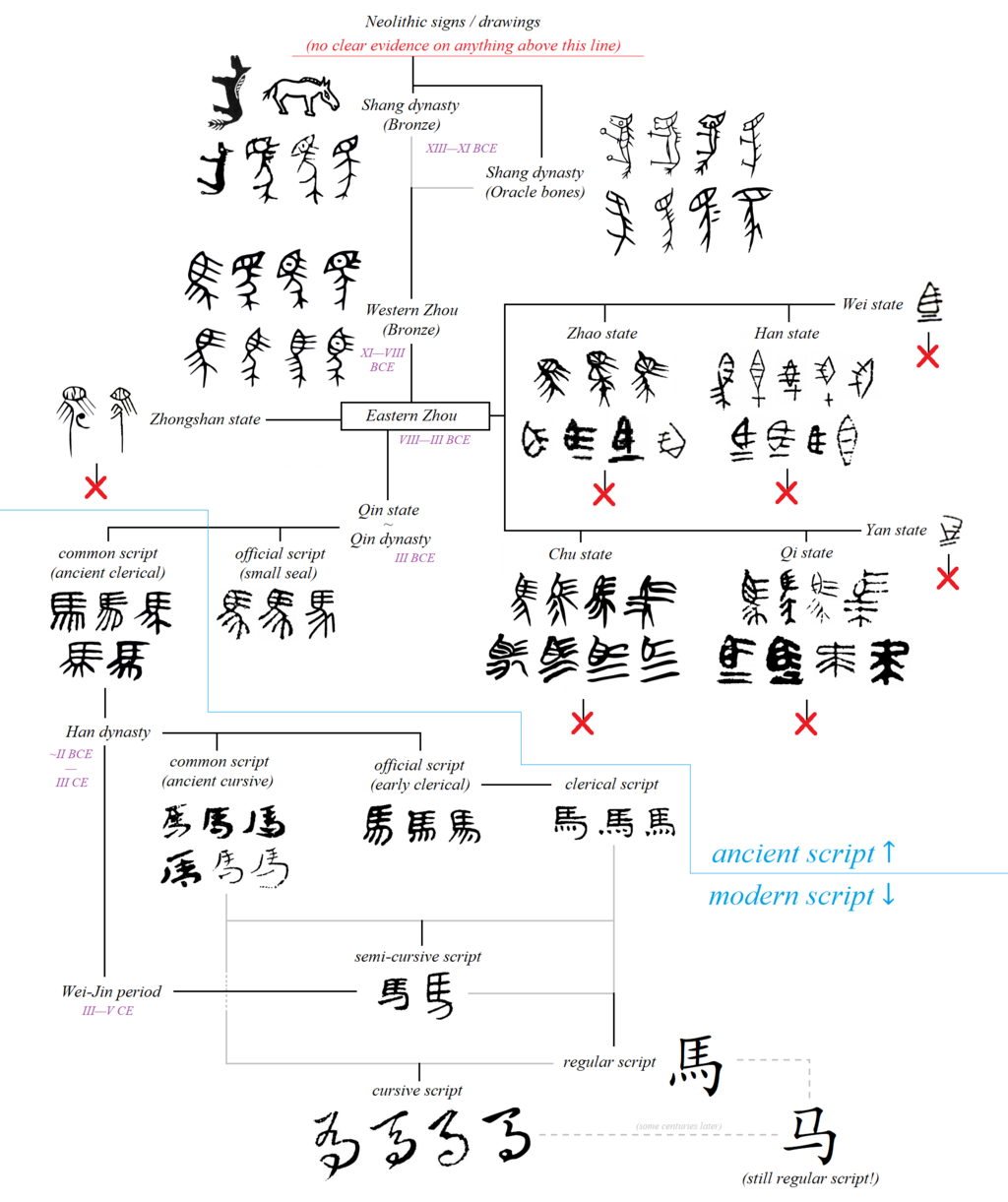
Kanji typically form the core of nouns, verbs, and adjectives. A single sentence will weave all three scripts together seamlessly.
For example: 私はアメリカ人です。 Watashi wa amerikajin desu. (I am American.)
- 私 (watashi): Kanji for "I"
- は (wa): Hiragana particle
- アメリカ (amerika): Katakana for "America"
- 人 (jin): Kanji for "person"
- です (desu): Hiragana for the verb "is/am"
| Script | Appearance | Primary Use |
|---|---|---|
| Hiragana (ひらがな) | Round, flowing | Grammar, native words, verb/adjective endings |
| Katakana (カタカナ) | Sharp, angular | Foreign loanwords, emphasis, onomatopoeia |
| Kanji (漢字) | Complex, multi-stroke | Nouns, stems of verbs and adjectives |
Let's review these concepts before moving on.
Now, test your understanding of how each script is used.
What are the three scripts that make up the modern Japanese writing system?
You see the word タクシー (takushī) in a sentence. Which script is this, and what does its use imply?
Getting comfortable with these three scripts is your gateway to the Japanese language. Start by memorizing the Hiragana and Katakana charts. With practice, you'll soon start to recognize them everywhere.