Introduction to Japanese Language
Japanese Writing Systems
Three Scripts, One Language
Unlike English with its single alphabet, Japanese uses three different scripts, often in the same sentence. These are Hiragana (ひらがな), Katakana (カタカナ), and Kanji (漢字). Think of them as different tools for different jobs.
Mastering the first two, Hiragana and Katakana, is the essential first step to reading and writing Japanese. Together, they are called 'kana'.
Hiragana The Foundation
Hiragana is a syllabary, where each character represents a syllable, like 'ka', 'shi', or 'to'. It’s the backbone of written Japanese, used for grammatical particles, verb and adjective endings, and native Japanese words that don't have a Kanji counterpart. Its characters are smooth and curvy, derived from cursive forms of Chinese characters.
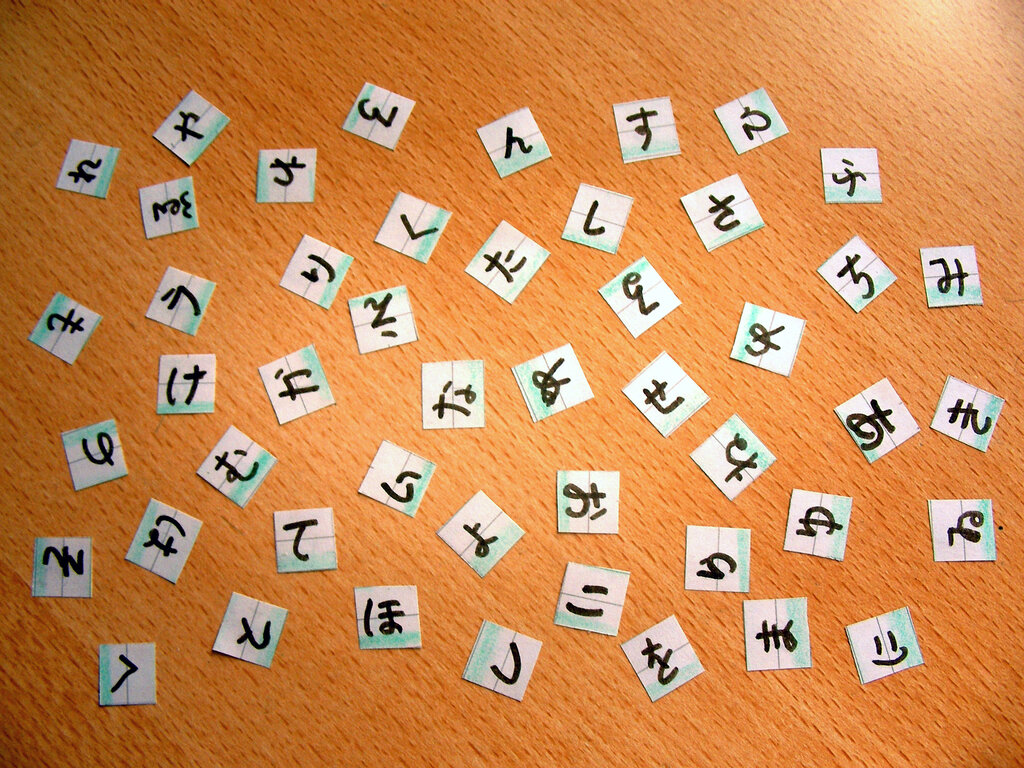
Japanese children learn Hiragana first. It allows them to write any word in the language phonetically. The basic set of Hiragana characters is called the gojūon, or "fifty sounds."
| a | i | u | e | o | |
|---|---|---|---|---|---|
| - | あ (a) | い (i) | う (u) | え (e) | お (o) |
| k | か (ka) | き (ki) | く (ku) | け (ke) | こ (ko) |
| s | さ (sa) | し (shi) | す (su) | せ (se) | そ (so) |
| t | た (ta) | ち (chi) | つ (tsu) | て (te) | と (to) |
| n | な (na) | に (ni) | ぬ (nu) | ね (ne) | の (no) |
| h | は (ha) | ひ (hi) | ふ (fu) | へ (he) | ほ (ho) |
| m | ま (ma) | み (mi) | む (mu) | め (me) | も (mo) |
| y | や (ya) | ゆ (yu) | よ (yo) | ||
| r | ら (ra) | り (ri) | る (ru) | れ (re) | ろ (ro) |
| w | わ (wa) | を (o/wo) | |||
| n | ん (n) |
You can modify these basic sounds by adding small marks. Two small dashes (゛), called dakuten, usually make a consonant voiced (like 'k' becomes 'g'). A small circle (゜), or handakuten, changes 'h' sounds to 'p' sounds.
| a | i | u | e | o | |
|---|---|---|---|---|---|
| g | が (ga) | ぎ (gi) | ぐ (gu) | げ (ge) | ご (go) |
| z | ざ (za) | じ (ji) | ず (zu) | ぜ (ze) | ぞ (zo) |
| d | だ (da) | ぢ (ji) | づ (zu) | で (de) | ど (do) |
| b | ば (ba) | び (bi) | ぶ (bu) | べ (be) | ぼ (bo) |
| p | ぱ (pa) | ぴ (pi) | ぷ (pu) | ぺ (pe) | ぽ (po) |
Katakana for Foreign Words
Katakana represents the exact same sounds as Hiragana, but its characters look different. They are sharp, angular, and more geometric. Katakana's main job is to write foreign loanwords, like 'computer' (コンピューター, konpyūtā) or 'taxi' (タクシー, takushī). It’s also used for emphasis (like italics in English), onomatopoeia, and company names.
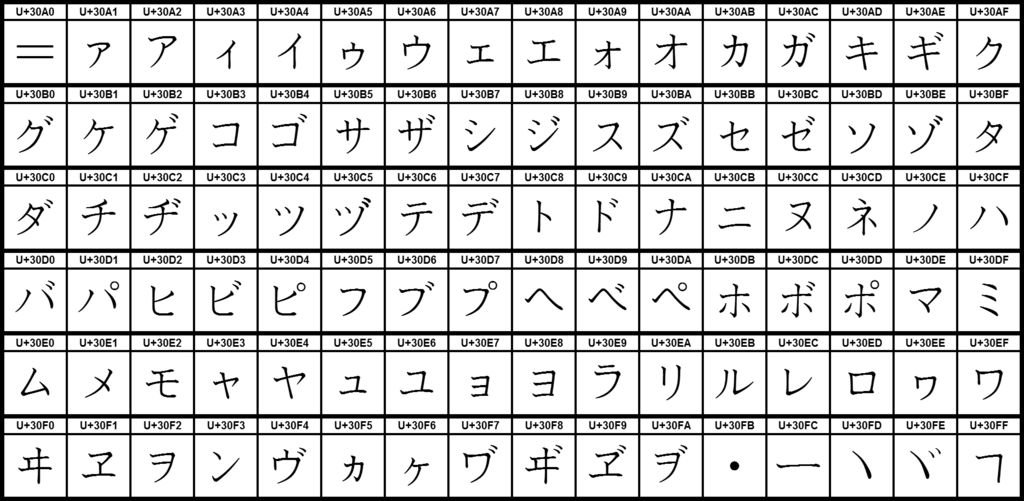
Learning Katakana alongside Hiragana is crucial because so many everyday words in modern Japanese are borrowed from other languages.
| a | i | u | e | o | |
|---|---|---|---|---|---|
| - | ア (a) | イ (i) | ウ (u) | エ (e) | オ (o) |
| k | カ (ka) | キ (ki) | ク (ku) | ケ (ke) | コ (ko) |
| s | サ (sa) | シ (shi) | ス (su) | セ (se) | ソ (so) |
| t | タ (ta) | チ (chi) | ツ (tsu) | テ (te) | ト (to) |
| n | ナ (na) | ニ (ni) | ヌ (nu) | ネ (ne) | ノ (no) |
| h | ハ (ha) | ヒ (hi) | フ (fu) | ヘ (he) | ホ (ho) |
| m | マ (ma) | ミ (mi) | ム (mu) | メ (me) | モ (mo) |
| y | ヤ (ya) | ユ (yu) | ヨ (yo) | ||
| r | ラ (ra) | リ (ri) | ル (ru) | レ (re) | ロ (ro) |
| w | ワ (wa) | ヲ (o/wo) | |||
| n | ン (n) |
Kanji Characters of Meaning
Kanji are characters borrowed from Chinese. Unlike kana, which represent sounds, Kanji represent ideas and meanings. A single kanji can be a whole word, like 木 for 'tree', or it can be part of a larger word. Using Kanji makes text more compact and easier to read quickly, as it helps distinguish between words that sound the same but have different meanings (homophones).
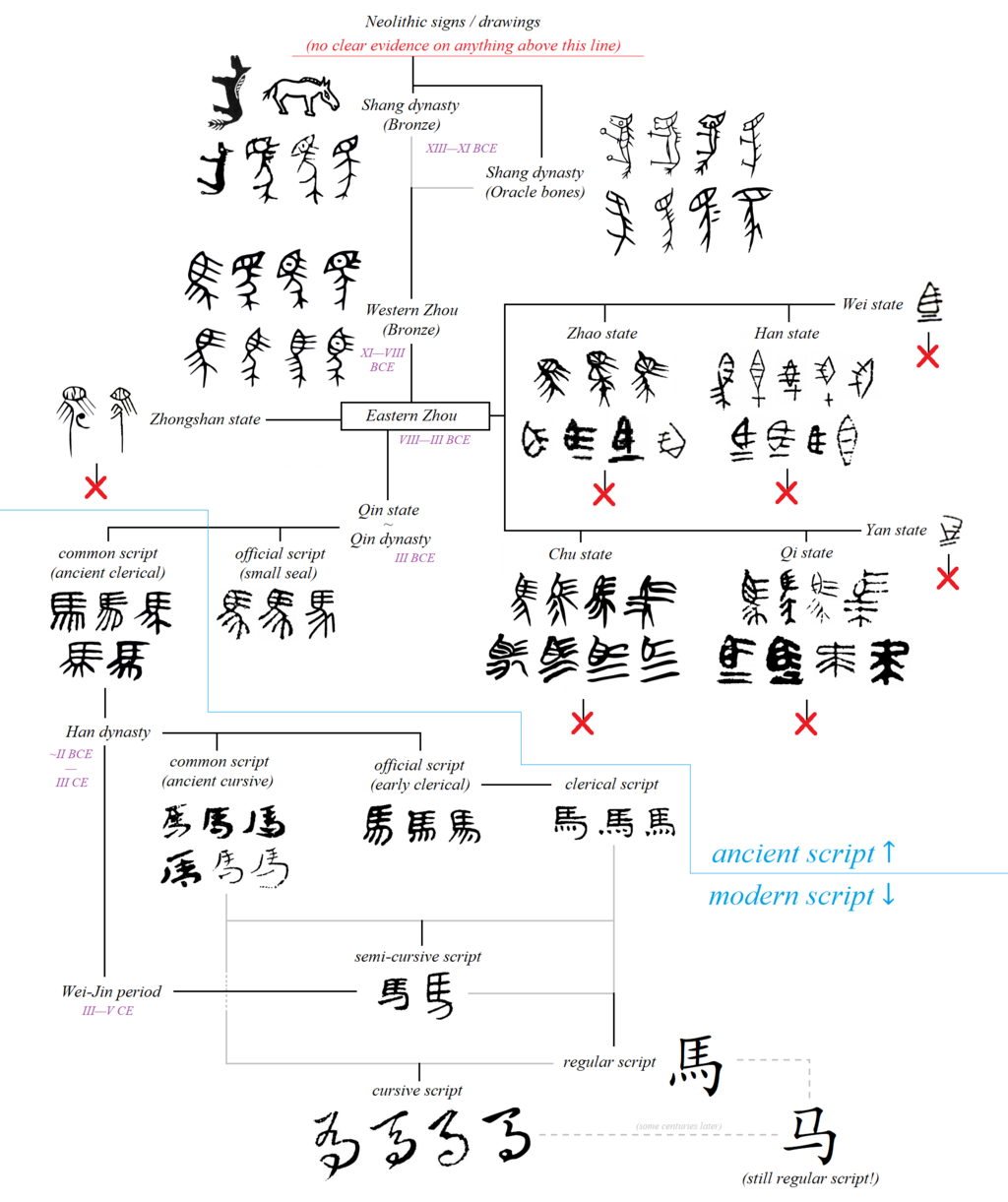
There are thousands of Kanji in use. It can seem intimidating, but you'll learn them gradually over time. For now, the focus is on mastering Hiragana and Katakana. They are the keys that unlock everything else.
As an example of how Kanji build meaning, the character for 'tree' is 木 (ki). Two trees together make 林 (hayashi), meaning 'woods'. Three trees become 森 (mori), meaning 'forest'.
Let's see how all three scripts work together in a single sentence:
I am American.
Here's the breakdown:
- 私 (watashi) is the Kanji for 'I' or 'me'.
- は (wa) is a Hiragana character used as a grammatical particle to mark the topic.
- アメリカ (Amerika) is 'America' written in Katakana, since it's a foreign word.
- 人 (jin) is a Kanji meaning 'person'.
- です (desu) is the verb 'to be', written in Hiragana.
Each script has its role, and together they create a rich and efficient writing system.
Ready to test your knowledge?
Which Japanese script is primarily used for writing foreign loanwords, such as 'computer' (コンピューター)?
The characters in this script are described as smooth and curvy, and it forms the grammatical backbone of written Japanese.