Introduction to Japanese Language
Hiragana
Your First Steps in Japanese
Welcome to the world of Japanese writing. It might seem intimidating with its three different scripts, but we'll start with the most essential one: hiragana. Think of hiragana as the Japanese ABCs. It's a phonetic script, which means each character represents a specific sound or syllable.
Hiragana is the most fundamental script used in Japanese writing.
There are 46 basic hiragana characters. You'll use them for native Japanese words, grammatical particles that connect words, and verb endings. Nearly any Japanese sentence you see will contain hiragana. Mastering it is the key to unlocking reading and pronunciation.
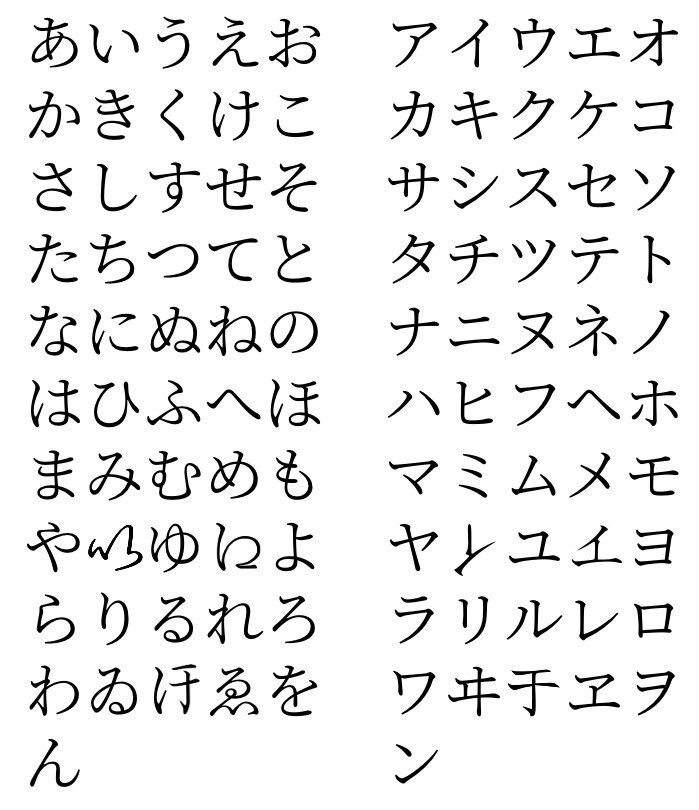
Writing the Characters
Each hiragana character has a specific stroke order. This isn't just for neatness; following the correct order helps you write quickly, accurately, and legibly. It also makes the characters feel balanced and natural. The general rules are simple: write from top to bottom, and from left to right.
Always practice with the correct stroke order. It builds good habits from the very beginning.
Let's look at the first five characters, which represent the five vowel sounds in Japanese: あ (a), い (i), う (u), え (e), お (o). Every other basic hiragana character (except one) is a combination of a consonant and one of these vowels.
| Character | Romaji | Pronunciation Guide |
|---|---|---|
| あ | a | Like the 'a' in 'father' |
| い | i | Like the 'ee' in 'see' |
| う | u | Like the 'oo' in 'moon' |
| え | e | Like the 'e' in 'get' |
| お | o | Like the 'o' in 'go' |
Here’s an example of the stroke order for the character あ (a).
As you can see, the process is logical. By learning the stroke order for each character, you'll develop muscle memory and be able to write Japanese fluidly.
Hiragana in Action
Once you know a few characters, you can start forming simple words. For example, by combining あ (a) and い (i), you get あい (ai), which means "love."
Let's learn a few more characters from the 'k' row: か (ka), き (ki), く (ku), け (ke), こ (ko). With these, you can write even more words:
- あか (aka): red
- いけ (ike): pond
- こえ (koe): voice
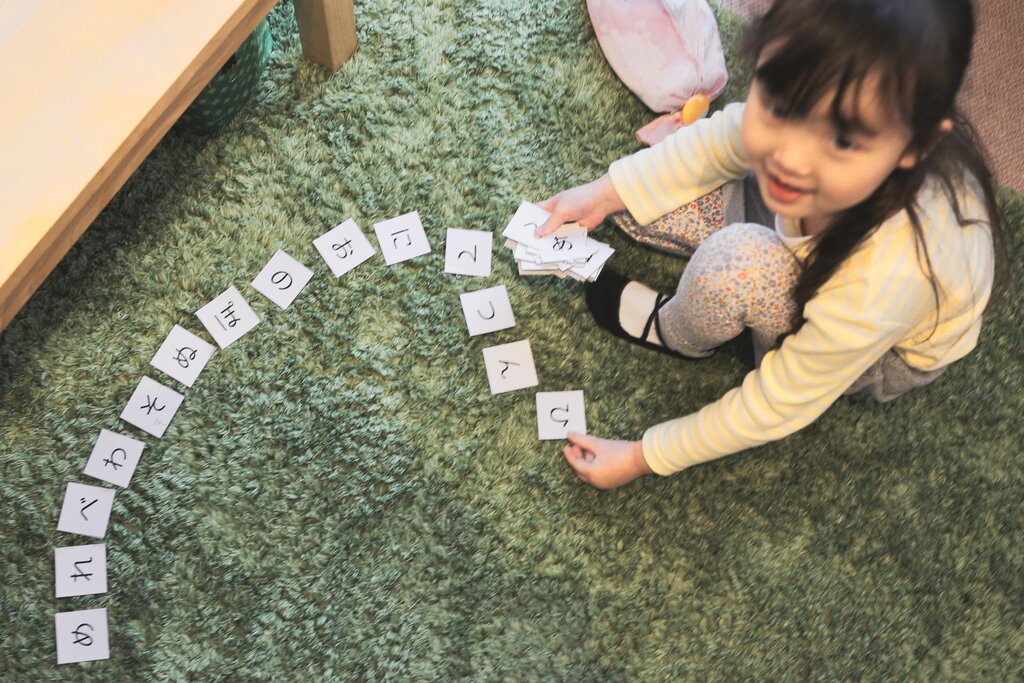
This building-block approach is why mastering hiragana first is so effective. Every new character you learn exponentially increases the number of words you can read and write.
furigana
noun
Small hiragana characters printed above or next to a kanji character to indicate its pronunciation.
You'll also encounter hiragana in another important role: as a reading aid for kanji. Kanji are the complex characters borrowed from Chinese. When you're just starting out, you won't know many kanji. That's where furigana comes in.
For example, the kanji for 'Japan' is 日本. A text for learners might write it with furigana above, like this: にほん (Nihon). This lets you read the word and learn its pronunciation even before you've memorized the kanji character itself. It's like having built-in pronunciation guides.
Ready to test your knowledge? Let's see what you've learned about hiragana.
What is the primary role of the hiragana script in the Japanese writing system?
The characters あ, い, う, え, and お form the foundation of the hiragana chart because they represent what?
Learning hiragana is your first, most important step. Take your time, practice the characters, and you'll build a solid foundation for your entire Japanese language journey.