Introduction to Islam
Origins of Islam
Arabia Before Islam
In the 7th century, the Arabian Peninsula was a land of stark deserts and bustling trade hubs. Society was organized around tribes and clans, where loyalty was paramount and conflicts were common. Cities like Mecca thrived as centers for both commerce and religion.
Caravans crisscrossed the peninsula, connecting it to the great Byzantine and Persian empires. Mecca's importance, however, went beyond trade. It was home to the Kaaba, a cubical stone building that housed idols of numerous gods and goddesses. Pilgrims from all over Arabia would visit, making the city a vibrant, multicultural center. Religious life was largely polytheistic, with each tribe often having its own patron deities.
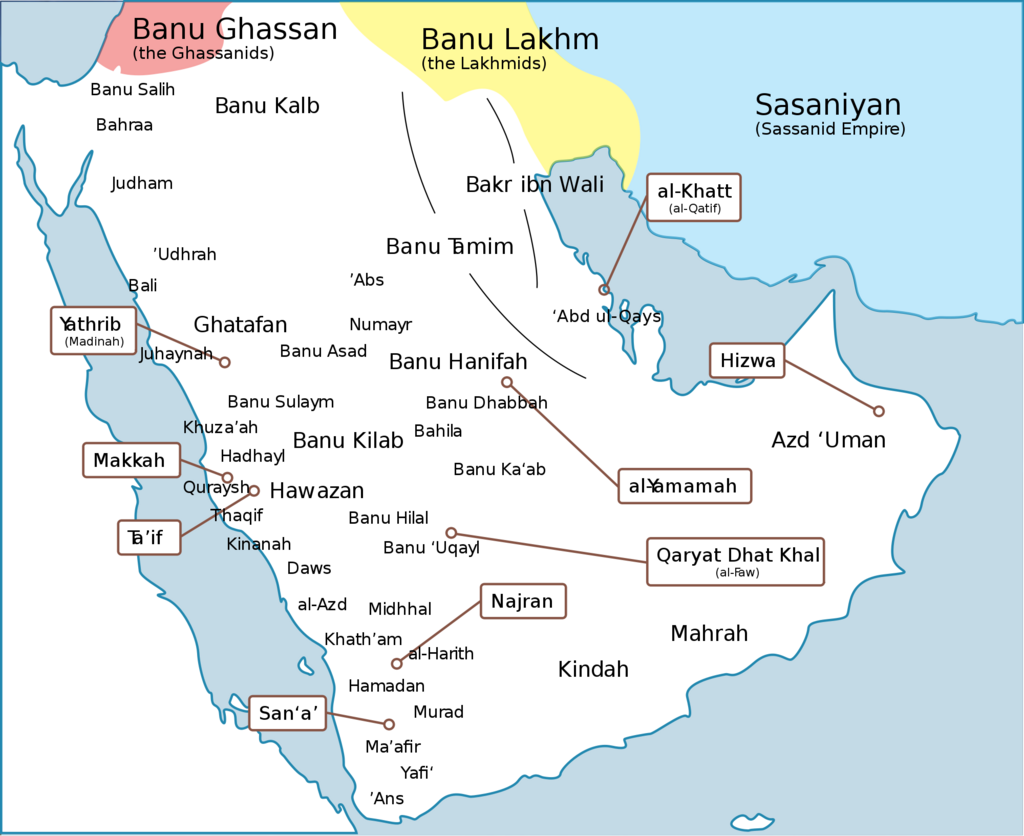
This was the world into which Muhammad was born. It was a society of deep-seated traditions, fierce loyalties, and a complex web of religious beliefs.
A Prophet in Mecca
Muhammad was born in Mecca around 570 CE into the Quraysh, the city's dominant tribe. He was orphaned at a young age and raised by his uncle, Abu Talib. As a young man, he earned a reputation for his honesty and integrity, earning him the nickname al-Amin, or 'the trustworthy.' He worked as a merchant in the service of a wealthy widow named Khadijah, whom he later married.
Though successful, Muhammad grew troubled by the social inequalities and moral decay he saw around him. He began retreating to a cave on Mount Hira, just outside Mecca, to meditate and reflect.
Quraysh
noun
The powerful merchant tribe that controlled Mecca and the Kaaba in the 7th century. Muhammad was a member of the Banu Hashim, a clan within the Quraysh tribe.
It was during one of these retreats, in the year 610 CE, that Muhammad, at the age of 40, received his first revelation. According to Islamic tradition, the angel Gabriel (Jibril in Arabic) appeared before him and commanded him to recite. These were the first verses of what would become the Quran.
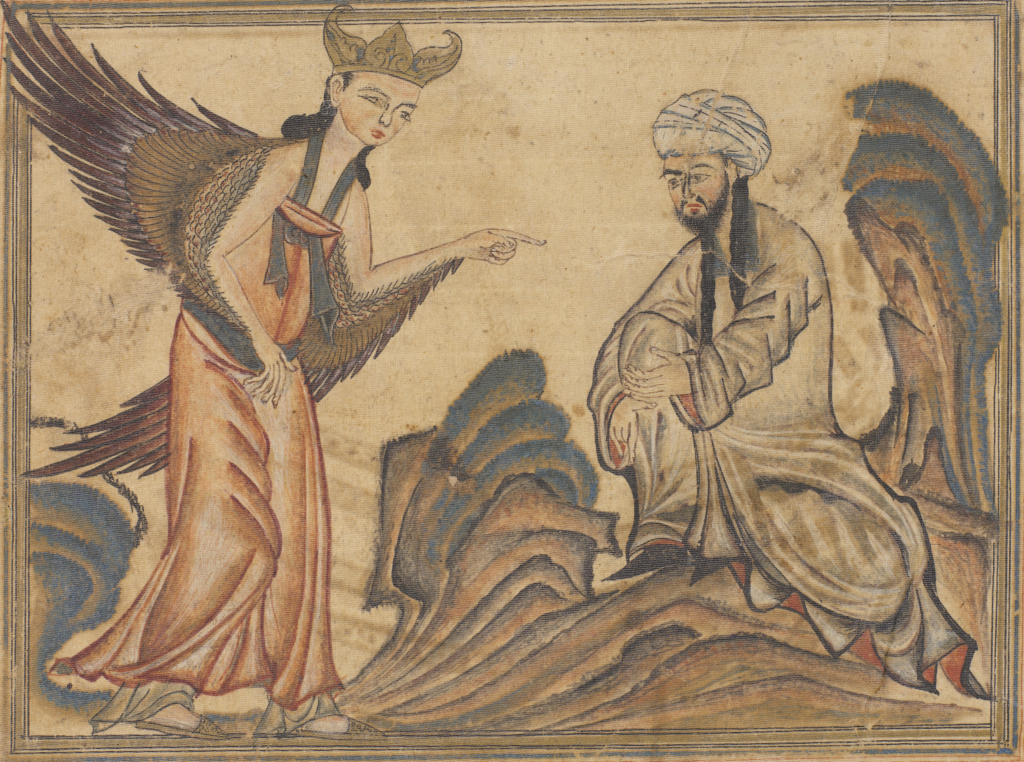
The message was radical for its time: there is only one God (Allah), and people must submit to His will. The revelations called for an end to polytheism and idol worship, and they emphasized social justice, charity for the poor, and accountability on the day of judgment. This message directly challenged the power structure of Mecca. The Quraysh leaders, whose wealth and influence were tied to the polytheistic pilgrimages to the Kaaba, saw Muhammad as a threat.
From Persecution to Community
Muhammad began preaching publicly, attracting a small but dedicated group of followers. The first converts included his wife Khadijah, his cousin Ali, and his close friend Abu Bakr. As their numbers grew, so did the hostility from the Meccan elite. The early Muslims faced ridicule, harassment, and physical abuse. Some were even killed.
The situation became so dire that in 615 CE, Muhammad arranged for a group of his followers to seek refuge in the Christian kingdom of Aksum, in modern-day Ethiopia. This was the first migration in Islamic history.
The persecution in Mecca tested the faith of the early Muslims, forging a tight-knit community bound by shared belief and struggle.
A turning point came in 622 CE. Muhammad and his followers were invited to the city of Yathrib, about 200 miles north of Mecca, to mediate a long-standing feud between its Arab tribes. This migration, known as the Hijra, was a pivotal event. It marked the end of the Meccan period of persecution and the beginning of the formation of an organized Muslim community, or ummah.
Hijra
noun
The migration of Muhammad and his followers from Mecca to Yathrib (later Medina) in 622 CE. This event marks the beginning of the Islamic calendar.
Yathrib was renamed Medina, 'the City of the Prophet.' There, Muhammad established a new social and political order based on the principles of Islam. He drafted the Constitution of Medina, a formal agreement that united the different tribes, including the local Jewish clans, under his leadership for mutual defense. In Medina, the first mosque was built, and practices like the call to prayer were established. This new community was not just a religious one; it was a state in the making, founded on the revelations that continued to guide its path.
What was the dominant religious practice in Mecca at the time of Muhammad's birth?
Why did the leaders of the Quraysh tribe, Mecca's elite, view Muhammad's message as a threat?